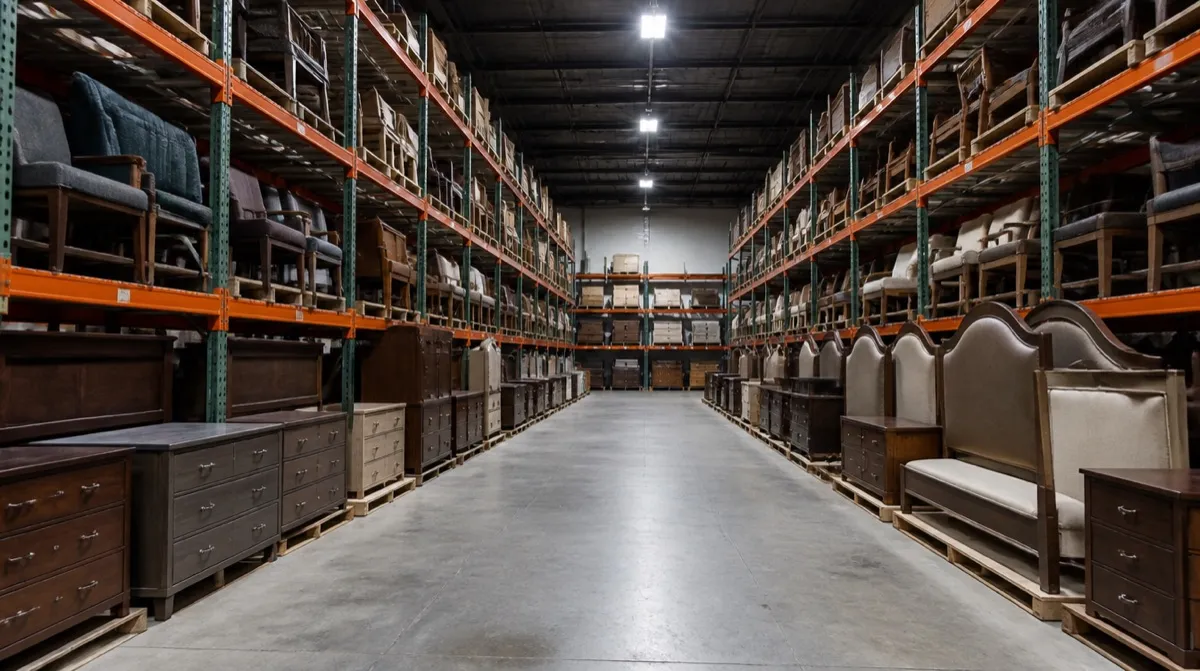
Hotel liquidators sell furniture pulled from properties that closed, rebranded, or renovated: guest room casegoods, lobby seating, banquet chairs, and tables, often at a fraction of what the same pieces cost new. For a buyer watching a budget, that discount is real and worth understanding. It is also not free money. Liquidated furniture comes with tradeoffs around condition, matching, quantity, and warranty that do not show up on the price tag. This guide covers when buying from hotel liquidators makes sense, what to check before you commit, and when ordering new contract furniture is the smarter spend.
What hotel liquidators actually sell
A hotel furniture liquidator buys furniture in bulk from properties that are removing it, then resells it. The supply comes from a few predictable events: a hotel closes, a brand conversion requires new furniture to meet a different standard, or a scheduled renovation cycles out furniture that still has service life left. Resort furniture liquidators work the same way with larger destination properties, which is why some liquidation lots include outdoor and pool furniture alongside the indoor pieces.
Because the inventory is whatever came out of a specific property, it changes constantly and sells as is. When people search for discount hotel furniture or hotel liquidators near me, this is the market they are describing: opportunistic, lot based, and priced to move rather than cataloged and restocked. That structure is exactly what makes it cheap and exactly what makes it unpredictable.
When buying from a liquidator makes sense
Liquidated hotel furniture is a genuinely good buy in specific situations, and it is worth naming them because the discount is real when the fit is right.
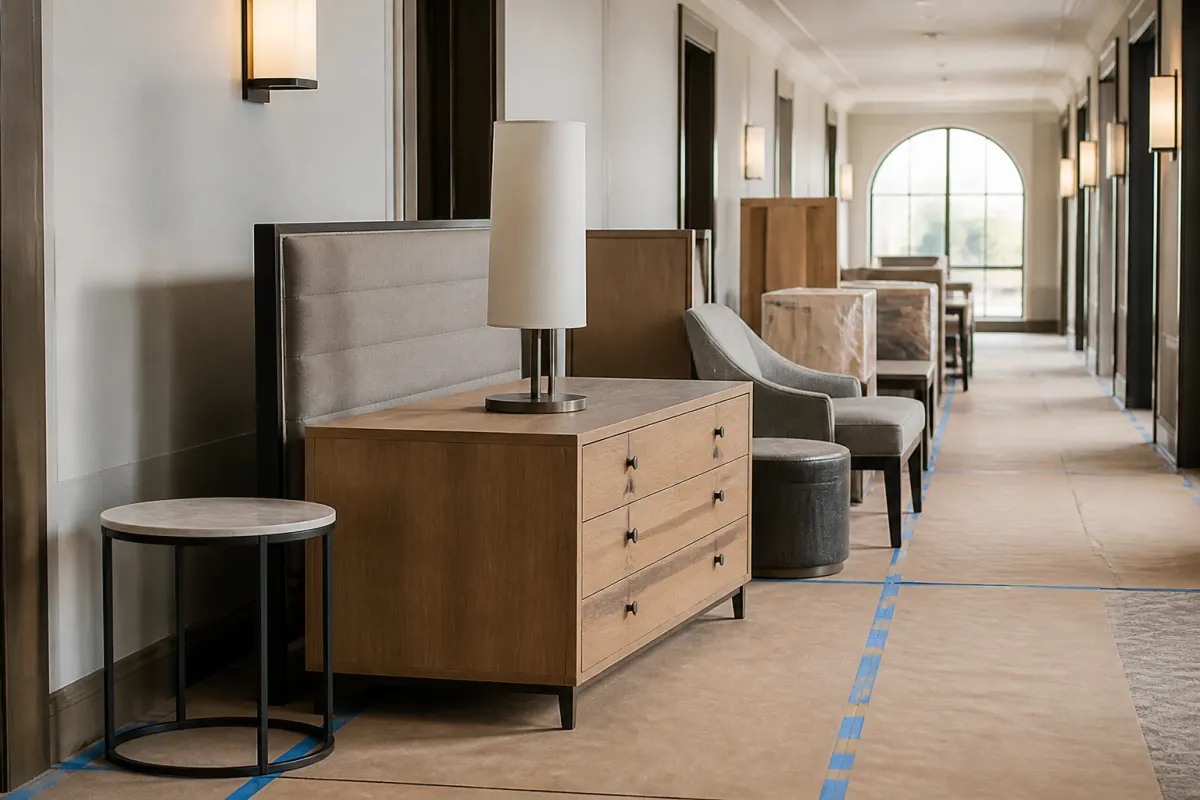
The strongest case is a single independent property that does not answer to a brand standard. If you run a boutique or independent hotel and can accept some variation in your rooms, a liquidation lot that matches your style can furnish a floor for a fraction of new. Short term and transitional needs are another good fit: furnishing a property you plan to renovate again soon, or filling a space where the furniture does not need a long service life. Back of house and staff areas, where appearance matters less, are a sensible place to spend a liquidation budget rather than a new furniture budget. And if a liquidator happens to have a lot that closely matches furniture you already own, buying it to extend or repair an existing set can solve a problem new furniture cannot.
The risks to check before you buy
The savings on liquidated furniture are front loaded and the risks are back loaded, so the discipline is to surface the risks before you pay, not after delivery.
Condition is the first. Liquidation furniture has already been in service, so frames, upholstery, and mechanisms carry wear that a photo may not show. Inspect in person or demand detailed condition photos and a written description, and price in reupholstery or repair if the pieces need it, because a cheap chair that needs new fabric and a new gas lift is not cheap anymore.
Check the liquidation lot's exact usable count and whether the seller or manufacturer has additional matching units. If a project needs 120 chairs and only 90 usable matching chairs are available, the 30-chair gap must be resolved before purchase. New production also needs a written availability and matching check; neither an old nor a new label guarantees future reorders or identical finish lots.
Obtain written warranty and delivery terms for each actual option. A used lot may be sold as-is, may carry seller coverage or may have transferable manufacturer coverage; verify rather than assume. New furniture also has exclusions and availability limits. Existing used stock can still require inspection, repairs and transport, while new production requires its own confirmed schedule.
| Factor | Hotel liquidators | New contract furniture |
|---|---|---|
| Price | Quote the used lot's usable condition and completeness | Obtain an itemized project quote |
| Condition | Inspect each lot; confirm as-is or other terms | Confirm model, inspection and defect remedies |
| Matching quantity | Verify available matching units and any reorder source | Verify quantity, minimums and future matching terms |
| Warranty | Confirm seller/maker coverage and transferability | Confirm applicable manufacturer coverage and exclusions |
| Lead time | Confirm inspection, repair and delivery dates | Treat 2 to 6 weeks stocked and 10 to 14 custom as provisional examples; obtain dated commitments |
| Brand standard fit | Check the actual specification and condition | Check the actual specification and approved sample |
When new contract furniture wins
A new option may fit a branded specification, quantity or warranty requirement more readily, but assess the actual products and written terms. Verify matching stock, approved specification, condition and future-part availability for both options. Neither new production nor a fixed used lot automatically guarantees the desired service life or later matching.

Compare the used lot's delivered, repaired and reupholstered cost with the itemized new quote on the same quantity and specification. Include warranty scope, downtime and known maintenance requirements on both sides rather than assuming every new chair is covered and consistent. The furniture cost calculator can model your chosen cost inputs for either comparison.
How to compare a liquidation lot against a new quote
Run both options through the same checklist. For the used lot, confirm usable count, inspect condition, price repairs or reupholstery, and document reorder and warranty terms. For new furniture, obtain an itemized quote for the selected specification and quantity, including freight, warranty coverage and delivery timing.
For a hypothetical comparison, the $45 to $90 chair and $60 to $130 table bands are chosen inputs, not current matched quotes. Compare the actual delivered-and-repaired used lot with an actual new quote. Submit a furniture request with quantity, condition/specification needs, finish and dates. Use the banquet-chair concepts, table concepts, lounge-chair concepts or headboard concepts as visual references; independent suppliers must confirm the real models and full quote scope.
The honest bottom line
A liquidation lot may suit an independent, transitional, back-of-house or matching-extension need if its actual condition and quantity fit. New furniture may meet another project's specification or availability needs more readily. Price both on the same delivered scope and document condition, repair, matching and warranty terms before choosing.