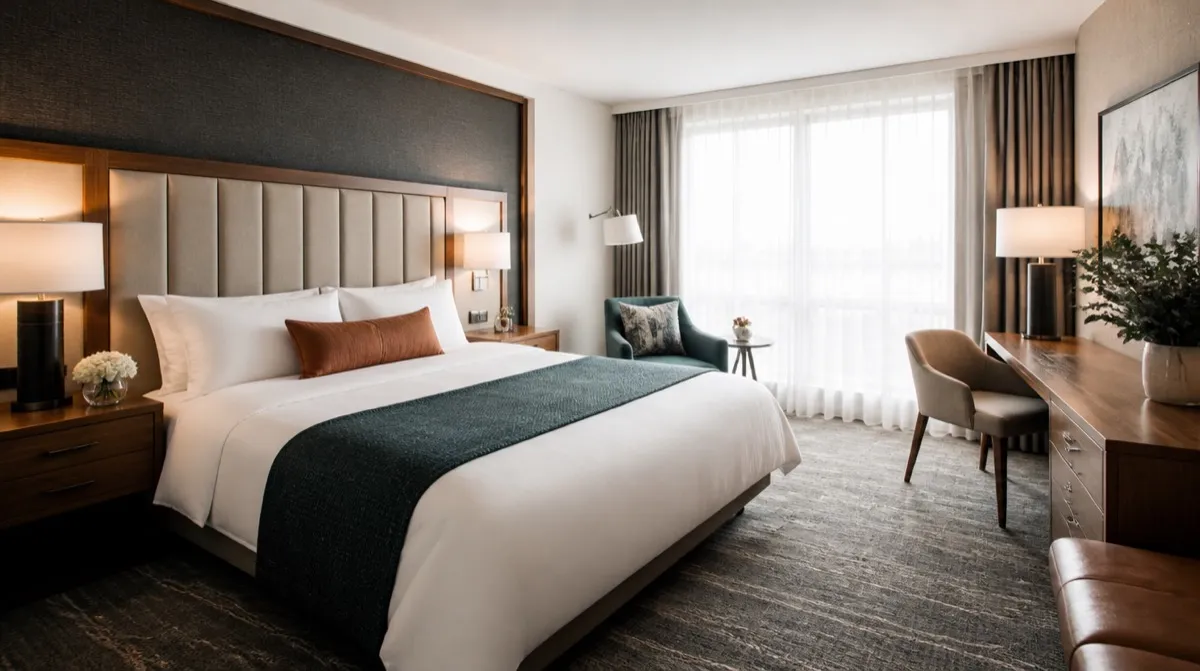
For a branded hotel, obtain the current furniture standards, property-specific improvement plan and applicable approval instructions before requesting a package. Requirements may include dimensions, finishes, performance documentation and supplier restrictions. Confirm which documents and revisions govern your property rather than relying on a prior renovation package.
What does a brand standards manual actually require on furniture?
Build a checklist from the actual manual: required items by room type, dimensions, construction or test references, upholstery requirements and finish codes. BIFMA, Wyzenbeek and flammability references have different scopes; record the exact standard, version and application requested by the brand. Do not assume that every manual requires the same tests or that a test label proves every requirement.
Some brands go further and publish an approved vendor list, meaning furniture must come from suppliers the brand has already vetted. Others publish performance specs only and leave vendor selection to the owner. Knowing which model your brand runs is the first thing to confirm before you request quotes, because it changes the entire sourcing conversation.
Approved vendor lists versus open sourcing
Where a brand mandates vendors, confirm the permitted model and configuration as well as the vendor. Ask about price, minimum quantities, approval status and delivery milestones for that exact package. A vendor's presence on a list does not automatically approve every product it sells.
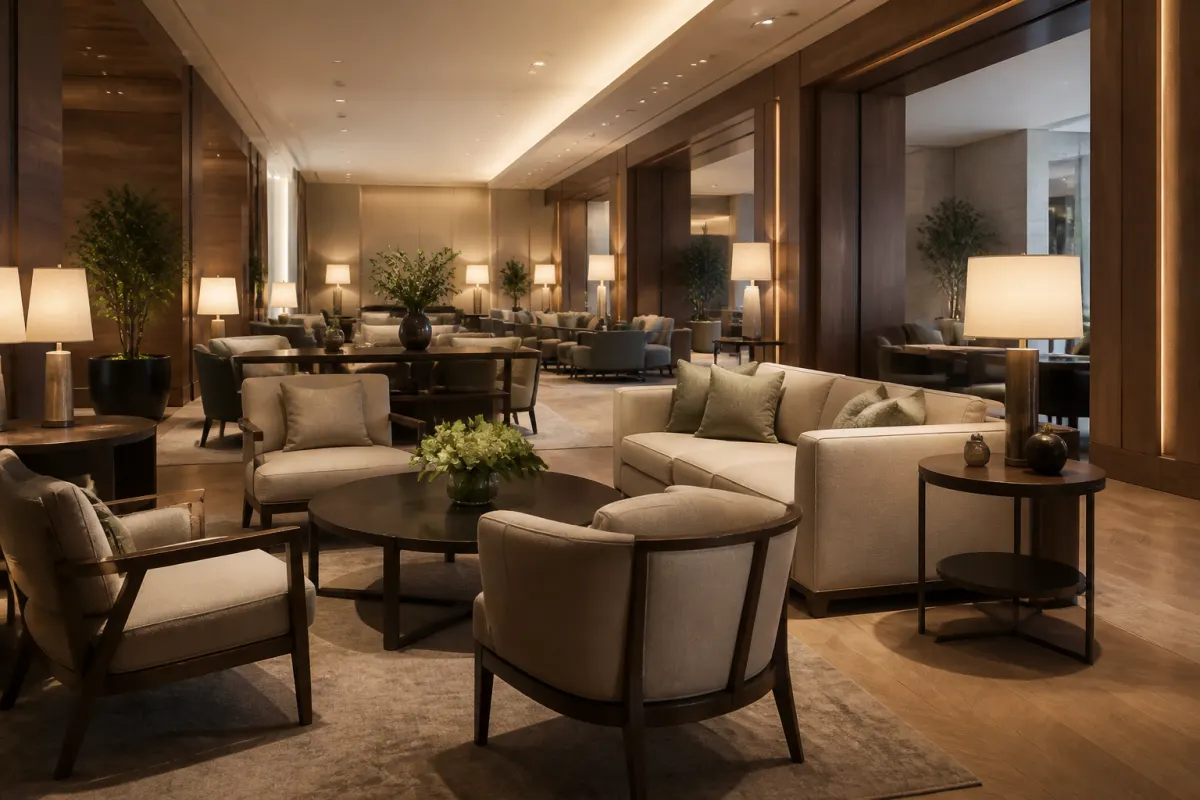
Where open sourcing is allowed, ask the brand what documentation and approval process applies to the proposed supplier and configuration. Compare compliant quotes against the same brief. The hotel furniture page can help organize the categories in a brief; its concept images do not establish an approved or stocked package.
Getting an equivalent product approved
Ask whether an equivalency or deviation submission is required. Follow the brand's current checklist for drawings, finish samples, test documentation, photographs and any mockup. Review may concern design as well as performance, so do not assume test paperwork replaces visual or physical approval.
Confirm the actual review milestones and whether production may begin before written approval. Separate review time, sample time, manufacture, freight and installation in the schedule. The lead time index provides planning context, not a promised brand review or delivery window.
What a brand reviewer actually checks
Use the brand's checklist to confirm coverage by room type, finishes, dimensions, required evidence and any sample or mockup. Verify proposed furniture on the actual room drawings with the project team. For example, an inch of changed dresser depth may affect a clearance; a brand approval does not replace the project's accessibility review.
Headboards may be an important visual part of the package, but approval priorities are brand-specific. Browse headboards as design concepts, then obtain dimensioned drawings, finish samples and actual product documentation for an approval submission.
Coordinating between owner, management company, and brand
On a franchised property, furniture decisions usually run through three parties with different incentives. The owner is watching the capital number. The management company is watching operational disruption and guest experience continuity. The brand is watching consistency across its portfolio. Getting all three aligned before you request quotes prevents the common failure mode where a management company sources a package, the owner approves the spend, and the brand rejects the finish at the eleventh hour.
The fix is sequencing the approval conversation before the sourcing conversation, not after. Confirm brand requirements and any deviation process first, then bring quotes to the owner with brand compliance already documented. This is also where portfolio scale changes the math: if you are running this process across several properties under one flag, our multi property hotel furniture program guide covers coordinating that rollout so each hotel is not solving the approval process independently.
Documenting the buy for the next renovation
Retain finish codes, drawings, test documents, configuration identifiers and the approval correspondence. They provide a reference for future sourcing, but confirm the current manual and product availability at the next renovation; a discontinued model or old approval is not automatic approval for a substitute.
Request a quote with your current requirements and approval checklist so relevant independent suppliers can price a proposed package and identify the documentation they can supply.