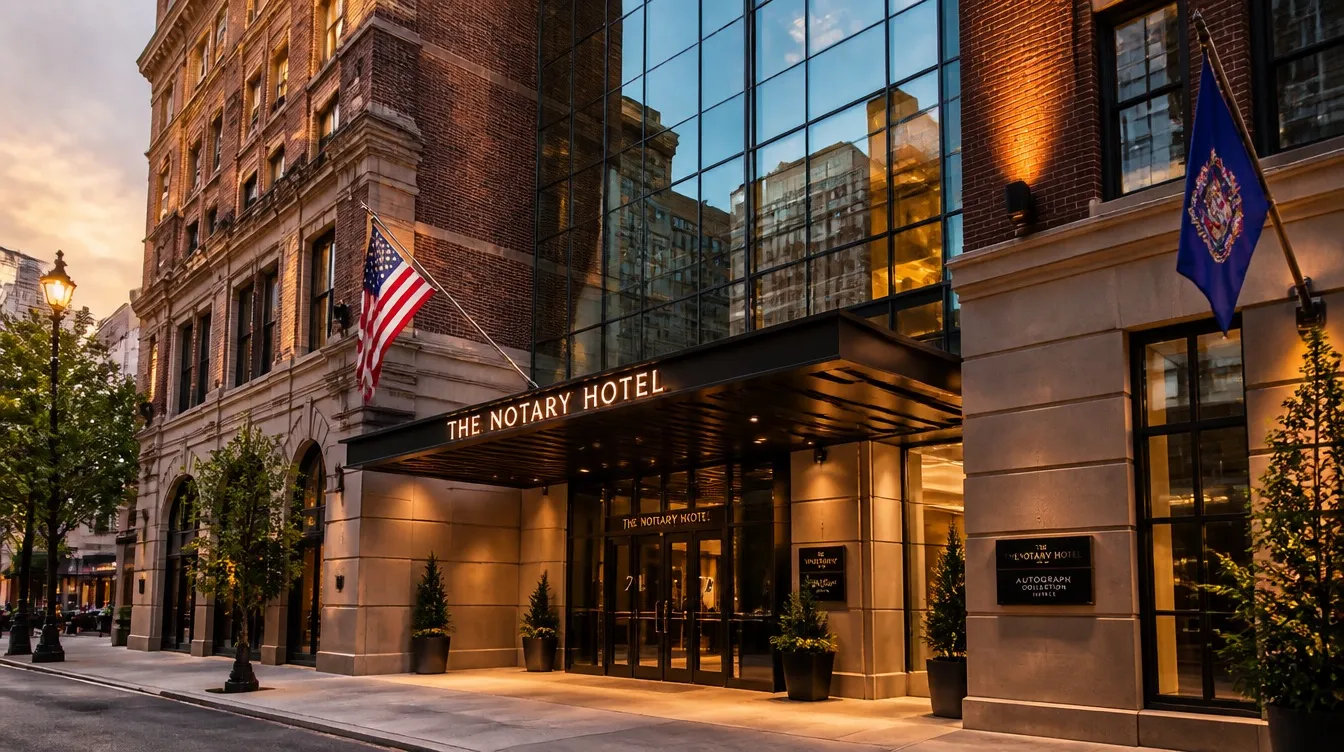
Philadelphia opens new hotel rooms and restaurant seats every year, and almost none of them get furnished the way an outsider would expect. There are no casual showroom visits. No ordering online and waiting for standard delivery. In a city where an Old City boutique hotel occupies three floors of a converted Federal-era building with stairwells that predate the freight elevator by a century, and a Center City restaurant needs furniture that arrives before the Pennsylvania Convention Center pharmaceutical conference calendar blocks every viable renovation window for months ahead, the procurement process has to be deliberate, sequenced, and built around lead times that do not accommodate improvisation. If you are planning a hospitality FF&E project in Philadelphia, understanding the process before you start will save you money, time, and significant operational stress.
What FF&E and OS&E Actually Cover and Why the Distinction Matters
FF&E stands for furniture, fixtures, and equipment: everything not physically attached to the building. In a hotel context, this means guestroom beds, lobby seating, case goods, restaurant tables, bar seating, mirrors, lighting fixtures, and decorative artwork. OS&E operating supplies and equipment covers the operational layer: linens, glassware, cutlery, cleaning supplies, anything a guest contacts during a stay or a meal.
The distinction is not semantic. FF&E items carry long lead times and high capital requirements. A custom lounge chair program for a Rittenhouse Square property might take fourteen weeks from sample approval to delivery. A guestroom casegood program for a 140-key Center City hotel requires production scheduling that starts months before the target installation date. OS&E items are sourced much closer to opening and replenished on a rolling basis. On larger Philadelphia projects, these are managed through completely separate procurement tracks different vendors, different approval chains, different timelines. Conflating the two in early budget planning is one of the fastest ways a project runs over budget before a single piece arrives on site.
How FF&E Procurement Philadelphia Projects Get Organized
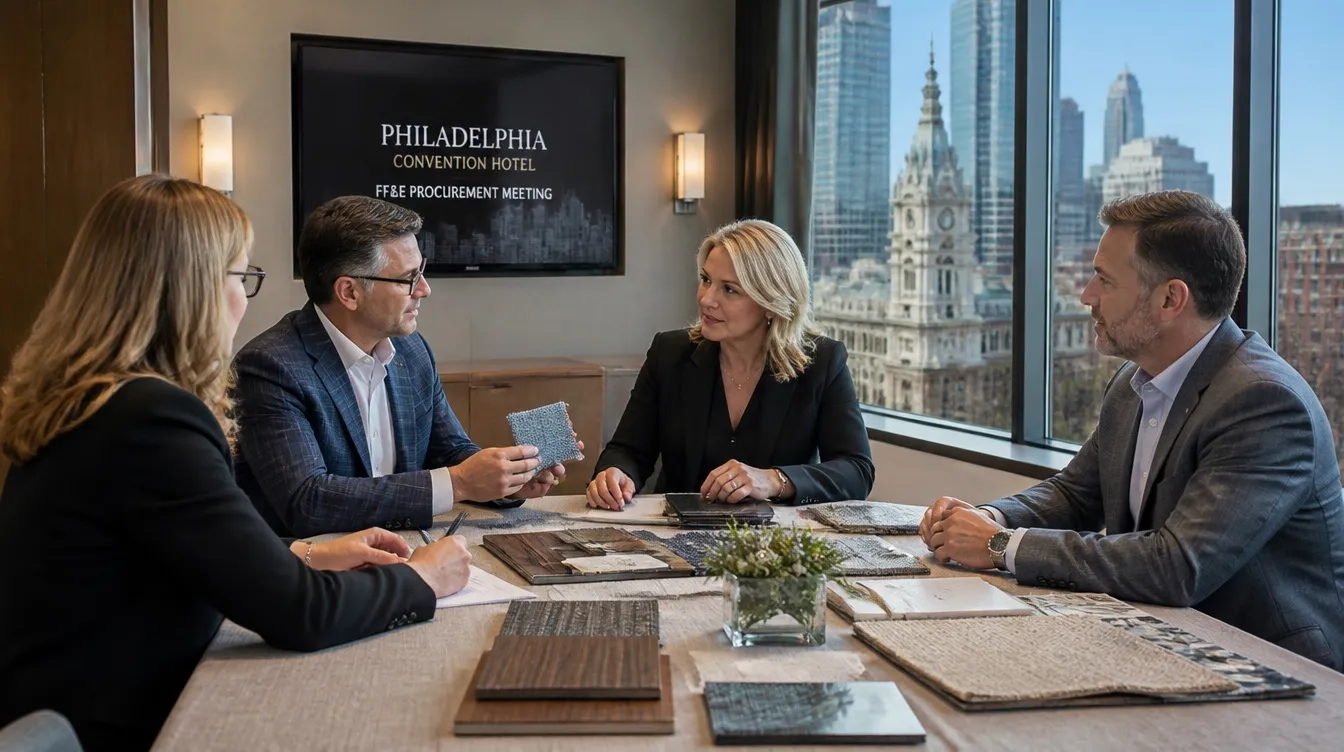
FF&E procurement Philadelphia projects typically involve three parties working in close coordination: the interior designer, the procurement agent or purchasing company, and the hotel or restaurant operator. On smaller boutique projects in Old City or Fishtown, one person often wears two of those hats. On a full-scale Center City hotel renovation or a flagship Rittenhouse Square restaurant opening, each role is held by a separate firm.
The designer specifies what the space needs dimensions, finishes, quantities, design direction. The procurement agent translates those specs into purchase orders, manages vendor relationships, and tracks lead times without gaps. The operator approves budgets and makes the final call when trade-offs arise, and they always arise.
Philadelphia's convention center calendar adds a scheduling pressure that most other markets do not share at the same intensity. The Pennsylvania Convention Center runs a dense conference program for pharmaceutical, biotech, and healthcare industries year-round GSK, Merck, and major healthcare systems including Penn Medicine, Jefferson, and Children's Hospital of Philadelphia send delegates through Center City hotels on a consistent schedule. A renovation targeting completion before a major convention block is working against a hard deadline that does not move. Procurement agents who have worked in Philadelphia build those calendar constraints into the scheduling framework from the first week. Those who have not learn about them when it is too late to adjust.
Procurement Timelines and Philadelphia-Specific Constraints
A typical full-property hotel FF&E procurement timeline runs 18 to 24 months from initial design brief to final punch list. Restaurant projects can move faster sometimes 9 to 12 months but custom upholstered pieces and case goods still need 10 to 16 weeks of lead time from final approval, and that clock does not start until every finish and fabric is signed off.
Philadelphia compounds the standard timeline with two local constraints that out-of-market operators consistently miss. First, historic building access. An Old City property may require furniture to be hand-carried through a 30-inch doorway and up a stairwell that was built in the 18th century. A Center City boutique hotel in a converted Victorian commercial building may have a service entrance accessible only through a shared loading zone with restricted hours. Pieces specified at standard hospitality dimensions may not fit through the actual openings. These are not rare situations in Philadelphia's historic building stock they are the norm for Old City and parts of Center City, and they require documentation and planning before purchase orders are placed.
Second, seasonal window constraints tied to both the convention calendar and major sports events. Philadelphia's Eagles and Phillies postseason runs are unpredictable but can be extremely disruptive to renovation timelines a hotel that planned a lobby refresh during what it expected to be a quiet October may find the city fully booked and its contractor crews diverted. Planning around those contingencies, rather than hoping they do not occur, is what separates experienced Philadelphia hospitality procurement from optimistic procurement.
What the Budget Typically Covers
FF&E procurement Philadelphia budgets vary significantly by property type and neighborhood. A limited-service hotel in University City or along the Broad Street corridor might allocate $8,000 to $14,000 per key. A boutique Center City property pursuing a design-forward identity custom case goods, statement lobby pieces, a curated art program can run $30,000 to $55,000 per key when fabrication time and installation complexity are factored in. An Old City historic conversion at the luxury boutique tier can exceed that range when the building's historic features demand bespoke furniture solutions.
Restaurant FF&E budgets are typically quoted per seat. A Fishtown casual concept might run $700 to $1,500 per seat depending on booth versus open seating ratios and custom millwork scope. A Rittenhouse Square white-tablecloth dining room with custom banquettes and handcrafted tables can exceed $4,500 per seat when fabrication and installation complexity are fully accounted for.
What these budgets cover: all furniture, fixtures, artwork, mirrors, window treatments, and decorative lighting. What they do not cover: built-in millwork (construction budget), kitchen equipment (separate equipment package), and technology infrastructure. Getting clarity on those boundaries at the project start is what separates a smooth Philadelphia FF&E project from a chaotic one.
Pricing for FF&E in Philadelphia depends on quantities, finishes, and your delivery window, so a project-specific quote beats any list figure. Request a quote to get yours.