
The office chair you buy for a home study and the office chair you buy for a floor of forty people are not the same product, even when they look identical in a catalog. One is used by one body a few hours a day. The other is used by whoever sits down, all day, every workday, for years, and it gets rolled, reclined, and cleaned far harder than any home chair ever will. Contract office furniture is built for that shared, high-cycle reality, and buying retail office product for a real facility is one of the most expensive shortcuts a buyer can take.
This guide covers what separates contract office furniture from retail, zone by zone. For the wider category, the contract furniture buyer's guide has the fundamentals.
Why shared use changes everything
Retail office furniture is engineered around a single owner who treats it gently. Contract office furniture is engineered around anonymous, continuous use. That difference drives the spec.
Task chairs take the hardest beating. In a facility, the same chair may be adjusted, reclined, and rolled by different people every day, and the mechanism that fails first is always the one that moves. Contract task seating uses heavier-duty gas cylinders, reinforced control mechanisms, and casters and bases rated for constant cycling, with warranties that assume multi-shift use. A retail chair's tilt and lift mechanisms are rated for a fraction of that duty and give out early. Desks and worksurfaces take daily loading, edge wear, and cleaning chemicals, so contract casegoods use banded edges, durable laminates, and frames that do not rack when someone leans on them.
The tell, as always in contract furniture, is the warranty. Contract office product carries warranties that explicitly cover commercial and often multi-shift use. A residential-style warranty on a chair sold for an office is a signal that the product is not built for the duty you are about to put it through, and residential warranties frequently void the moment the product is used commercially.
Task seating: the highest-leverage decision
Because people spend the most hours in it and it wears the fastest, task seating deserves the most scrutiny in an office package. Look at the cylinder and the control mechanism first, since those are the moving parts that determine lifespan. Confirm the base and casters are rated for the flooring, hard casters for carpet and soft casters for hard floors, because the wrong caster damages the floor and drags. Check the upholstery against the traffic, and verify the fabric or mesh carries a commercial double-rub rating rather than a residential one. You can pressure-test a specific textile with the fabric durability checker before it goes into the spec.
Match the chair to the role. Heads-down workstations, shared touchdown desks, conference rooms, and reception each have a different use pattern, and buying one chair for all of them over- or under-specifies most of them. Browse desk chairs with the seat count and use pattern of each zone in mind rather than picking a single model for the whole floor.

Desks, casegoods, and the rest of the floor
Beyond seating, an office package is casegoods and worksurfaces, and the contract-versus-retail line runs through construction. Contract desks and worksurfaces use durable laminate tops, banded edges that resist chipping, and steel or reinforced frames that stay square under daily use. Flat-pack retail desks with particleboard cores and cam-lock joints loosen and sag under shared use, and once a worksurface starts to rack it does not recover.
Think in zones rather than pieces. Workstations and private offices, meeting and conference rooms, reception and waiting areas, and breakrooms each have a different durability and finish requirement, and specifying by zone keeps you from buying one grade for everything. Reception and conference rooms are seen by visitors and justify finish investment, while heads-down workstations justify durability over show. The commercial office furniture guide goes deeper on outfitting a full floor.
Buying for a facility, not a room
The reason facilities buy contract rather than retail is not just durability, it is the math of replacement and consistency. When you furnish forty workstations, a small per-chair defect or an early mechanism failure multiplies across the whole floor, and mismatched replacements from a discontinued retail line leave a floor looking patchwork within a year or two. Contract programs are built to be reordered, so a chair that wears out in year three can be matched, and volume buying gets a better number than picking up retail chairs a few at a time.
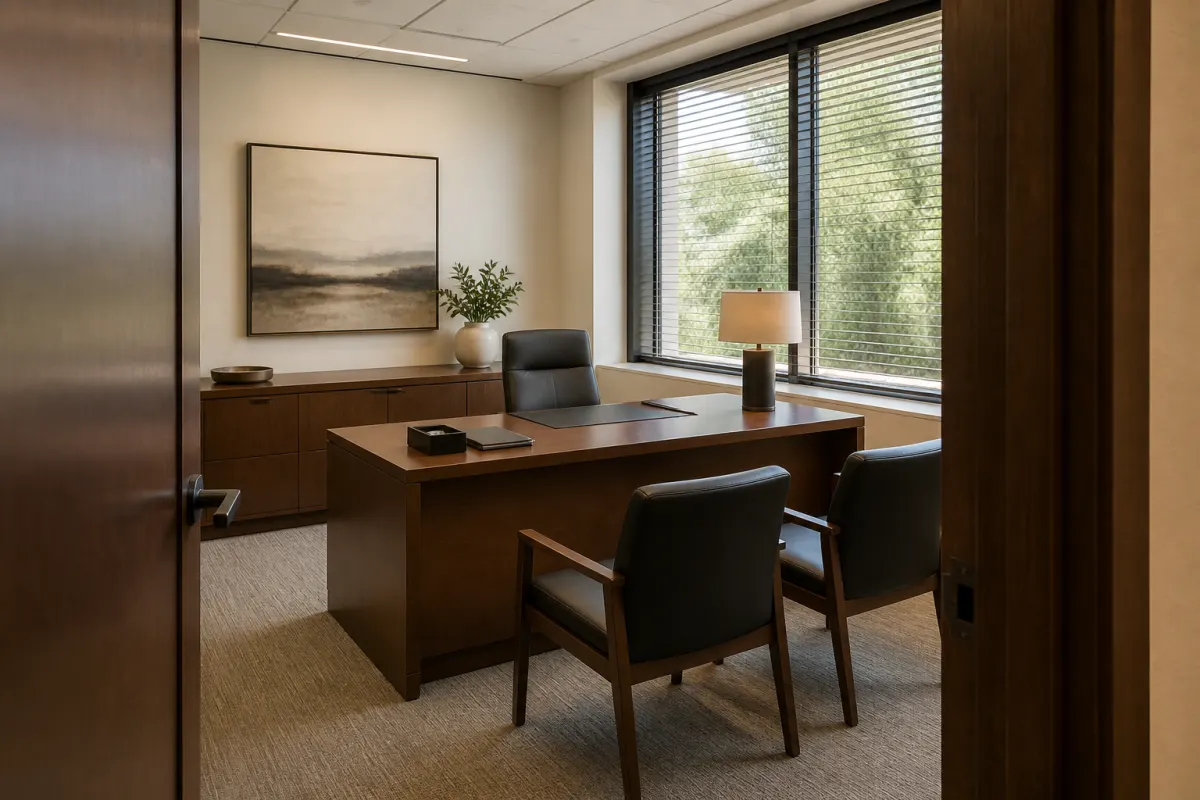
That reorder path is worth protecting. Standardizing on a spec you can buy again, from a supplier who will still carry it, turns office furniture from a one-time purchase into a maintainable program. It is the same logic that governs the rest of contract furniture, and it is why consolidating the buy with one accountable supplier beats splitting it across whoever is cheapest this quarter.
Getting an office package priced
Contract office furniture is quote-driven, so the real number depends on quantities, finishes, the mix of task versus casegoods, freight, and installation. To get a real one, bring a real spec: a seat and workstation count by zone, your finish and fabric selections, and your target move-in date. Request a quote with that in hand and you will get a plan built around actual production and freight rather than a generic estimate, with a timeline tied to your move-in rather than a guess.