A single boardroom order is simple: pick a chair, order 12, done. Buying conference room chairs in bulk for a corporate headquarters, training center, university, or coworking portfolio is a different problem entirely. You are outfitting dozens of rooms that get used in different ways, from executive meetings to all-day training sessions to reconfigurable breakout spaces, and the wrong chair spec multiplies across every room you buy it for.
At volume, compare the quoted quantity pricing, complete construction, upholstery, and handling requirements, and you need to decide upfront whether these chairs live in fixed conference rooms or move between training and meeting configurations. Get that decision right before you request pricing, because it determines whether you are buying a task-style conference chair or a mobile training chair with a documented nesting or stacking arrangement.
Fixed conference chairs vs mobile training and nesting chairs
Most bulk buyers land in one of two categories, and mixing them up leads to complaints within the first year.
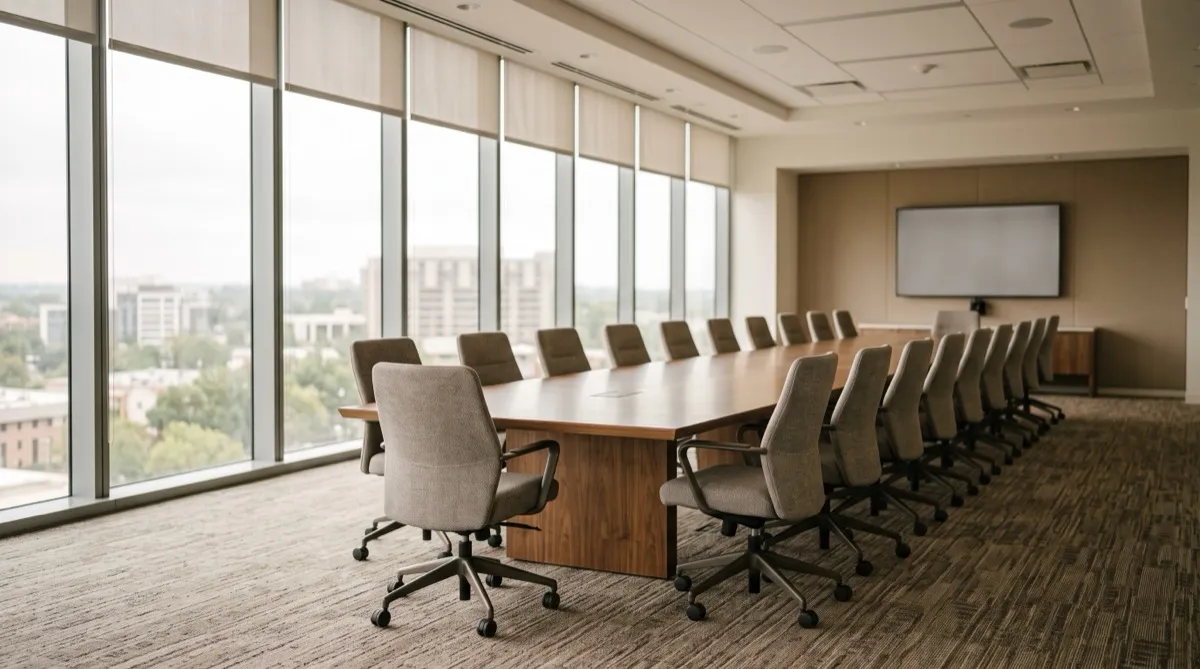
Fixed conference chairs are built for boardrooms and standard meeting rooms that keep the same layout day to day. They typically run on a swivel base with casters, offer some tilt and height adjustment, and prioritize comfort for meetings that run an hour or more. These are the right call for executive suites, standing conference rooms, and client-facing spaces where the room configuration rarely changes.
Nesting and training chairs are built for spaces that get reconfigured constantly: training centers, universities, conference centers, and coworking portfolios that flip a room from a boardroom setup to a classroom setup to an open floor in the same week. Some models nest horizontally, often with a flip-up seat; other models stack vertically. Check the actual model’s mechanism, approved storage arrangement, dimensions, and handling instructions. Casters can help with room resets, but compare the loaded storage footprint and route rather than assuming nesting always takes less space than stacking. If your portfolio includes shared training rooms or multi-use event space, compare mobile nesting models with stacking alternatives using actual setup trials, storage measurements, and staff handling needs before deciding which saves labor.

What bulk pricing actually looks like
Ask bidders for the same quantity, configuration, use documentation, and delivery scope. A retail or direct-supply channel does not establish product quality or guarantee a volume discount. Compare the proposed frame, casters, upholstery, test evidence, and warranty alongside the price.
The dollar figures below are illustrative unit allowances for an early budget. Confirm currency, configuration, quantity, freight, tax, and installation scope in a current quote. For a basic steel-frame stacking or nesting-chair scenario, test $45 to $90 per unit. For an aluminum-frame scenario, test $70 to $130. These inputs do not establish prices for casters, upholstery, or a particular model; compare itemized configurations and actual handling weights. These examples are not current supplier prices or an inventory offer. If you are outfitting a multi-floor office or a chain of training centers, get your total unit count across all locations into one quote request rather than ordering room by room, with counts, configurations, and delivery requirements for each site.
Freight, lead times, and what to have ready
Bulk conference chair orders ship LTL or full truckload depending on total volume, and the actual freight cost depends on your delivery zip code, whether the site has a loading dock or needs a liftgate, and whether the address is a commercial dock or a limited-access site like an office tower with a shared freight elevator. Have those delivery details ready before you request a quote, because they change the freight number significantly and a supplier can only give you an accurate landed cost once they know them.
As an initial scenario, test 2 to 6 weeks for a stocked configuration and 8 to 14 weeks for custom fabrics or finishes. Confirm stock and separate approval, production, transit, and delivery dates for the actual model; these ranges are not guaranteed schedules. If you are coordinating a phased office buildout or a training center opening on a fixed date, order the custom-finish chairs first and treat the in-stock options as your buffer for rooms that can flex on timing.

What to check before you place a volume order
Before committing to a large conference or training chair order, confirm a few things in writing. For a stacking chair, confirm the manufacturer’s maximum stack count, stability requirements, and compatible cart. For a nesting chair, confirm the permitted row arrangement, seat operation, and storage footprint. Do not apply a vertical stacking instruction to a model intended to nest horizontally. Confirm the frame gauge and weld quality, and ask for a stated weight rating. If the chairs use casters, ask whether they are rated for the flooring you have (hard floor casters and carpet casters are not interchangeable). For upholstered seats, ask for the fabric's double-rub count; anything getting daily institutional use should be rated well above light-office fabric. Ask about the warranty terms in writing rather than assuming, and request a sample chair before committing to a full order of 100 or more, since a sample lets your team physically test the nesting mechanism and sit comfort before it is locked into a purchase order. Finally, confirm floor protection glides or casters are included standard rather than sold separately, since that is an easy line item to miss on a large quote.
Getting a quote
Once you know your room mix, fixed versus mobile, unit counts and delivery details, request a quote with the item, quantity, finish, delivery zip code and timeline for relevant independent suppliers to review. Include each site's room and receiving requirements so suppliers can itemize configurations, pricing and delivery scope. If you are still scoping budget, use the furniture cost calculator to test allowances before replacing them with quoted terms. Browse conference and meeting seating and tables as visual concept references, then confirm the actual model, nesting or stacking documents and availability with the supplier.