West Palm Beach has a patio advantage most markets do not get, and it comes with a real cost if you spec it wrong. Unlike a Northern city with a short outdoor window, South Florida runs a near year-round patio season, which means outdoor furniture here works harder, longer, and under more consistent exposure than almost anywhere else in the country. Operators running serious outdoor programs downtown near Clematis Street, along the Intracoastal Waterway hotel corridor, or on Palm Beach Island know the real challenge is not a short season, it is salt air, relentless UV, humidity, and a hurricane season that can turn a mediocre spec into an expensive lesson in a single storm.
The operators who get commercial patio furniture in West Palm Beach right are treating outdoor seating as a year-round revenue driver with specific corrosion resistance, UV durability, and storm readiness requirements that are different from what you would spec for a market with real winters. Getting that specification right the first time is the difference between a patio program that earns back its cost across many strong seasons and one that needs frames replaced after two hurricane seasons.
Salt Air and Humidity Demand More, Not Less
The common assumption is that a longer outdoor season means furniture just needs to be durable in a general sense. West Palm Beach's coastal position says otherwise. Salt air off the Atlantic and the Intracoastal Waterway is corrosive to lower-grade metal in a way that inland markets never have to plan for. Furniture that is not rated for that exposure, whether that means proper alloy grade, powder coat thickness, or hardware selection, starts pitting, staining, and corroding within a season or two.
Sun exposure is the second factor that catches operators off guard. South Florida's UV intensity is high nearly year round, not seasonal the way it is further north. A powder coat finish that would hold its color for years in a milder market can show visible fading and chalking here within a couple of seasons if the topcoat's UV inhibitor content was not specified correctly.
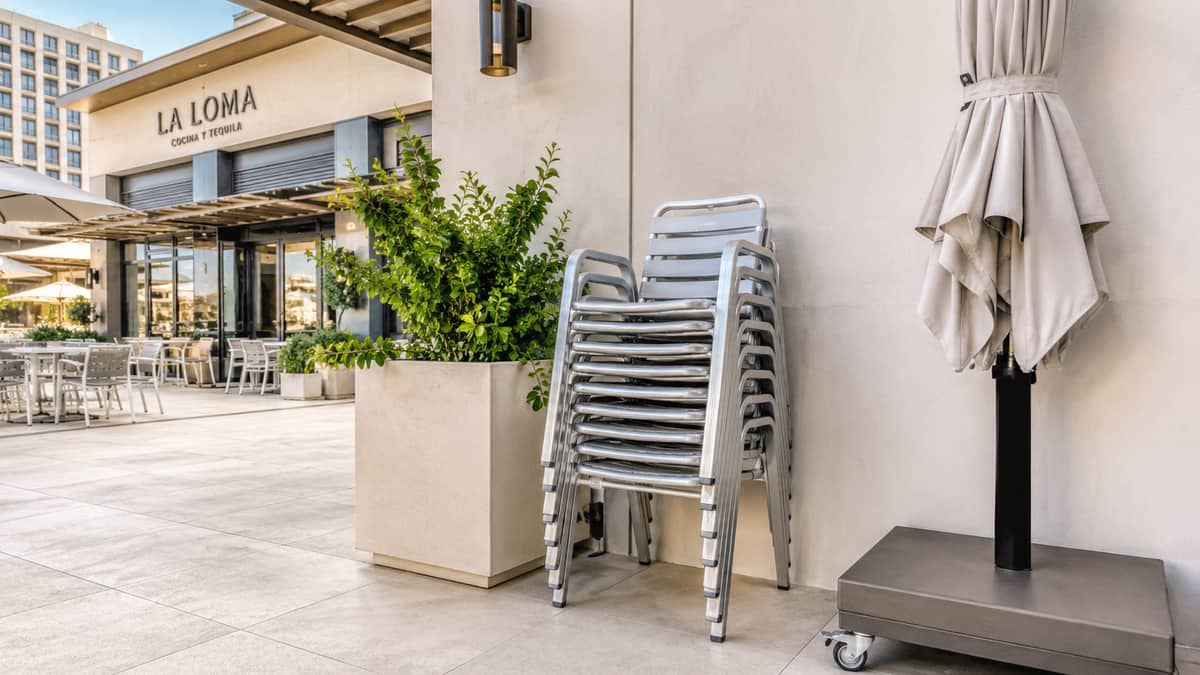
Then there is hurricane season itself, roughly June through November. Furniture that is not designed to be quickly stacked, stowed, or secured becomes a liability risk during storm prep, and frames not built to a genuinely commercial standard do not survive repeated storm cycles even when properly stored.
What Downtown, the Intracoastal Corridor, and Palm Beach Island Require
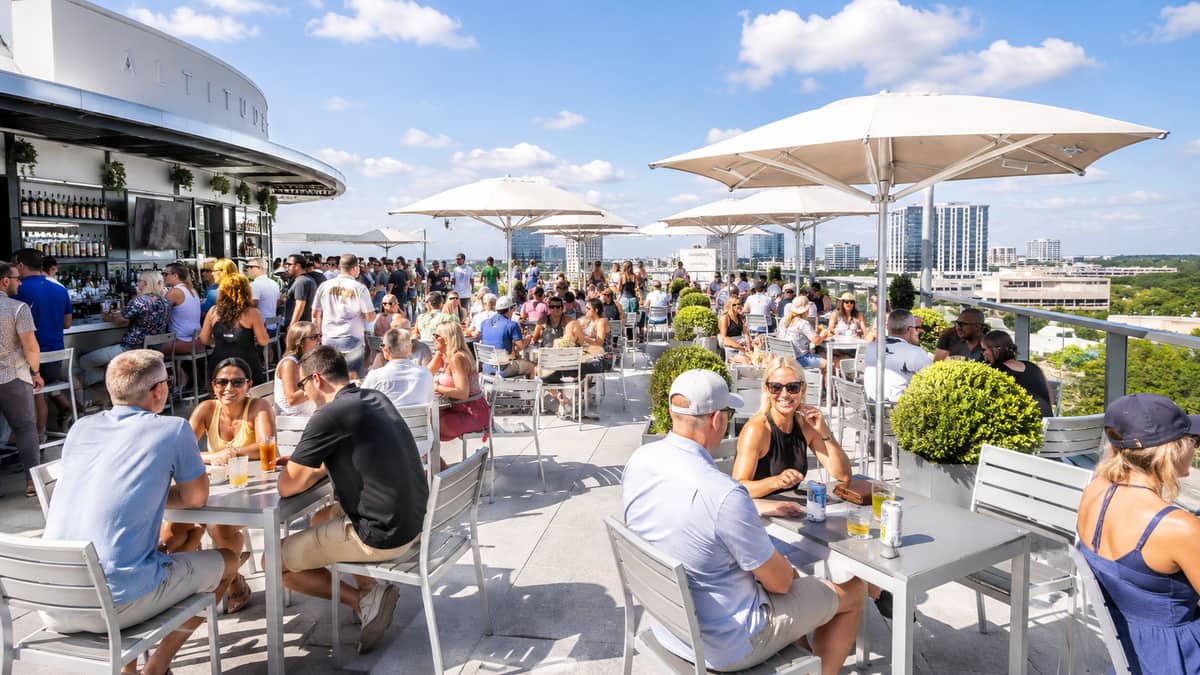
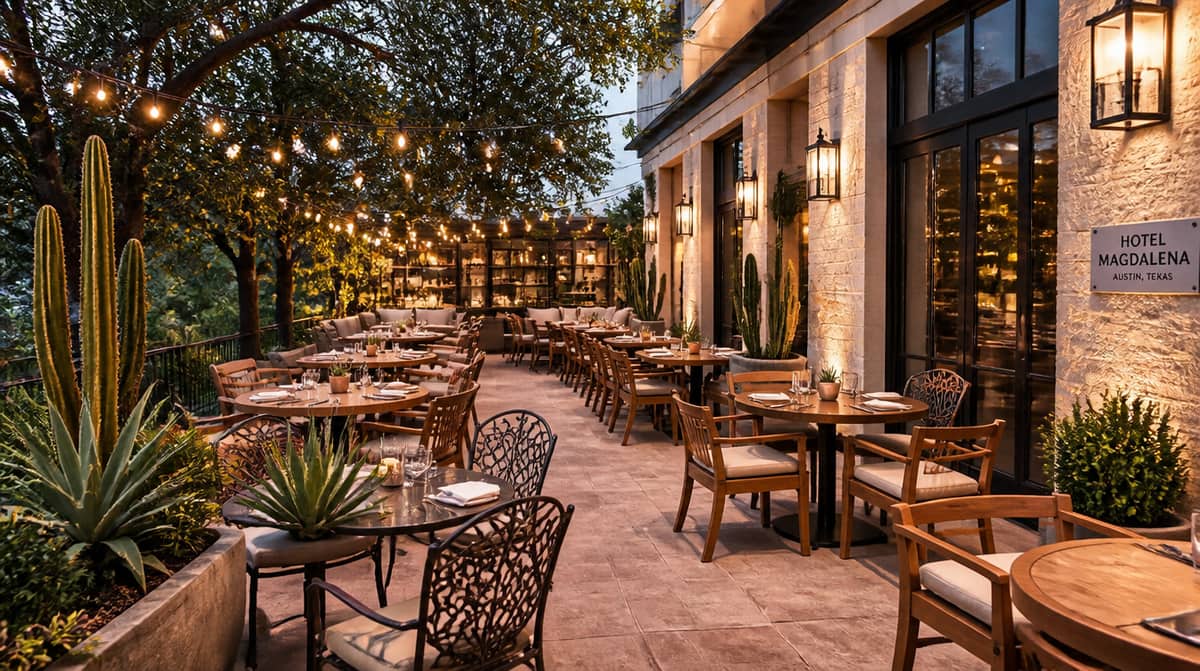
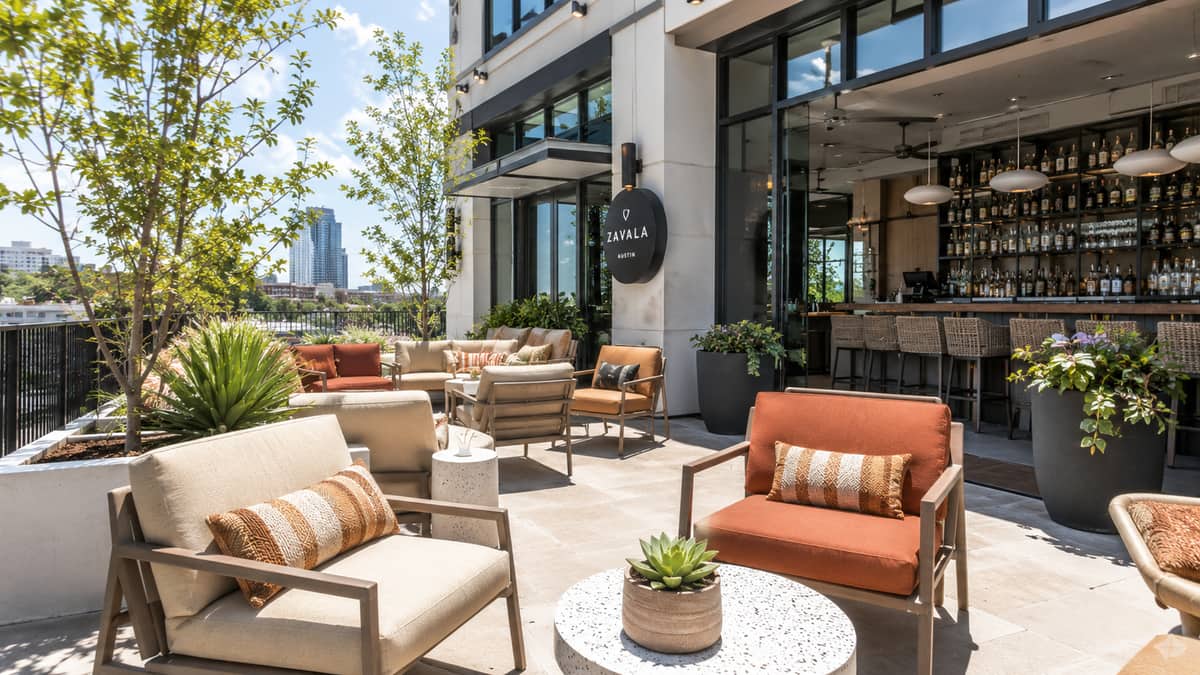
West Palm Beach's patio market is not uniform. Downtown, centered on Clematis Street and Rosemary Square, has built a genuine restaurant and bar scene where furniture needs to read as intentional against a walkable, design-conscious backdrop. The Intracoastal Waterway hotel corridor operates on a different logic, with pool decks and waterfront patios that need to perform for a guest base staying through a long snowbird season and expecting a competent, comfortable outdoor amenity. Palm Beach Island, just across the water, holds the market's highest design bar, where furniture needs to match resort-level finish standards while still surviving the same salt and sun exposure as everywhere else in the metro.
Wind, UV, and Fabric: Getting the Spec Right in South Florida
Fabric specification deserves more attention than most operators give it before their first hurricane season. Solution-dyed acrylic, with Sunbrella as the industry benchmark, is the right base specification for any uncovered or partially covered West Palm Beach patio. The color is embedded through the fiber rather than applied to the surface, which is why it resists the fading that intense coastal UV causes in surface-dyed fabrics within a season or two. It also cleans easily, which matters when salt spray and humidity leave cushions needing a wipe-down constantly.
Foam density is where budget programs fail quietly. Standard 1.8 lb density foam compresses and traps moisture faster under South Florida's humidity and constant sun exposure. Commercial-grade foam in the 2.0 to 2.5 lb range with a higher ILD rating holds its profile through a full year of steady traffic and survives being stacked or covered ahead of a storm without permanent compression.
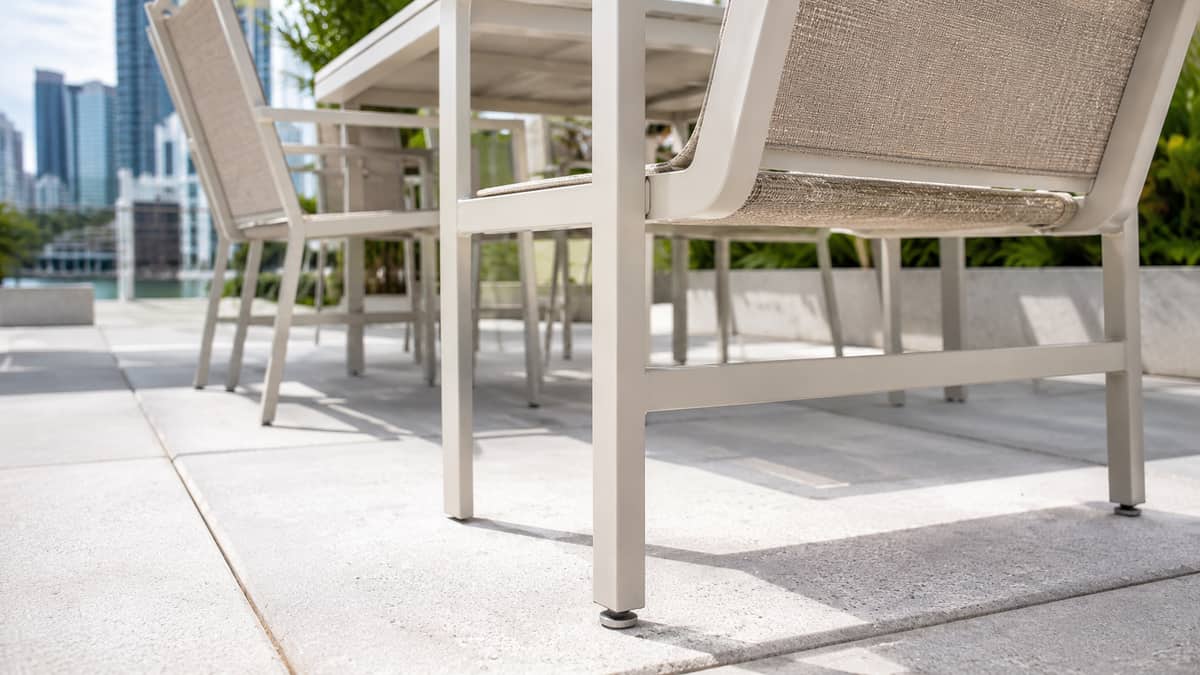
For frame material, commercial-grade aluminum at 1.5mm wall thickness minimum is the right starting point for a West Palm Beach hospitality application. Lighter consumer-grade frames are simply not built for a location where salt exposure and periodic storm conditions are routine, not an edge case.
The Revenue Math on Quality Commercial Patio Furniture
West Palm Beach's near year-round outdoor season means every patio day carries real revenue weight, and the lifecycle math on furniture quality reflects that. A commercial aluminum dining chair properly specified for South Florida's coastal exposure and maintained through hurricane season lasts many years in active service. A lighter-duty or consumer-style chair bought to save money upfront often needs partial replacement within two seasons once corrosion, sun fading, and storm exposure take their toll.
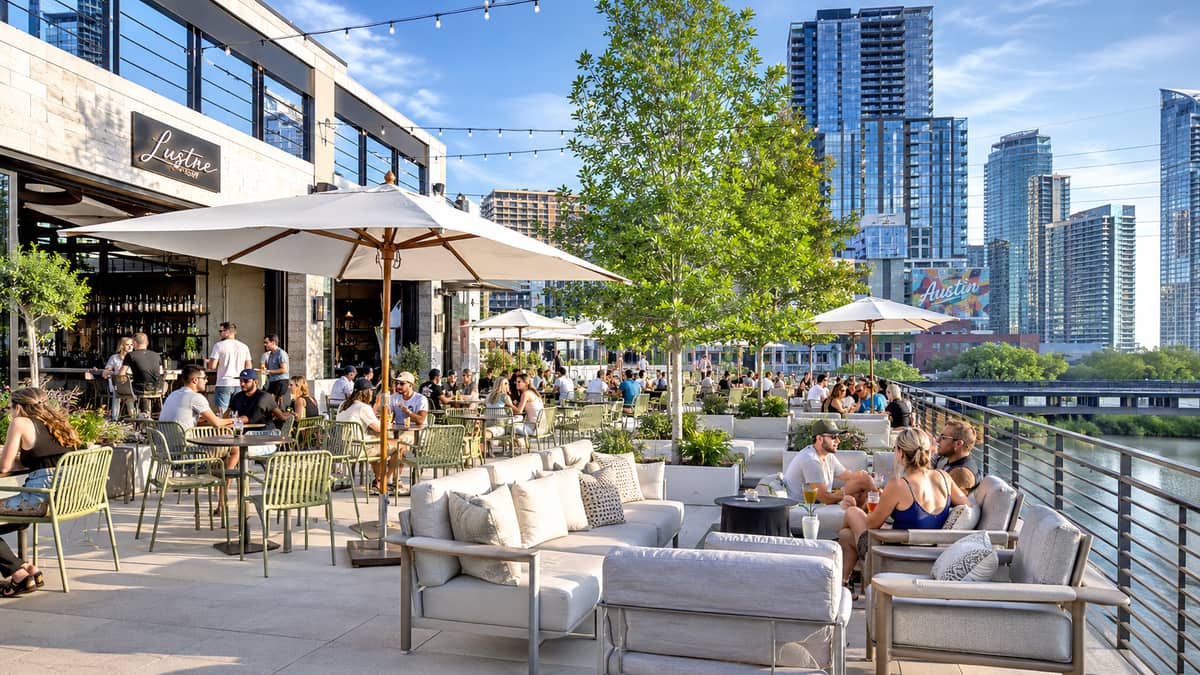
The right approach to commercial patio furniture in West Palm Beach is to specify for salt, sun, and storm exposure honestly, match the aesthetic to the setting, whether that is downtown's walkable energy or the Intracoastal corridor's resort-adjacent calm, and buy for the full multi-year lifecycle rather than the opening day cost. Talk to a specialist before your outdoor build-out locks in the wrong spec.