Virginia Beach has a patio problem, and it is not the one most operators plan for. The instinct walking into a Virginia Beach furniture project is to spec for sun and heat, since the boardwalk economy runs on outdoor seating from Memorial Day through Labor Day. Heat matters, but the operators who have kept programs running along the Oceanfront, through Town Center, and out at Sandbridge for multiple seasons know the real adversary is salt air. Virginia Beach patios sit directly on the Atlantic, and the same onshore breeze that guests pay a premium to enjoy is steadily corroding hardware, pitting cheap finishes, and shortening the useful life of any frame that was not specified for a marine environment.
The operators who get commercial patio furniture in Virginia Beach right are not treating outdoor seating as a seasonal amenity to refresh every few years. They are treating it as a coastal hospitality program with durability, comfort, and corrosion requirements that differ meaningfully from what you would spec for Richmond or even nearby Norfolk once you cross into direct salt exposure. Getting those specifications correct at the outset is the difference between a patio program that earns its return over eight years and one that needs a partial rebuild after two summers on the boardwalk.
Virginia Beach's Coastal Climate Actually Requires More, Not Less
The standard assumption is that a mid-Atlantic beach town gets an easier climate than a true subtropical market, since Virginia Beach sees real winters and does not deal with year-round heat. That assumption misses what actually damages outdoor furniture here. The city's exposure to salt-laden air off the Atlantic is the dominant durability factor, and it does not pause for winter. Chloride ions carried on the sea breeze settle on any exposed metal, and where a powder coat finish has a weak spot at a weld or a fastener, corrosion starts within a single season rather than several years. An operator who buys furniture rated for a generic "outdoor" spec sheet without a documented salt-spray test result learns the difference the first winter the frames sit through nor'easters with sustained onshore wind.
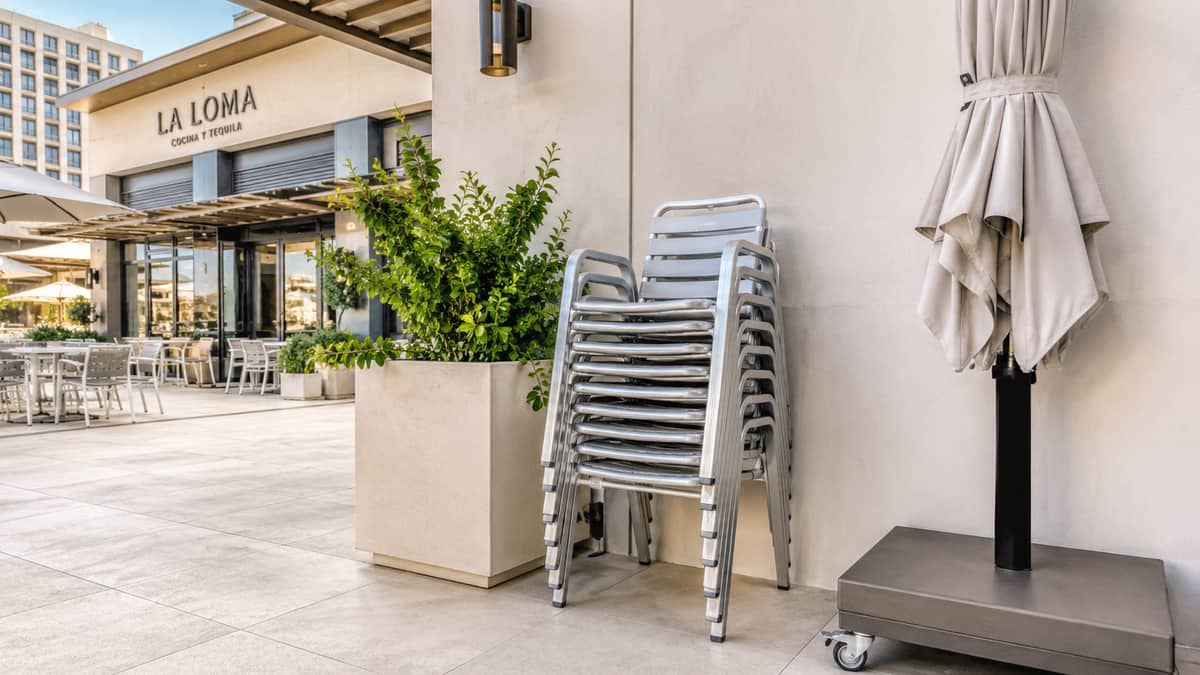
Summer brings its own demands on top of the corrosion issue. Virginia Beach summers run hot and humid, with UV exposure strong enough to fade unprotected finishes and fabrics within a couple of seasons. Hurricane season, running roughly June through November, adds tropical storm systems and occasional direct hurricane threats that bring driving rain and wind loads most inland markets never plan for. Furniture programs along the Oceanfront need stackability or secure storage protocols built into the operation, not as an afterthought when a storm watch is issued with two days' notice.
Then there is the freeze-thaw cycle that does still show up most winters, even if briefly. Virginia Beach gets hard frosts and the occasional ice event, and that moisture cycling into a finish already compromised by salt exposure accelerates failure faster than either factor alone would. The hotels and restaurants running serious outdoor programs near the Virginia Beach Convention Center and along General Booth Boulevard understand that a marine-grade finish is not a marketing upsell, it is the baseline spec for a coastal property that wants furniture to survive more than a couple of tourist seasons.
What the Oceanfront, Town Center, and Sandbridge Actually Require
Virginia Beach's patio market is not one market, it is several with different guest expectations and different exposure levels. Furniture that performs correctly at a Sandbridge beach house rental deck reads as wrong at a Town Center rooftop lounge, and neither matches what an Oceanfront boardwalk hotel needs. Specifying commercial patio furniture in Virginia Beach without matching the program to both guest profile and salt exposure is how operators end up with furniture that is technically durable but visually and functionally mismatched to the space.
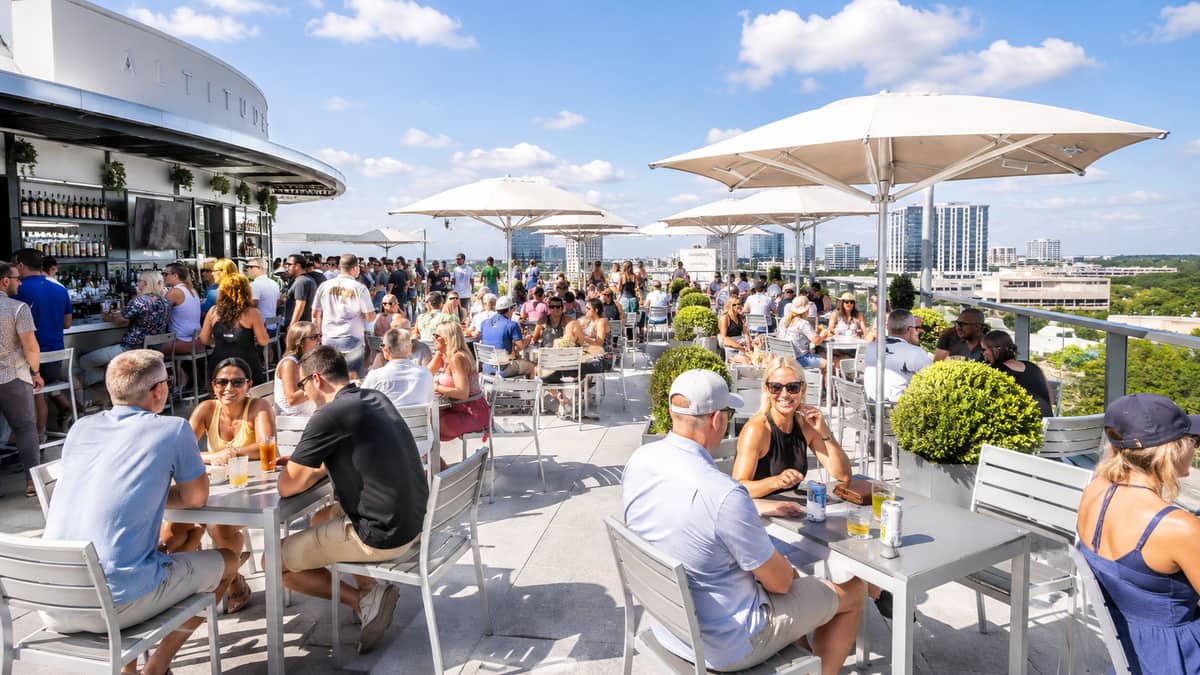
The Oceanfront corridor, from 1st Street up through the resort strip near 31st Street, is the highest-exposure, highest-volume market in the city. Hotel pool decks and boardwalk-facing restaurants here need the most aggressive marine-grade specification available, because these properties sit closest to the salt spray and see the heaviest tourist-season traffic. Guests here expect a resort-casual aesthetic, comfortable enough for long lounging sessions but durable enough to survive daily cleaning protocols and constant sun.
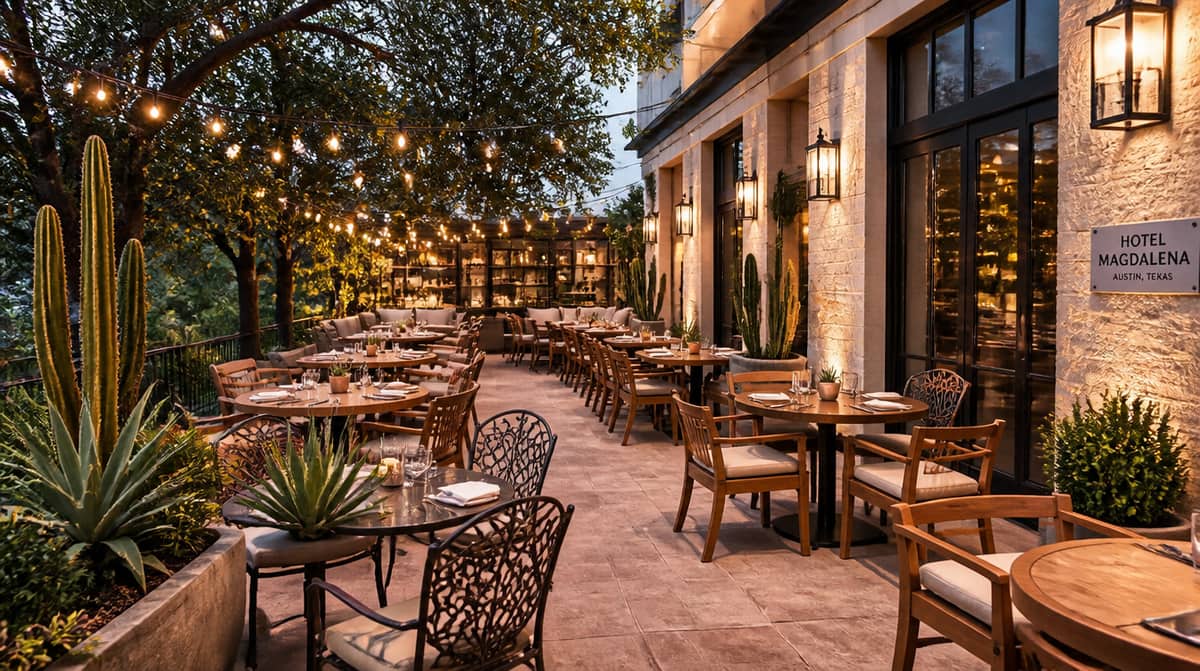
Town Center is a different market entirely. This is Virginia Beach's urban core, with rooftop bars and restaurant patios that serve a business and local dining crowd rather than beach tourists. Design expectations lean more toward Midtown-style sophistication, cohesive frame finishes across dining and lounge pieces, and bold upholstery choices that would feel out of place at a family-oriented boardwalk hotel. Salt exposure is lower here since Town Center sits several miles inland, which opens up finish options that would not survive a season at the Oceanfront.
Sandbridge and the quieter southern beach communities operate on yet another logic. The furniture programs here serve vacation rental clusters and smaller hospitality operations rather than large hotel chains, and the aesthetic rewards a relaxed, coastal-cottage feel over a polished resort look. Durability still matters enormously given direct beach exposure, but the design language should feel understated rather than corporate.
Salt, Sun, and Fabric: Getting the Spec Right on the Coast
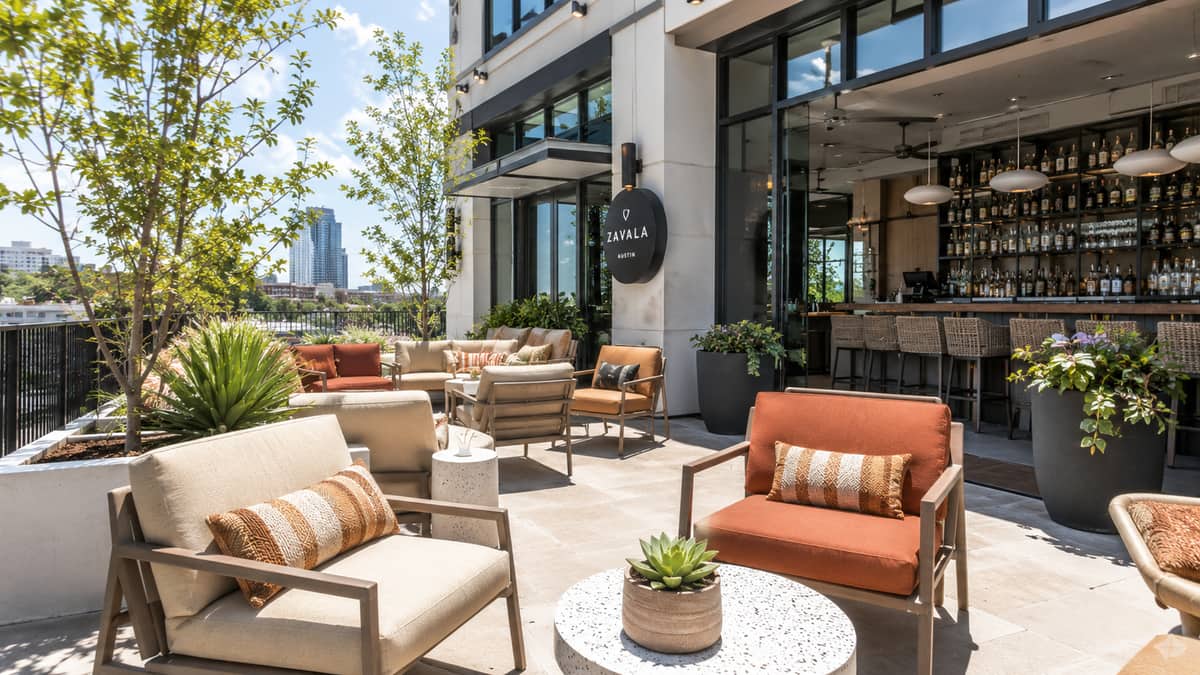
Fabric specification in Virginia Beach deserves more scrutiny than most operators give it before their first season. Solution-dyed acrylic, with Sunbrella as the industry benchmark, remains the correct baseline for any uncovered or partially covered coastal patio. The color is embedded through the fiber rather than applied to the surface, which is why it resists both UV fading from the summer sun and the salt residue that settles on fabric near the Oceanfront. It also handles diluted bleach cleaning, which matters more here than in an inland market because salt air combined with humidity creates mildew conditions on any fabric not built to resist it.
Foam density is where coastal patio programs quietly fail. Standard 1.8 lb density foam compresses fast under heavy tourist-season use, and in a market where a boardwalk hotel patio runs at capacity daily from Memorial Day through Labor Day, that compression shows up by midsummer. Commercial seating foam in the 2.0 to 2.5 lb density range with a higher ILD rating holds its shape through that continuous rotation, which is the difference between cushions that still feel right in September and cushions that have gone flat by the Fourth of July.
Frame material is where the salt exposure issue becomes non-negotiable. Commercial-grade aluminum at 1.5mm wall thickness minimum is the right starting point for any Virginia Beach hospitality application, and for Oceanfront or Sandbridge properties directly exposed to salt spray, a marine-grade powder coat system with a documented salt-spray test rating should be a hard requirement rather than a nice-to-have. Consumer-grade frames in the 0.8mm to 1.0mm range simply do not survive a coastal Virginia summer of daily staff handling, guest use, and salt exposure. Weld quality matters as much as wall thickness here, since corrosion finds the weakest point in a joint first.
The Revenue Math on Quality Commercial Patio Furniture in Virginia Beach
Virginia Beach is one of the mid-Atlantic's largest resort destinations, and the Virginia Beach Convention Center draws steady group and meeting business that fills hotels well beyond the summer tourist window. The restaurants and hotels along the Oceanfront and near Town Center serve high-volume guest traffic across a long season, and the lifecycle math on furniture quality changes entirely when measured against revenue per seat rather than against sticker price alone.
A commercial aluminum dining chair correctly specified with a marine-grade finish and properly maintained lasts eight to ten years even with direct coastal exposure. A budget chair marketed as "outdoor rated" without that spec, requiring replacement after two salt-heavy seasons, ends up costing more per year while adding the operational headache of sourcing mid-season replacements and managing the mismatch between weathered originals and new pieces. Operators who have run Oceanfront patio programs across multiple summers know this cycle well, and the ones who buy correctly the first time avoid repeating it.
For hotel pool decks along the resort strip, brand perception is part of the calculation too. A pool deck with visibly corroded frames or faded cushions by year two signals to guests that the property is not maintaining its outdoor experience, and in a market where guests choose between dozens of comparable oceanfront properties, that signal has real revenue consequences.
The right approach to commercial patio furniture in Virginia Beach is to specify for actual salt exposure and storm exposure, match the aesthetic to the corridor's guest expectations, and buy for the full coastal lifecycle rather than the opening season cost. The patio programs that get this right become durable advantages through every tourist season. The ones that do not spend their maintenance budgets chasing corrosion they could have specified away.