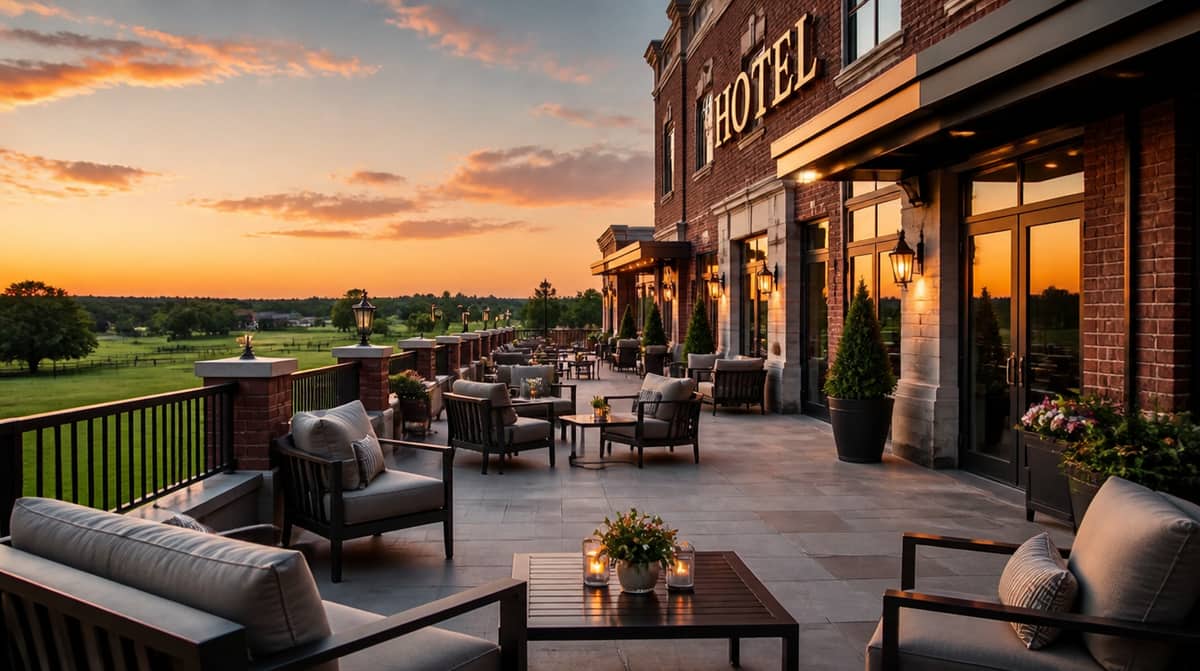
Lexington operators running outdoor programs, whether downtown near the entertainment district, out along horse farm country, or at bourbon-adjacent tasting rooms, are managing a climate that is more demanding than it first appears. Kentucky summers bring sustained humidity and regular afternoon storms. Winters bring genuine freeze events, sometimes ice rather than snow, that punish furniture finishes that were only specified for warm weather. The operators who get commercial patio furniture in Lexington right treat outdoor seating as a year-round revenue program, not a warm-weather amenity.
Kentucky's Climate Requires a Real Specification
The standard assumption is that a moderate climate is easier on outdoor furniture than a harsher one. Lexington's track record says otherwise. Ice infiltrates micro-cracks in powder coat finishes, expands, and accelerates delamination at weld points, and an operator who buys on the assumption that Kentucky does not need cold-weather durability specs learns this the first hard freeze.
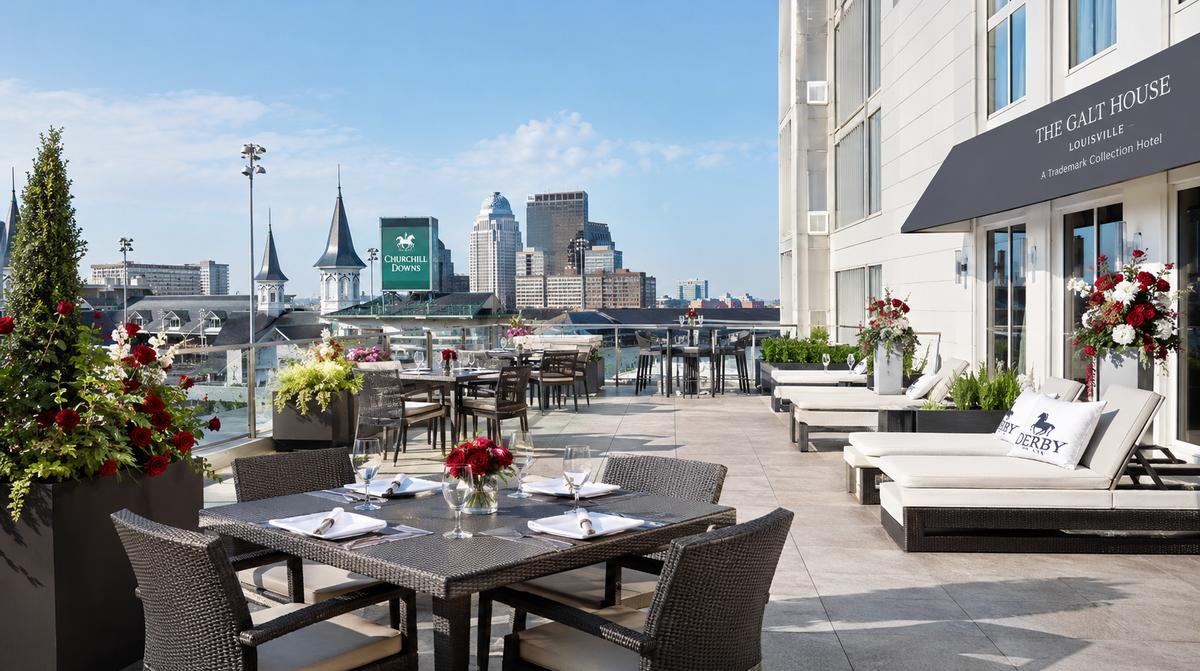
Summer brings its own demands. UV exposure and sustained humidity across the Kentucky summer accelerate corrosion at any point where a finish is compromised, and they create mold and mildew conditions on cushion fabrics not rated for it. Operators running outdoor programs near downtown venues and race-week hotel patios know that fabric specification is not optional, it is a maintenance cost that scales directly with how wrong you get it.
What Downtown and Horse Country Actually Require
Lexington's patio market is not uniform. Downtown restaurant and lounge patios near Rupp Arena are high visibility and need to perform under serious event-night traffic while looking intentional. Stackability matters here because space is at a premium and the ability to reconfigure for private events is a real operational requirement.
Properties oriented toward horse country and bourbon trail tourism operate on a different logic. The aesthetic skews warmer and more tactile, matte finishes and darker powder coat tones read as considered rather than catalog-ordered, and durability still matters because the guest volume during race season and peak tourism months is relentless.
Fabric, Foam, and Frame Specification
Solution-dyed acrylic fabric is the correct base specification for any uncovered or partially covered Lexington patio. The dye is embedded in the fiber during manufacturing, which is why fade resistance holds up under Kentucky UV rather than washing out within two seasons the way surface-coated fabrics do. It also cleans with diluted bleach, the correct maintenance protocol for mold prevention in a humid climate.
Foam density is where many patio programs fail quietly rather than dramatically. Standard foam rated at 1.8 lb density compresses and loses its profile within a season of serious hospitality use. Commercial seating foam runs 2.0 to 2.5 lb density with a higher ILD rating that maintains its shape under continuous rotation through a full Kentucky season. For frame material, commercial-grade aluminum at 1.5mm wall thickness minimum is the appropriate starting point. Consumer patio furniture in the 0.8mm to 1.0mm range works for a residential deck, not a commercial patio where staff are moving tables multiple times a day and furniture cycles through wet and dry conditions repeatedly.
The Revenue Math on Quality Patio Furniture
A commercial aluminum dining chair correctly specified for Kentucky's climate, properly maintained, lasts eight to ten years in active service. A consumer-grade or "commercial-style" chair at a lower upfront cost that requires replacement in two years costs more per year and adds the operational disruption of sourcing replacements mid-season. Operators who have run patio programs through multiple cycles buy quality once, maintain it correctly, and reupholster rather than replace when the frame is still performing. Request a quote once you have your seating count and site plan.