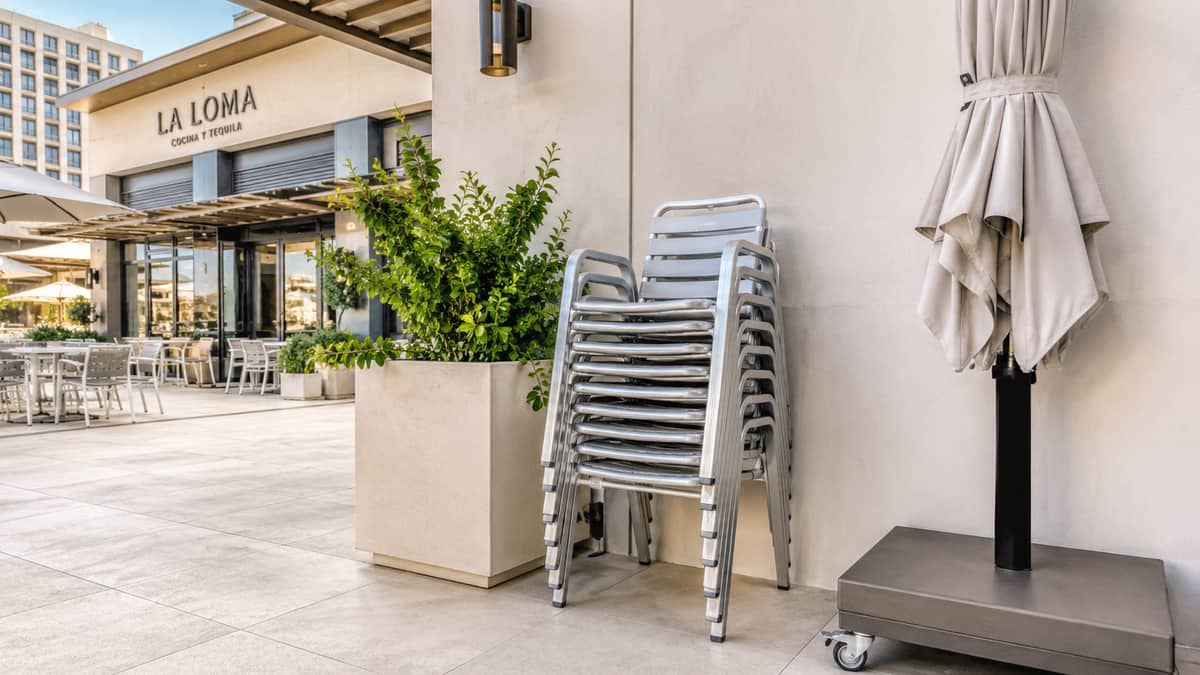
Knoxville has a patio problem, and it is not the problem most operators expect walking into a project. The assumption is that summer heat and humidity are the only real factors. Operators running serious outdoor programs along Volunteer Landing and the Tennessee River waterfront, downtown near Market Square, and near the university know the real challenge is more complicated: this market needs furniture that performs in humid valley summers, in occasional winter ice storms that arrive with little warning, and under the year-round foot traffic of a downtown that has built its identity around outdoor dining and gathering.
The operators who get commercial patio furniture in Knoxville right are not treating outdoor seating as a warm-weather amenity. They are treating it as a revenue program with specific durability, comfort, and aesthetic requirements. Getting those specifications correct from the start is the difference between a patio program that earns its return over eight years and one that needs a partial replacement after two.
Knoxville's Climate Actually Requires More, Not Less
The standard industry logic runs like this: warmer climates are easier on outdoor furniture because they do not get ice and snow. Knoxville's track record says otherwise. Sitting in a valley in the foothills of the Smokies, the city gets genuine freeze events most winters, often with ice rather than heavy snow. Ice is harder on furniture than snow because it infiltrates micro-cracks in powder coat finishes, expands, and accelerates delamination at weld points.
Summer brings its own set of demands. High-quality commercial powder coat for this market should contain UV stabilizers at a concentration the manufacturer can actually document. "UV resistant" as a marketing claim without a corresponding spec sheet is not a sufficient answer.
Then there is humidity. Sustained moisture in the valley accelerates corrosion at any point where the finish is compromised, and it creates mold and mildew conditions on cushion fabrics that are not rated for it. Operators running large-scale outdoor programs near downtown and along the riverfront know that fabric specification is not optional, it is a maintenance cost that scales directly with how wrong you get it.
What Downtown, the Riverfront, and Near-Campus Actually Require
Knoxville's patio market is not uniform. The design expectations at a downtown rooftop bar are different from a riverfront restaurant terrace, and both are different from a hotel patio serving business travelers near the interstate. Specifying commercial patio furniture without matching the program to the location's guest profile and design context is how operators end up with furniture that functions correctly but reads as slightly wrong.
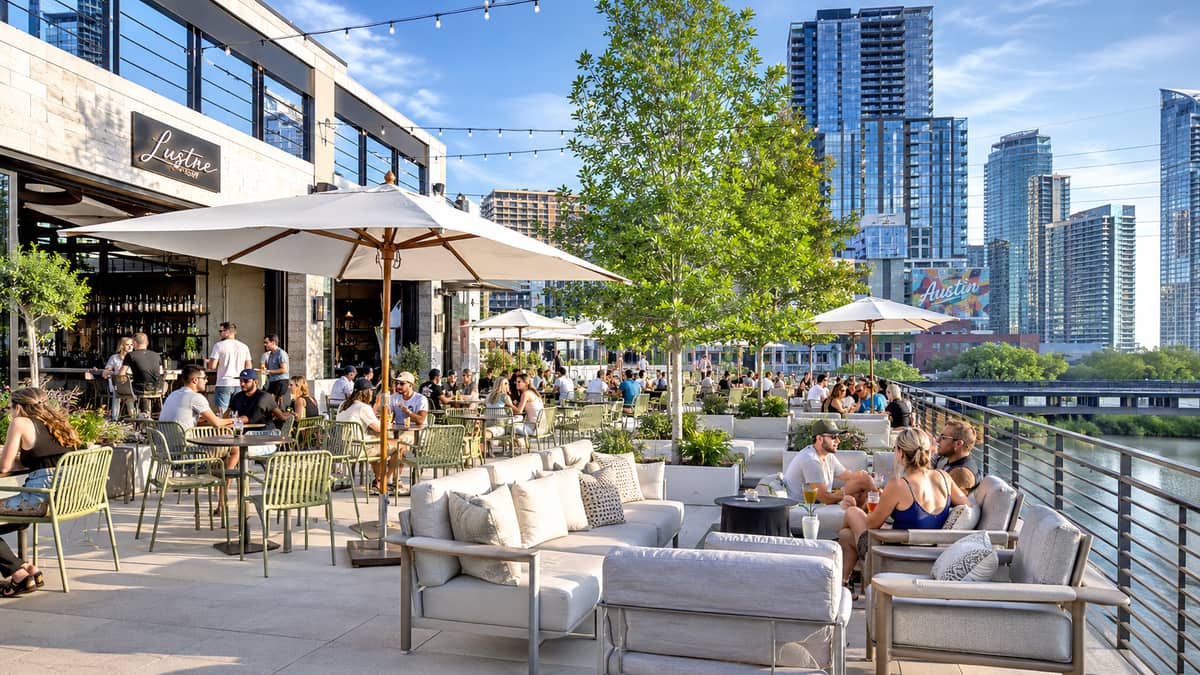
Downtown's patio market is high visibility and increasingly design-conscious. The restaurant terraces around Market Square and the rooftop bars overlooking the historic district need furniture that performs under serious traffic loads while looking intentional from the street. Bold design choices in upholstery color or frame finish work well here. Stackability matters because space is at a premium and the ability to reconfigure quickly for private events is a real operational requirement.
The riverfront along Volunteer Landing rewards a different logic, one built around views and a more relaxed pace, with furniture that photographs well against the water and holds up to direct sun exposure across a long season. Near-campus patios need to absorb the same game day compression that hits every other category of furniture in this market, with frames and glides built for rapid turnover on the busiest weekends.
Heat, UV, and Fabric: Getting the Spec Right
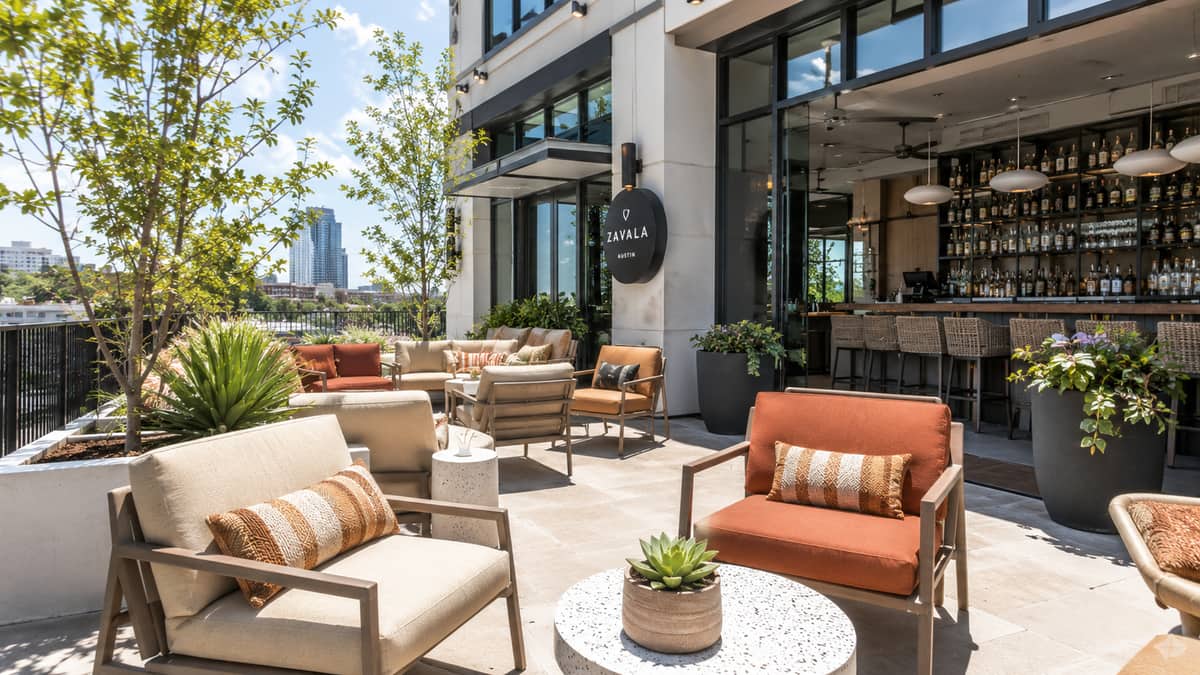
Fabric specification in Knoxville requires more attention than operators typically give it before the first season. Solution-dyed acrylic, with Sunbrella being the industry benchmark, is the correct base specification for any uncovered or partially covered patio. The dye is embedded in the fiber during manufacturing, not applied to the surface, which is why fade resistance holds up under sustained UV rather than washing out within two seasons. It also cleans with diluted bleach, the correct maintenance protocol for mold prevention in a humid climate.
Foam density is where many patio programs fail quietly rather than dramatically. Standard foam rated at 1.8 lb density compresses and loses its profile within a season of serious hospitality use. Commercial seating foam runs 2.0 to 2.5 lb density with a higher ILD rating that maintains its shape under continuous rotation, particularly on a downtown rooftop running full capacity through the warmer months.
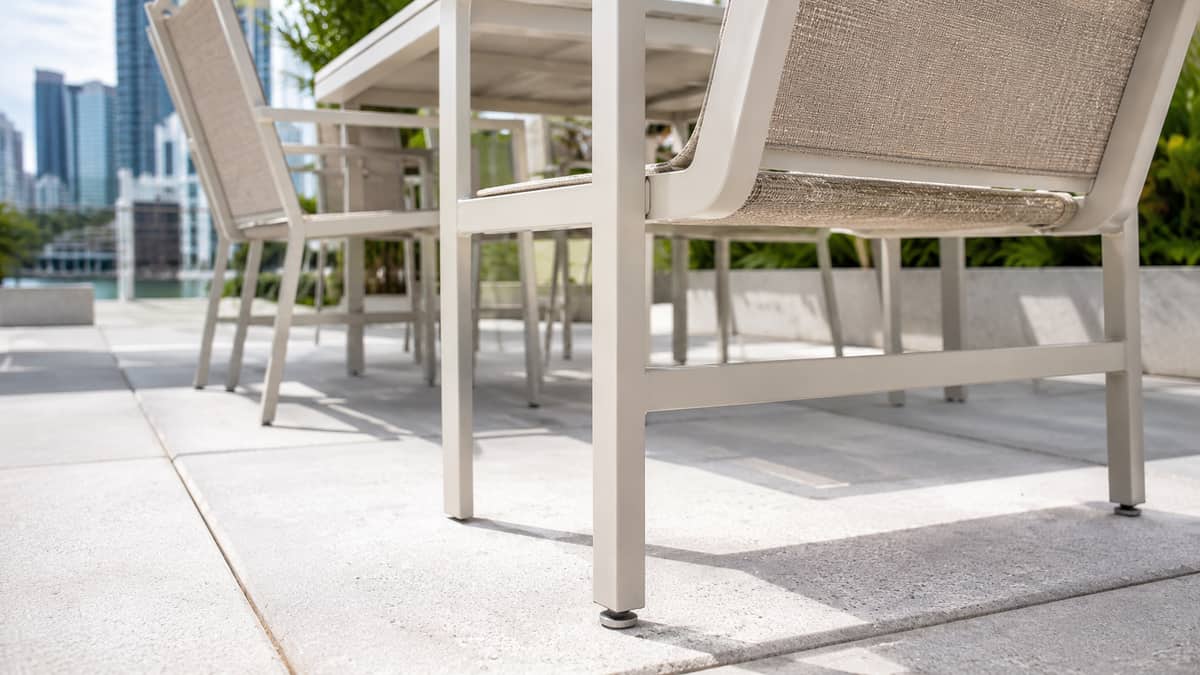
For frame material, commercial-grade aluminum at 1.5mm wall thickness minimum is the appropriate starting point. Consumer patio furniture in the 0.8mm to 1.0mm range works for a residential deck that sees occasional use. It does not hold up on a commercial patio where staff move chairs multiple times a day and the furniture cycles through wet and dry conditions repeatedly across an East Tennessee summer.
The right approach to commercial patio furniture in Knoxville is to specify for the actual climate, match the aesthetic to the setting, and buy for the full lifecycle rather than the opening day cost. Request a quote with your material and finish preferences in hand so lead times can be confirmed before your season starts.