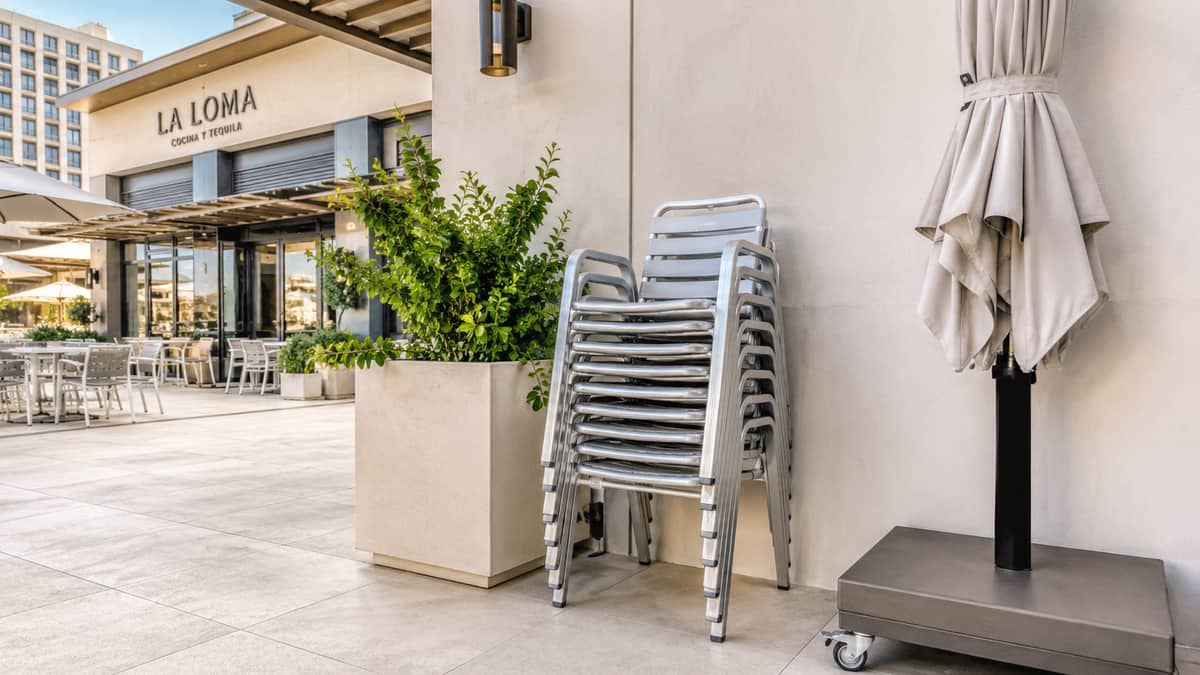
Huntsville sits in a climate band that surprises a lot of first-time operators sourcing patio furniture here. It is far enough south to get genuinely humid, high-UV summers, but far enough into the Tennessee Valley to see hard freezes and occasional ice most winters. That combination is harder on outdoor furniture than either extreme alone. Operators running patio programs around downtown, MidCity, and Bridge Street Town Centre know that getting the specification right from the start is the difference between a program that earns its return over eight years and one that needs a partial replacement after two.
Huntsville's Climate Requires More, Not Less
The standard assumption is that a Southern city gets easier winters, so furniture can be specified lighter than in a northern market. Huntsville's elevation and inland position mean it gets real freeze events most years, sometimes with ice. Ice is harder on furniture than snow because it infiltrates micro-cracks in powder coat finishes, expands, and accelerates delamination at weld points. Buying on the assumption that Huntsville does not need cold-weather-rated finishes is a mistake that shows up the first February.
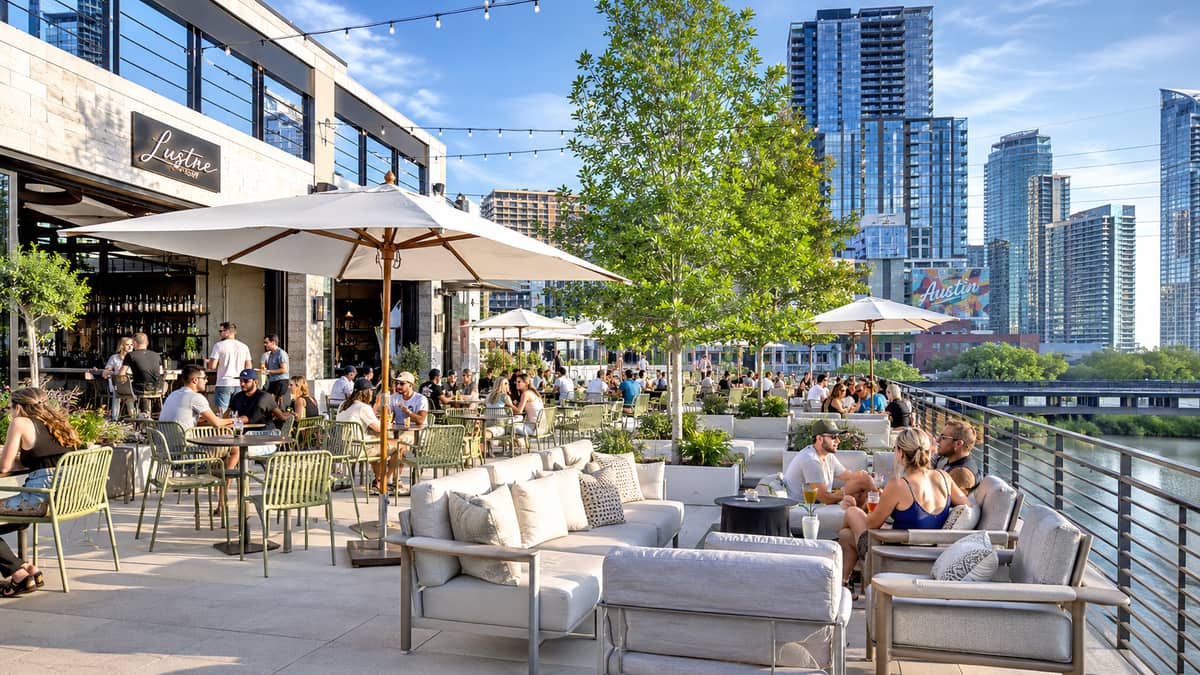
Summer brings the opposite demand. UV exposure runs high, and the same powder coat finish that holds its color for years in a milder market can show visible fading here within a couple of seasons if the UV inhibitor content is not specified correctly. Humidity adds a third load: sustained moisture accelerates corrosion at any point where the finish is compromised and creates mold and mildew conditions on cushion fabric that is not rated for it.
What Downtown, MidCity, and the Research Park Corridor Actually Require
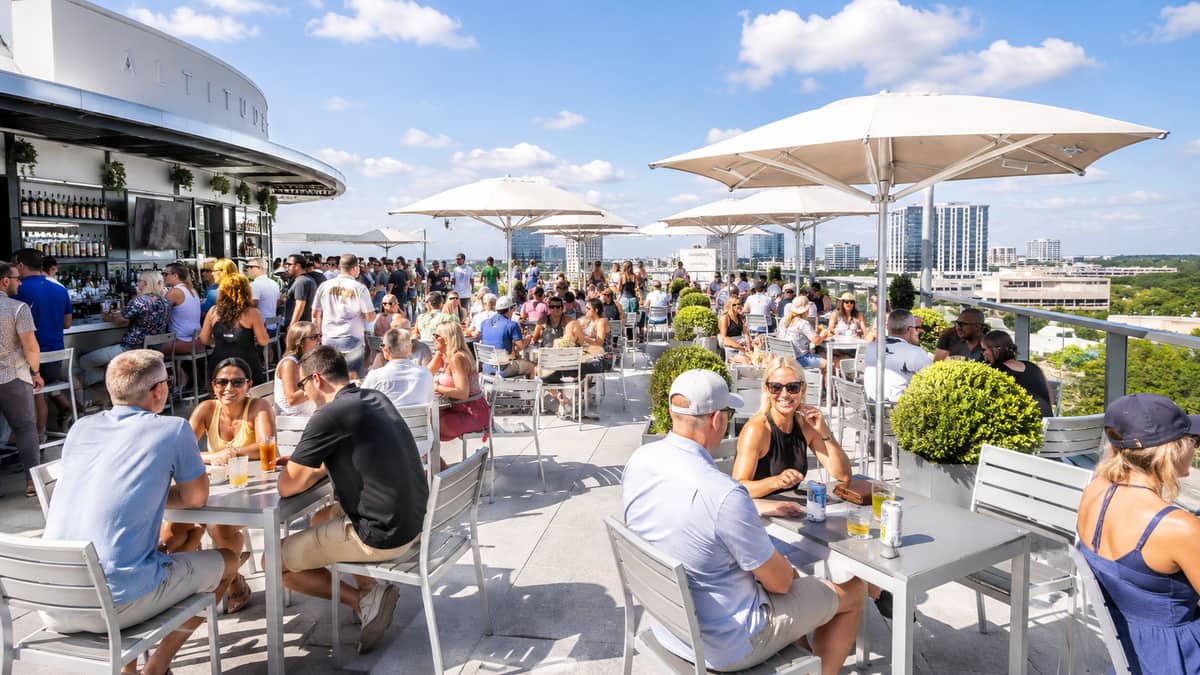
Huntsville's patio market is not uniform. Downtown and Twickenham restaurant patios serve a historic-district crowd that responds to warmer, more textured finishes. MidCity and Bridge Street Town Centre skew toward a more polished, contemporary look with higher visibility and higher volume, where stackability matters because space is at a premium and quick reconfiguration for events is a real operational need. Hotel pool decks and patios near the research park corridor serve a mostly corporate guest base that expects a complete, cohesive program rather than mismatched pieces added over time.
Heat, UV, and Fabric: Getting the Spec Right
Solution-dyed acrylic, with Sunbrella as the industry benchmark, is the correct base specification for any uncovered or partially covered Huntsville patio. The dye is embedded in the fiber during manufacturing, which is why fade resistance holds up under Alabama UV rather than washing out within two seasons. It also cleans with diluted bleach, the correct maintenance protocol for mold prevention in a humid climate.
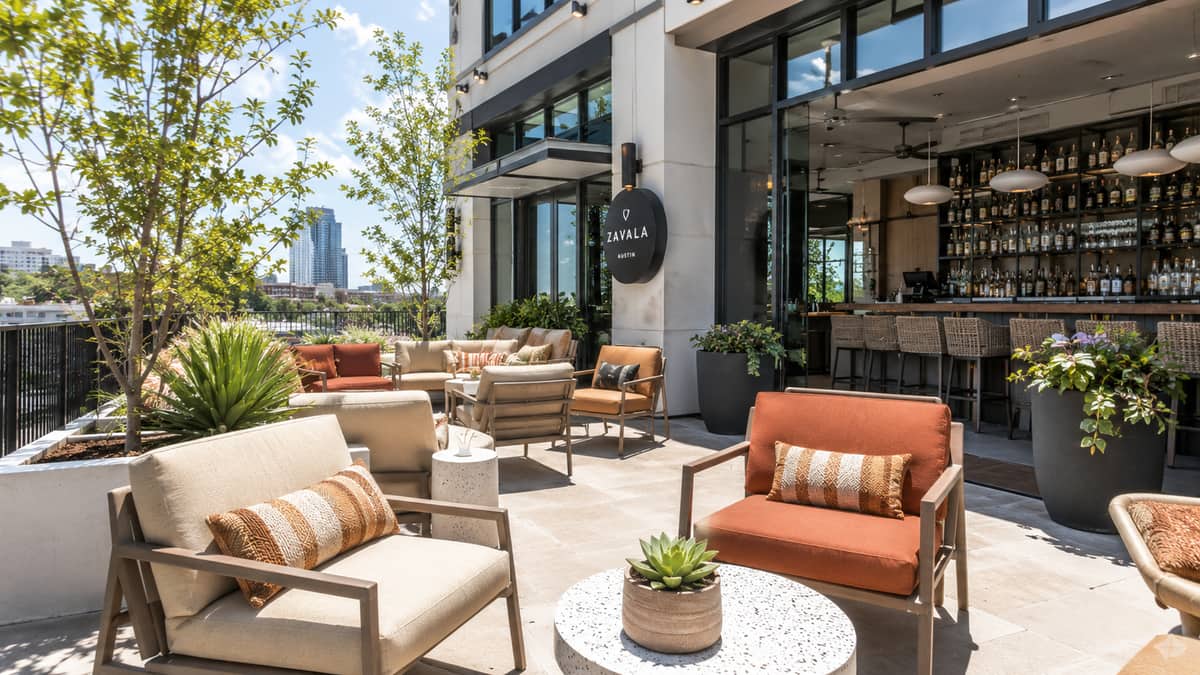
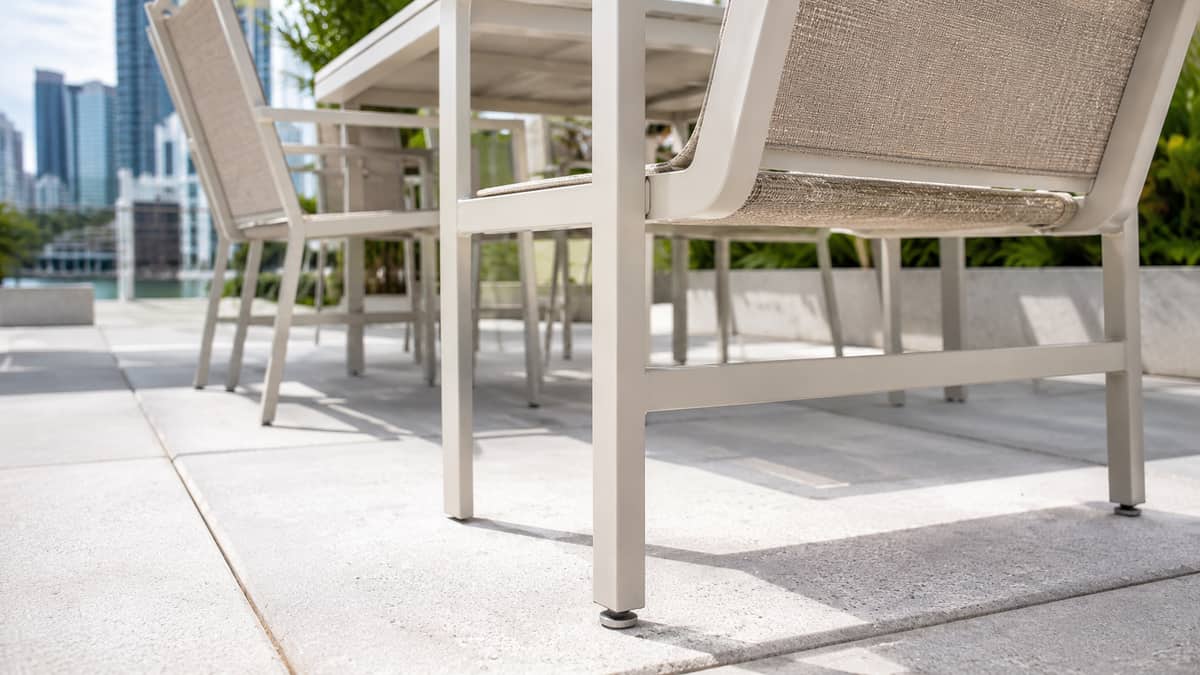
Foam density is where patio programs fail quietly. Standard foam rated at 1.8 lb density compresses within a season of serious hospitality use in a hot, humid climate. Commercial seating foam at 2.0 to 2.5 lb density with a higher ILD rating maintains its shape under continuous rotation through a Huntsville summer. For frame material, commercial-grade aluminum at 1.5mm wall thickness minimum is the appropriate floor for any hospitality application here, well above the 0.8mm to 1.0mm range of consumer patio furniture.
Building the Program
A commercial aluminum dining chair correctly specified for the Tennessee Valley climate, properly maintained, lasts eight to ten years in active service. A consumer-grade or "commercial-style" chair at a lower upfront cost that needs replacement in two years costs more per year once the disruption of sourcing replacements mid-season is factored in. Once your material and frame specs are set, submit them through a project quote so pricing reflects freight into the metro and your actual installation timeline.
The right approach to commercial patio furniture in Huntsville is to specify for the actual climate, match the aesthetic to the corridor's design grammar, and buy for the full lifecycle rather than the opening day cost.