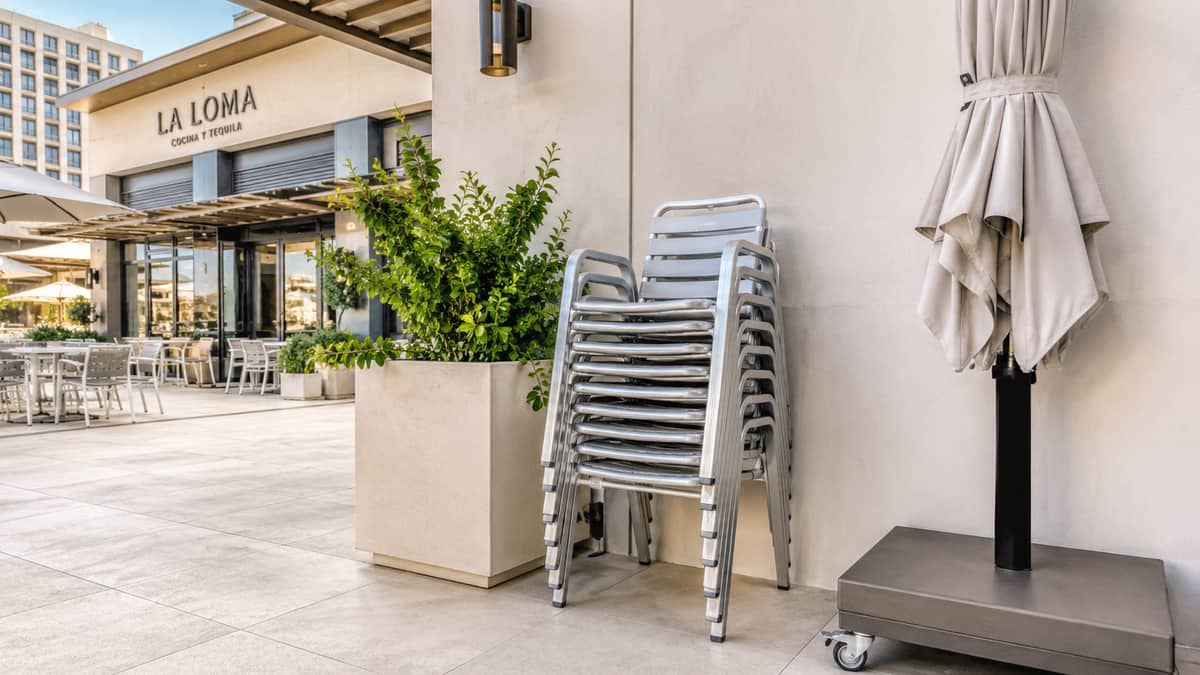
Greensboro's outdoor dining season runs longer than a lot of operators plan for, and that is exactly why the furniture decision matters more here than in a market with a truly short window. The instinct on a first patio build is to treat outdoor furniture as a seasonal accessory: order something reasonable, get a good six or seven months out of it, worry about the rest later. Operators who have run real outdoor programs downtown along Elm Street and near the Greensboro Coliseum complex know the actual challenge is different. Piedmont patios need to survive a humid, ninety-degree July afternoon, sudden summer thunderstorms that roll through with real force, and a winter that brings genuine cold snaps even if it never turns brutal for long.
The operators who get commercial patio furniture in Greensboro right are not treating outdoor seating as a fair-weather bonus. They are treating it as an eight-month-plus revenue window, roughly March through October in a normal year, with specific humidity resistance, storm durability, and comfort requirements that are different from what you would spec for a drier or colder market. Getting that specification right the first time is the difference between a patio program that earns back its cost across six or seven strong seasons and one that needs frames replaced after two rough summers.
Greensboro's Climate Actually Requires More, Not Less
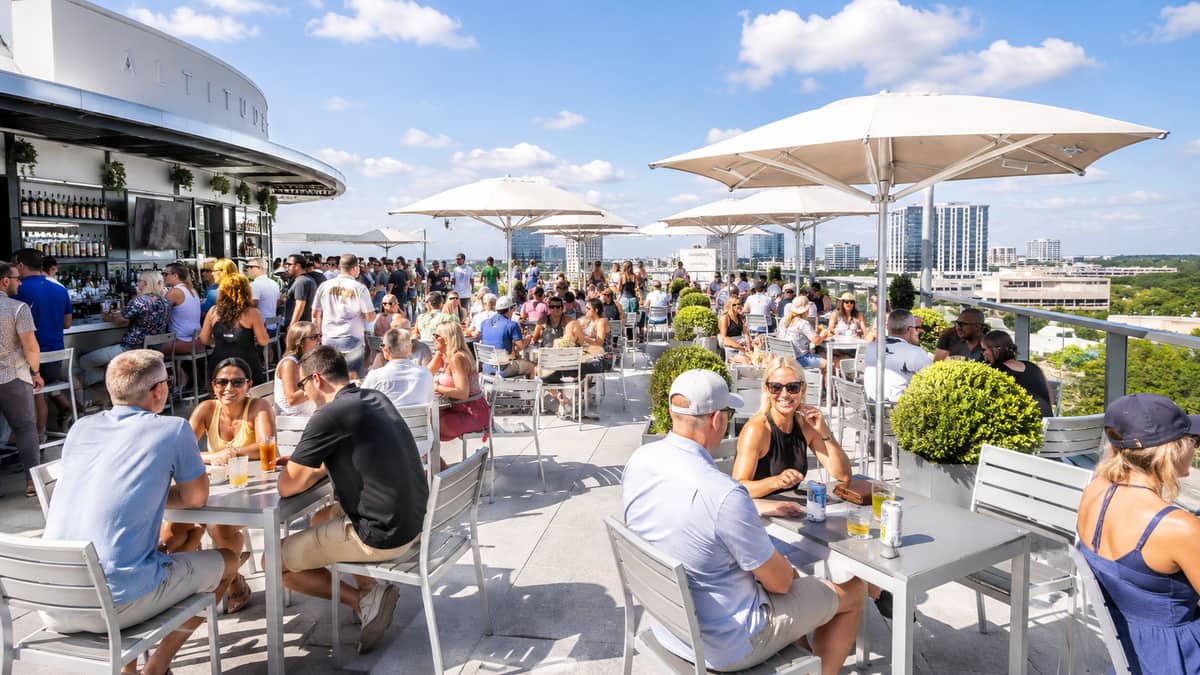
The common assumption is that a long outdoor season with mild winters means furniture gets an easier life overall. Greensboro's weather record says otherwise. The Piedmont sits in a humid subtropical zone with real summer humidity, frequent afternoon thunderstorms from late spring through summer, and a winter that regularly dips below freezing even if snow is inconsistent. Furniture that is not rated for sustained moisture exposure, whether that means frame material, drainage design, or cushion construction, ends up rusting, staining, or developing mildew well before a five-year replacement cycle. An operator who specs Greensboro the way they would a dry, low-humidity market learns the difference the first sticky August week.
Humidity is the underestimated factor here. A powder coat finish that would hold its color and resist corrosion for six or seven seasons in a drier climate can show rust bloom and finish failure in the Piedmont within three or four years if the coating was not specified for high-moisture exposure. "Weather resistant" without a documented corrosion and humidity spec is not sufficient here, and it is worth asking any supplier for the actual finish data rather than accepting the claim at face value.
Then there is the storm factor. Greensboro's spring and summer thunderstorms bring real wind gusts with little warning, and furniture that is not rated for wind load, whether that means proper frame weight, stackability, or anchoring options, ends up airborne, scratched against concrete, or tipped and dented within the first season. Operators running larger outdoor programs near the Coliseum corridor, where event traffic brings steady volume through the warmer months, know that storm damage is a real maintenance line item, not a hypothetical.
What Downtown and the Coliseum Corridor Actually Require
Greensboro's patio market is not uniform, and specifying commercial patio furniture in Greensboro without matching the program to the district's guest profile is how operators end up with furniture that functions fine but reads as slightly off.
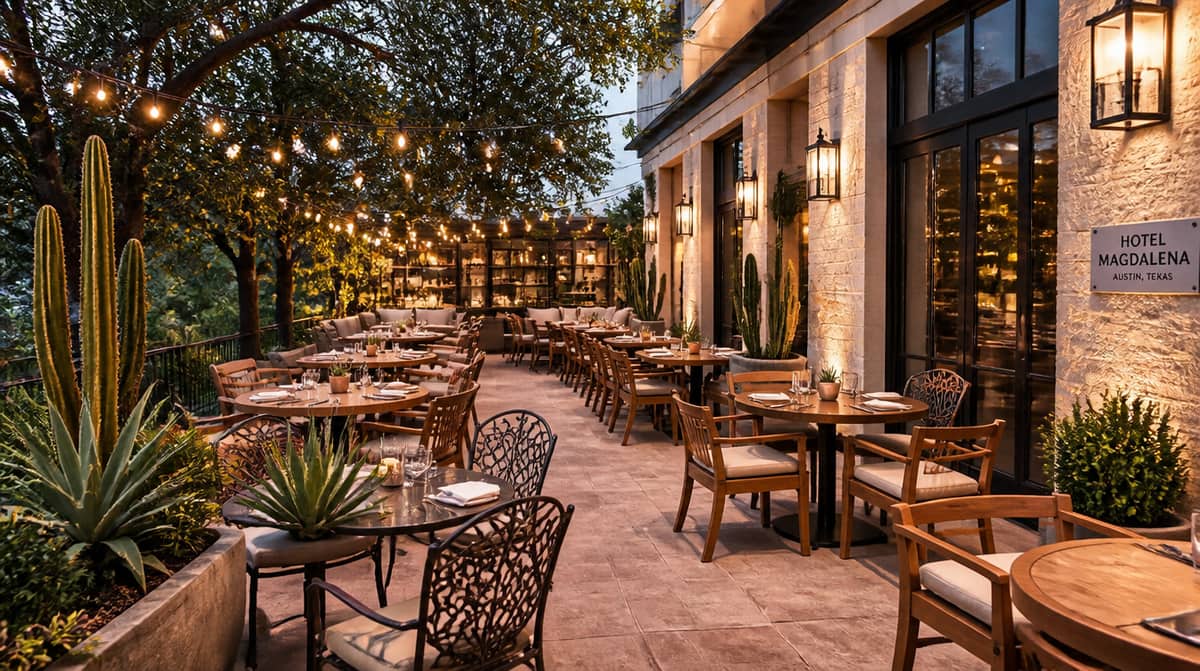
Downtown, centered on Elm Street and the surrounding historic blocks, has built a genuine restaurant and brewery scene out of renovated storefronts. The guest base here skews local and repeat, people who know the difference between a patio program that was thought through and one that was assembled from whatever was in stock. Furniture in this corridor needs to read as intentional against that historic brick backdrop: darker frame finishes in matte charcoal or bronze, cohesive programs across dining chairs, lounge seating, and side tables, and a design vocabulary that feels considered rather than catalog-ordered.
The Coliseum corridor and the hotel properties surrounding it operate on a different logic. This is where convention, sports, and event traffic concentrates, and hotel patios and pool decks in this zone need to perform for guests who are in town for a few days and expect a competent, comfortable outdoor amenity rather than a design showcase. Consistency and comfort matter more here than local character, and furniture needs to hold up to the same humidity and storm exposure as everywhere else in the city, with less forgiveness for downtime during a busy event week.
Humidity, Storms, and Fabric: Getting the Spec Right in the Piedmont
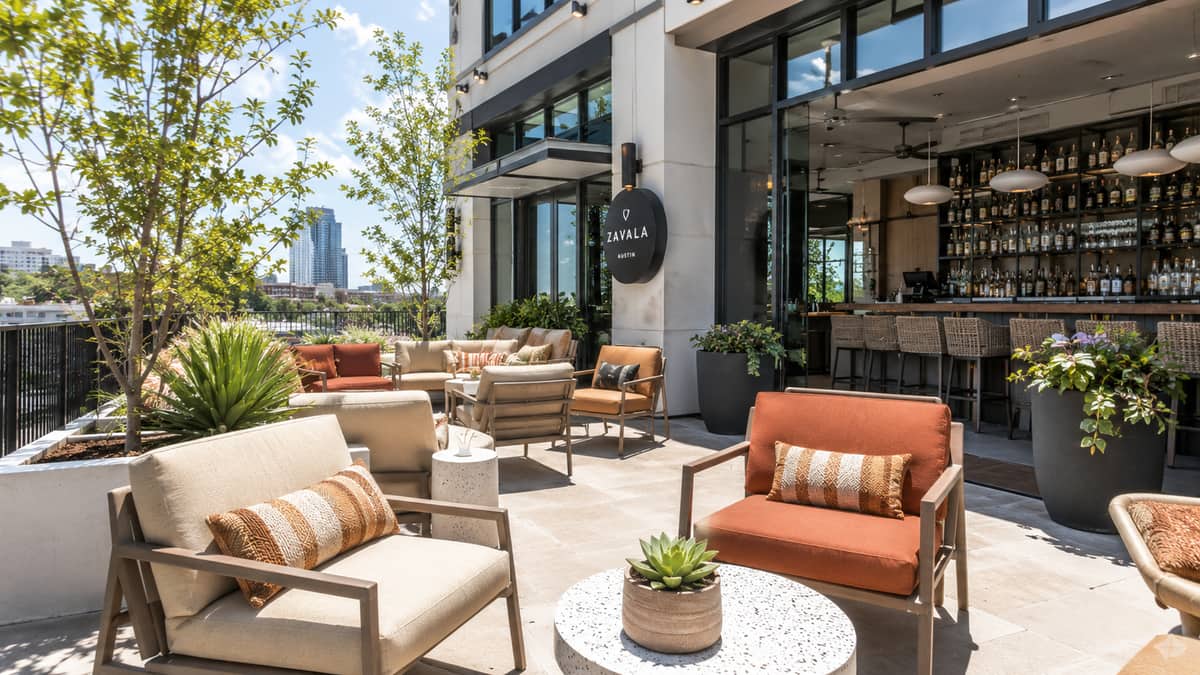
Fabric specification in Greensboro deserves more attention than most operators give it before their first humid summer. Solution-dyed acrylic, with Sunbrella as the industry benchmark, is the right base specification for any uncovered or partially covered Greensboro patio. The color is embedded through the fiber rather than applied to the surface, which is why it resists the fading that summer sun causes in surface-dyed fabrics, and it stands up to the moisture and mildew risk that comes with real Piedmont humidity.
Foam density is where budget programs fail quietly. Standard 1.8 lb density foam retains moisture and loses shape faster under the combination of humidity and frequent afternoon rain. Commercial-grade foam in the 2.0 to 2.5 lb range with a moisture-resistant core holds its profile through a full Greensboro season of steady weekend traffic at downtown restaurants and hotel patios, and it survives being covered or stacked through the shorter winter off-season without permanent compression.
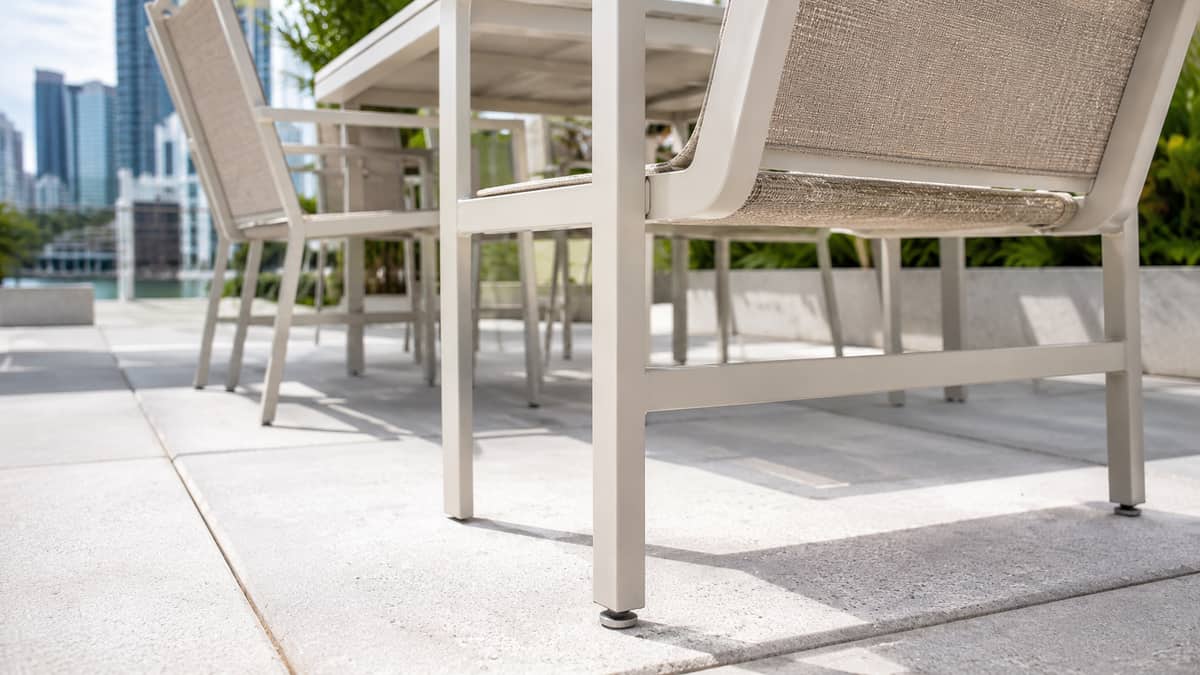
For frame material, commercial-grade aluminum at 1.5mm wall thickness minimum is the right starting point for a Greensboro hospitality application. Lighter consumer-grade frames in the 0.8mm to 1.0mm range are simply not built for a location where sustained humidity and periodic storm wind are routine design considerations, not edge cases. Weld quality at the joints matters as much as wall thickness here, since humidity accelerates corrosion at any weak connection point faster than it does in a drier climate.
The Revenue Math on Quality Commercial Patio Furniture in Greensboro
Greensboro is the anchor city of the Piedmont Triad and draws steady hotel and event traffic through the Coliseum complex, downtown's growing dining scene, and the twice-yearly High Point Market surge. The outdoor season here runs long compared to colder markets, which means the furniture investment has more usable days to earn back its cost, not fewer.
A commercial aluminum dining chair properly specified for Piedmont humidity and storm exposure, stored correctly through the shorter winter, and maintained through the season lasts seven to nine years in active service. A lighter-duty or consumer-style chair bought to save money upfront often needs partial replacement within two seasons once rust, mildew, and storm damage take their toll, and that replacement cycle costs more per year than buying correctly the first time.
For hotel properties near the Coliseum and larger downtown restaurant groups, the calculus also includes guest perception during peak event and Market weeks, when every impression counts more. A patio showing rust, faded fabric, or wobbling frames signals underinvestment to travelers choosing between properties on amenity quality.
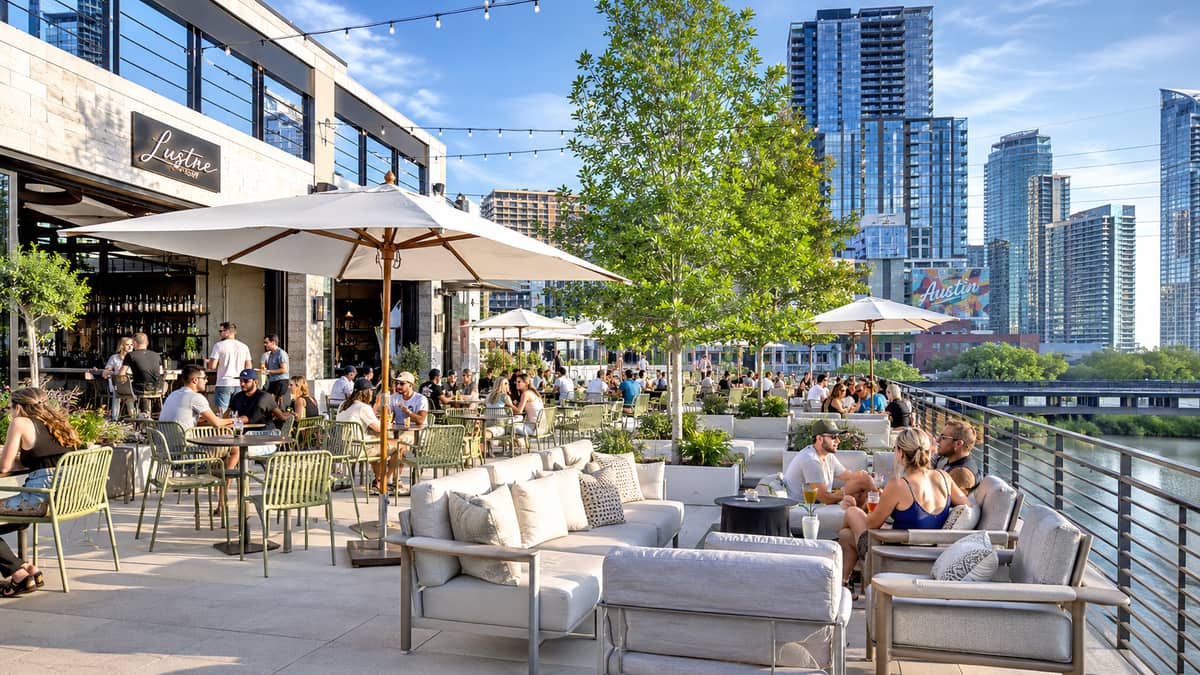
The right approach to commercial patio furniture in Greensboro is to specify for humidity and storm exposure honestly, match the aesthetic to the district, whether that is downtown's historic character or the Coliseum corridor's more mainstream hospitality expectations, and buy for the full multi-year lifecycle rather than the opening day cost. Start that process with a quote built around your actual site conditions rather than a generic patio package.