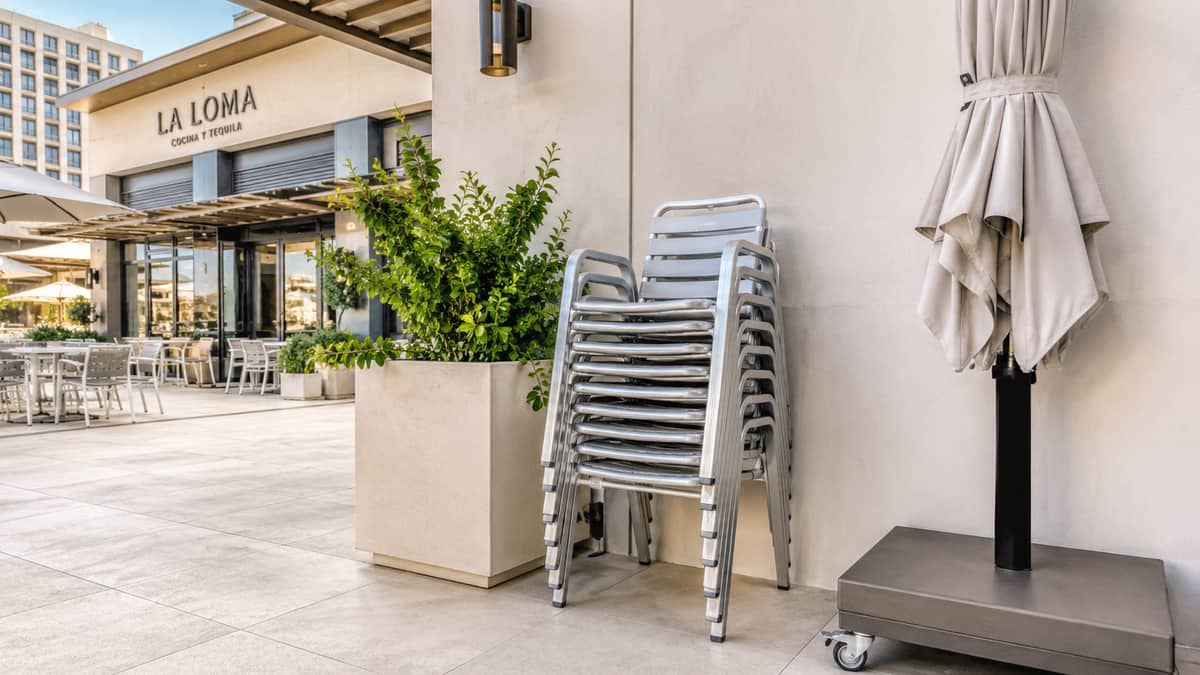
Bangor has a patio problem, and it is not the one most operators plan for. The instinct walking into a Bangor furniture project is to treat the season as short and therefore low stakes: order something reasonable, get four or five good months out of it, worry about the rest later. Operators who have run serious outdoor programs downtown near West Market Square, along the Penobscot River waterfront, and in the hotel cluster near the airport corridor know the real challenge is different. Bangor patios need to survive a genuinely humid July stretch, sudden rain and wind rolling in off the river with little warning, and a fall cold snap that can drop temperatures fast, sometimes within the same week.
The operators who get commercial patio furniture in Bangor right are not treating outdoor seating as a fair weather bonus. They are treating it as a compressed but high value revenue window, roughly May through September, with specific moisture resistance, temperature swing durability, and comfort requirements that are different from what you would spec for a warmer or drier market. Getting that specification right the first time is the difference between a patio program that earns back its cost across six or seven strong seasons and one that needs frames replaced after two rough winters in storage.
Bangor's Climate Actually Requires More, Not Less
The common assumption is that a shorter outdoor season means furniture gets an easier life overall. Bangor's weather record says otherwise. The city sits along the Penobscot River with a genuinely humid summer climate and winters that arrive early and stay long, often with the first hard frost landing well before most operators have closed out their patio season. Furniture that is not rated for sustained moisture exposure, whether that means proper frame coating, drainage in cushions, or covered storage options, ends up rusted, mildewed, or cracked within the first season or two. An operator who specs Bangor the way they would a dry inland market learns the difference the first humid August week or the first early October frost.
Humidity is the most underestimated factor. Summers along the Penobscot carry real moisture, and cushion foam that is not properly sealed traps that moisture and develops mildew fast, especially in shaded patio areas near mature trees or building overhangs. A powder coat finish without a proper UV and moisture inhibitor can show visible degradation within a few seasons. Weather resistant without a documented spec is not sufficient here, and it is worth asking any supplier for the actual finish data rather than accepting the claim at face value.
Then there is the shoulder season swing itself. A warm September stretch can be followed within weeks by an early hard frost, and Bangor regularly sees real temperature drops heading into fall while patio programs are still trying to capture the last of the season's revenue. That kind of thermal cycling stresses welds and shortens the life of any frame that was built to a lighter residential standard. Operators running larger outdoor programs at the hotel properties along the airport corridor, where business travel brings steady volume through the shoulder months, know that this cycling is a real maintenance line item, not a hypothetical.
What Downtown, the Waterfront, and the Airport Corridor Actually Require
Bangor's patio market is not uniform, and specifying commercial patio furniture in Bangor without matching the program to the setting's guest profile is how operators end up with furniture that functions fine but reads as slightly off.
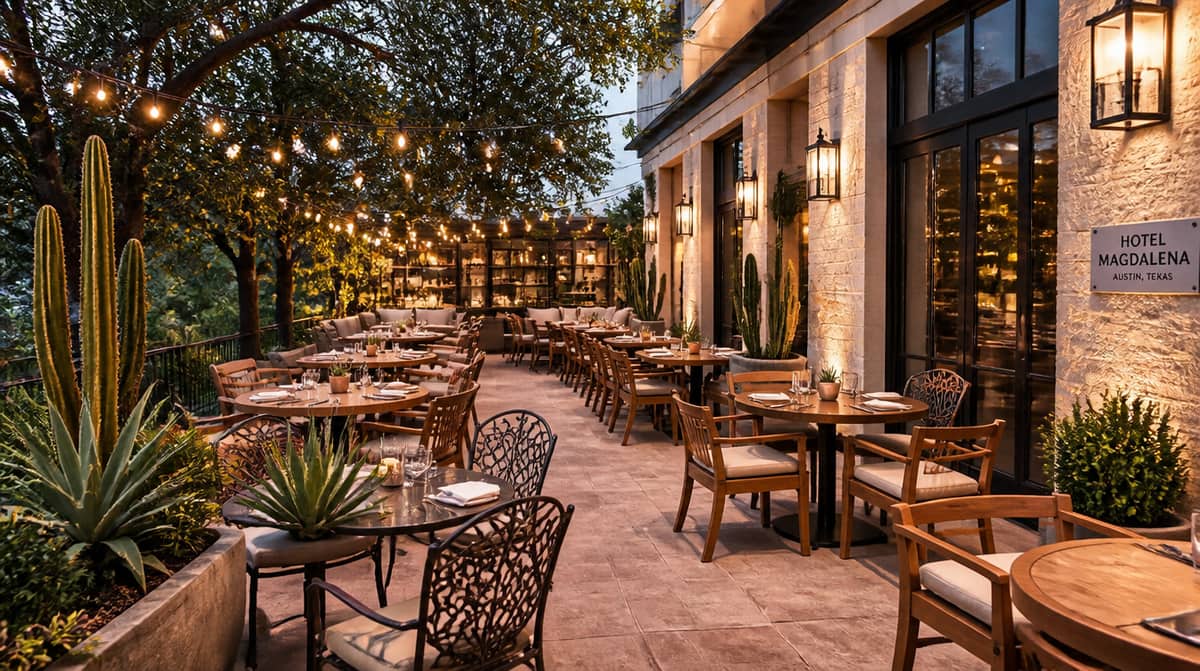
Downtown, centered on West Market Square and the surrounding historic district, has built a genuine restaurant and taproom scene out of renovated brick storefronts. The guest base here skews local and repeat, people who know the difference between a patio program that was thought through and one that was assembled from whatever was in stock. Furniture in this corridor needs to read as intentional against that brick and river town backdrop, darker frame finishes in matte charcoal or bronze, cohesive programs across dining chairs, lounge seating, and side tables.
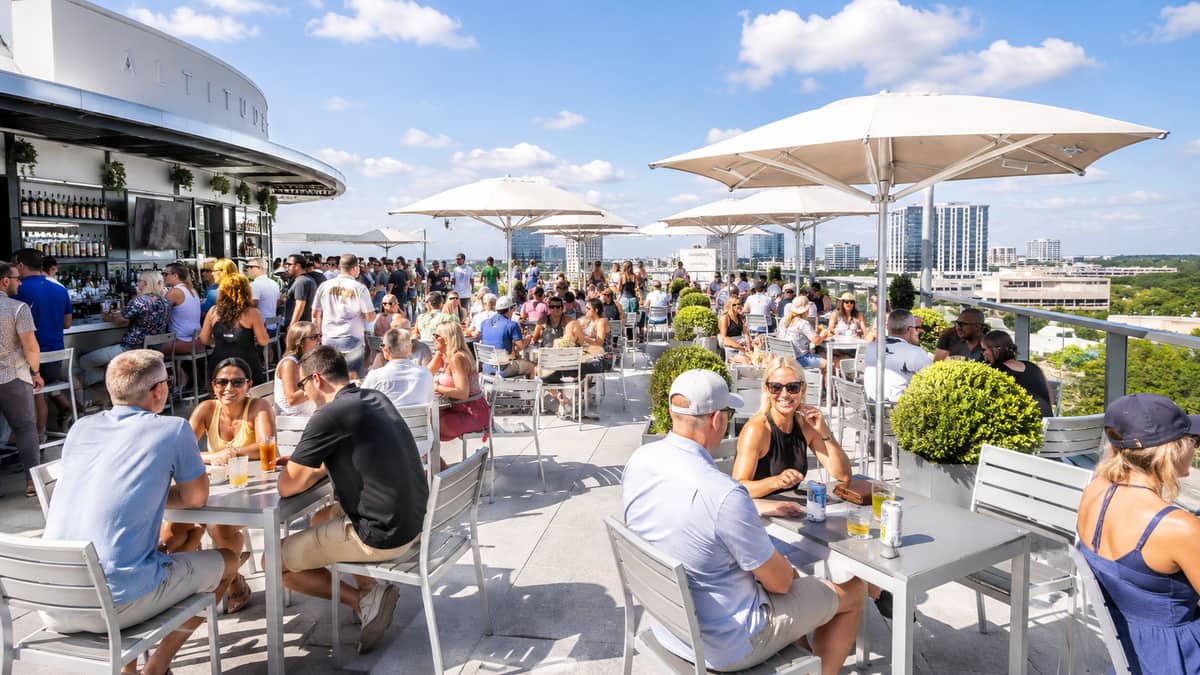
The waterfront, along the Penobscot River, runs on a mix of concert and event traffic through the summer season and a more relaxed daytime crowd the rest of the week. Furniture programs here need to prioritize weather resistance and quick reset capability, since event driven traffic can fill a space fast and empty it just as quickly.
The airport corridor operates on a different logic again. This is where business and medical travel volume concentrates, and hotel patios in this zone need to perform for guests who are in town for a few days and expect a competent, comfortable outdoor amenity rather than a design showcase.
Moisture, Cold, and Fabric: Getting the Spec Right in Maine
Fabric specification in Bangor deserves more attention than most operators give it before their first humid summer or early frost. Solution dyed acrylic, with Sunbrella as the industry benchmark, is the right base specification for any uncovered or partially covered Bangor patio. The color is embedded through the fiber rather than applied to the surface, which is why it resists both fading and the mildew growth that surface treated fabrics are prone to in a humid river town climate.
Foam density is where budget programs fail quietly. Standard 1.8 lb density foam compresses and traps moisture faster under Bangor's humidity. Commercial grade foam in the 2.0 to 2.5 lb range with a higher ILD rating holds its profile through a full Bangor season and survives being stacked or covered for the long off season without permanent compression or mildew buildup.
For frame material, commercial grade aluminum at 1.5mm wall thickness minimum is the right starting point for a Bangor hospitality application. Weld quality at the joints matters as much as wall thickness here, since the seasonal thermal cycling puts real stress on those connection points.
The Revenue Math on Quality Commercial Patio Furniture in Bangor
Bangor is the commercial hub for central and eastern Maine, drawing steady hotel and event traffic through Bass Park and the downtown corridor. The outdoor season is compressed compared to a year round market, which means every usable patio day carries more relative weight in the annual revenue picture, not less. A commercial aluminum dining chair properly specified for Maine's humidity and cold, stored correctly through the winter, and maintained through the season lasts seven to nine years in active service. A lighter duty or consumer style chair bought to save money upfront often needs partial replacement within two seasons once moisture damage and thermal stress take their toll.
The right approach to commercial patio furniture in Bangor is to specify for moisture and cold exposure honestly, match the aesthetic to the setting, and buy for the full multi year lifecycle rather than the opening day cost. Ready to spec your patio program? Browse outdoor dining chairs and patio tables built for exactly this climate.
Ready to spec furniture for a Bangor project? Request a quote with your quantities and timeline for volume pricing.