Sacramento's boutique hotel development has tracked the city's identity evolution from government town to genuine destination. Midtown properties in converted Victorian and Craftsman buildings, boutique hotels in the Grid neighborhood adjacent to the farm-to-fork restaurant corridor, and design-forward properties in the emerging downtown entertainment district are attracting guests who specifically choose Sacramento for what the city has become -- not what it used to be. Furniture for these properties needs to reflect that evolution.
What Boutique Hotels in Sacramento Require
The aesthetic context that Sacramento's boutique hotel scene operates within runs toward California warmth rather than California cool. The Bay Area modernism of glass and concrete doesn't translate to Sacramento's Central Valley character -- the city's identity is rooted in agriculture, the river, and the Craftsman architecture of its historic neighborhoods. Hotel lounge chairs in warm-toned leather, platform beds in white oak with natural grain, and case goods with oil-rubbed bronze hardware read authentically in Sacramento boutique hotel contexts in a way that chrome-and-lacquer alternatives do not.
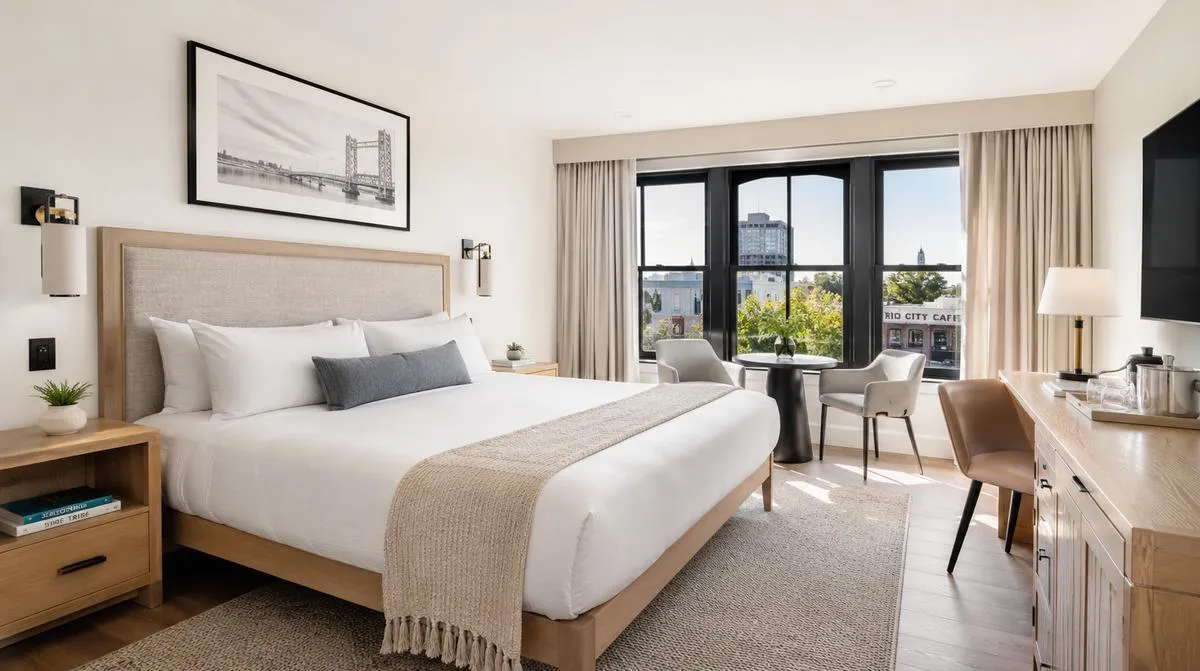
Midtown boutique properties in Victorian-era buildings face specific furniture sizing constraints. Original room dimensions -- often narrower than modern code-minimum requirements -- limit furniture scale. A king bed platform that works in a standard hotel room footprint may not fit a converted Victorian guestroom without dominating the space. Furniture selection for Sacramento boutique conversions requires actual room measurements, not standard spec assumptions.
The farm-to-fork design sensibility that defines Sacramento's restaurant culture extends into its boutique hotel aesthetic. Guests who stay in Midtown Sacramento boutique properties and dine in the city's serious restaurant scene develop a coherent expectation of material quality and authenticity. Furniture that contradicts that expectation -- synthetic wood-look finishes, foam-core upholstery that compresses quickly, chrome hardware that reads as cheap against warm wood tones -- generates the kind of disconnect that shows up in reviews.
California Compliance for Boutique Hotel Furniture
California's furniture fire safety requirements apply to all commercial hospitality furnishings in the state. TB 117-2013 is the baseline for upholstered furniture; commercial hospitality applications typically require confirmation of the specific occupancy classification to determine whether TB 133 testing is also needed.
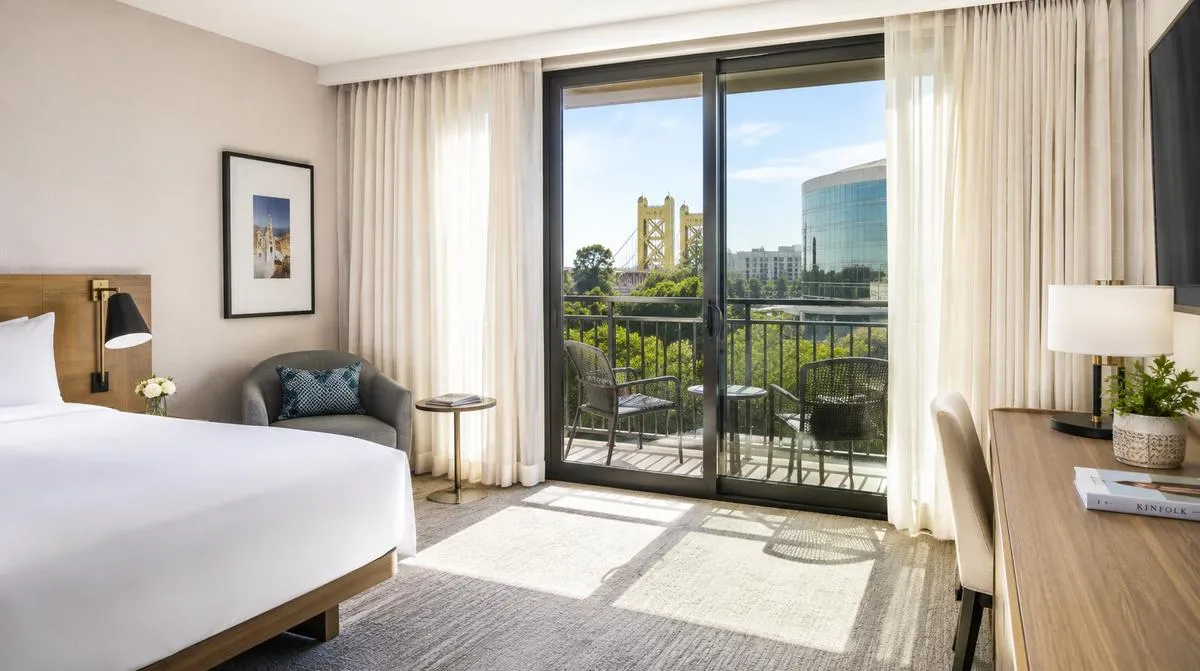
Upholstered headboards are the highest-leverage piece in Sacramento boutique hotel guestrooms. A well-specified headboard in a channel-tufted or vertically stitched leather or performance fabric in a warm neutral -- camel, cognac, warm linen, deep sage -- anchors the room's design identity without requiring expensive millwork. Pair with white oak or walnut case goods and the room reads as designed rather than assembled.
Procurement for Sacramento Boutique Hotels
Lead times for custom boutique hotel furniture run 10 to 16 weeks. Boutique properties often have compressed timelines and limited staging space. Confirm delivery phasing in the purchase agreement and verify that the supplier can provide California fire code compliance documentation before the purchase order is placed.
Ready to spec boutique hotel furniture for your Sacramento project? Send us the details and we will price it around your requirements. Request a quote to start.