Buffalo has become a genuine boutique hotel market over the last several years, driven in large part by the adaptive reuse of downtown's historic building stock and the growth of the Canalside waterfront district. Independent and lifestyle brand properties in these neighborhoods are competing on design identity, not just location, and that changes what a furniture supplier needs to deliver. Retail furnishings and generic contract catalogs do not hold up to this segment's expectations or its occupancy demands. Here is what sourcing boutique hotel furniture in Buffalo actually requires.
Why Buffalo's Hospitality Calendar Changes the Durability Math
Buffalo's occupancy calendar is not evenly distributed across the year. Arena events at KeyBank Center, convention bookings downtown, and the Niagara Falls leisure season each drive concentrated spikes that a boutique property has to absorb without its furniture looking tired by the following quarter. A design-forward lobby chair that gets photographed constantly for social media also has to survive being sat in by three different guests in the same afternoon during a busy event weekend.

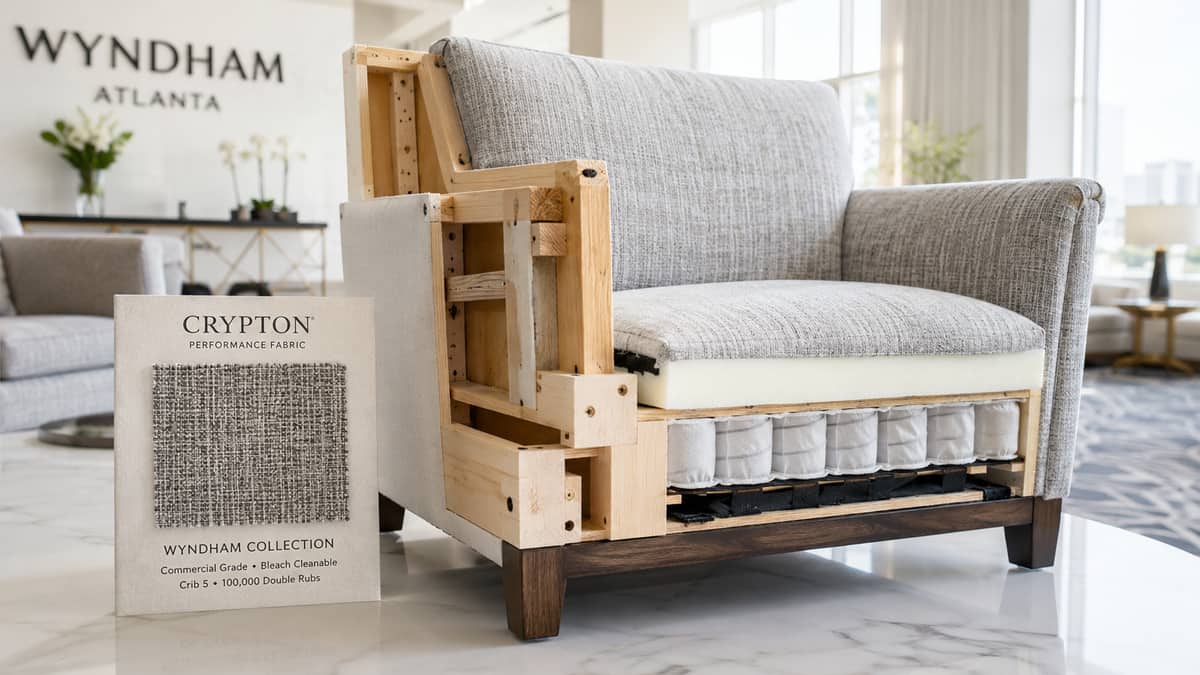
That combination, high design visibility plus high physical use, is exactly what separates boutique hospitality furniture from both retail and generic contract product. You need frame construction and fabric specifications rated for commercial cycling, but you also need finish options, custom upholstery programs, and silhouettes that a big-box contract catalog was never built to offer. Suppliers who only carry one or the other leave a boutique operator choosing between durability and design, which is not a choice you should have to make.
Design Cohesion in a City Built Around Neighborhoods
Buffalo's boutique hotel scene draws distinct design cues depending on location. A downtown property in a converted historic building leans into exposed architectural character, industrial and warehouse-influenced finishes that echo the building's original use. A waterfront property near Canalside has more freedom to lean contemporary, playing off water views and open sightlines. An Elmwood Village property, closer to the neighborhood's independent retail and restaurant character, tends toward a warmer, more residential-feeling palette even while meeting full contract specification underneath.
A furniture supplier who understands these distinctions can help you avoid the generic boutique look that has become its own cliché in this hospitality category, oversized velvet, brass accents, and a mid-century silhouette repeated in every city regardless of context. Buffalo ownership groups doing this well are pulling design cues from the building and the neighborhood, not from a boutique furniture catalog that looks the same in every market.
Navigating Minimums and Finding the Right Suppliers
Boutique properties in Buffalo are almost always furnishing fewer rooms than a full-service downtown hotel, which changes the sourcing math. Minimum order quantities that make sense for a 200-room property do not work for an 80-room boutique, and a supplier who cannot flex on MOQs for smaller footprint properties will either overcharge you or push you toward off-the-shelf product that undercuts your design intent.
Custom fabric and finish programs almost always carry higher minimums than stock product, so understand that tradeoff early. A supplier experienced with boutique projects in markets like Buffalo will walk you through where custom finishes make sense, on visible lobby and public space pieces, for example, versus where stock contract product with a strong finish selection gets you 90 percent of the design intent at a meaningfully lower cost and shorter lead time.
Planning for Buffalo's Renovation Cycle
Boutique hotel renovations in Buffalo, particularly in historic downtown buildings, often run on tighter physical constraints than new construction, narrow loading docks, older elevators, and phased construction access that limits how much furniture can move through the building at once. Plan your delivery sequencing around those realities from the start rather than discovering them mid-installation.
Work backward from your opening date using realistic lead times, 10 to 16 weeks domestic and 20 or more for imported or heavily customized pieces, and build in buffer for the kind of unexpected building access issues that come with historic adaptive reuse projects. A supplier who has done boutique work in Buffalo before will flag these risks before they become schedule problems. Request a quote to get your project's timeline and pricing started.