Hotel renovation planning in Columbus requires a level of calendar precision that most other Midwest markets don't demand. The combination of Ohio State athletics, the Columbus Convention Center's event schedule, and a boutique hotel scene in the Short North that runs lean on rooms means the available windows for renovation work are narrow, predictable, and worth defending. Getting furniture procurement right confirmed lead times, phased delivery, clear installation sequencing is what separates renovations that finish on schedule from those that drag across multiple demand peaks.
Columbus Renovation Windows: The Calendar Reality
The January through mid-March period is the primary renovation window for Columbus hotels. Ohio State's winter semester is underway but athletics are in the off-season for football, occupancy dips to its annual low, and the Convention Center's event calendar is lighter than any other period. Properties that plan renovations outside this window typically do so in two- to four-week shoulder periods in late November or the first half of December viable for smaller room-count projects but insufficient for full property renovations.
The Ohio State football schedule is the hard constraint that most Columbus renovation planners work backward from. Home game weekends in September and October represent some of the highest revenue-per-available-room days a Columbus hotel will see all year sometimes three to five times the baseline ADR. No asset manager can justify pulling rooms from inventory during these dates for a renovation that could have been scheduled earlier. The planning implication is that any renovation project with a fall completion deadline needs furniture delivered and installed by late August, which means orders placed no later than April or May for standard specifications.
Convention programming creates secondary constraints. Large association conferences booked at the Convention Center fill adjacent hotels six to twelve months in advance. If a property has a convention on the books, the rooms those guests need are unavailable for renovation regardless of what the general calendar looks like. Columbus renovation planners who work with the Convention Center's public event calendar available well in advance can identify the most viable phasing windows before finalizing contractor and supplier schedules.
Phased Renovation Strategies for Columbus Properties
Most Columbus hotels that renovate without going fully dark use a floor-by-floor or wing-by-wing approach. Typically, a block of 20–40 rooms is taken offline at a time, renovated over a two- to three-week window, and returned to inventory before the next block comes down. This approach preserves revenue during renovation but requires extremely tight coordination between the general contractor, the furniture supplier, and the property's operations team.
Headboards and lounge chairs are typically the longest-lead items in a standard guestroom renovation. If these pieces are custom-specified COM fabric, non-catalog finish, non-standard dimensions lead times can reach sixteen weeks or longer. For phased projects, this often means ordering all renovation furniture in a single production run and staging it in a warehouse until each phase is ready for installation. Confirm with your supplier whether they offer warehouse staging services, or whether you need to arrange intermediate storage independently.
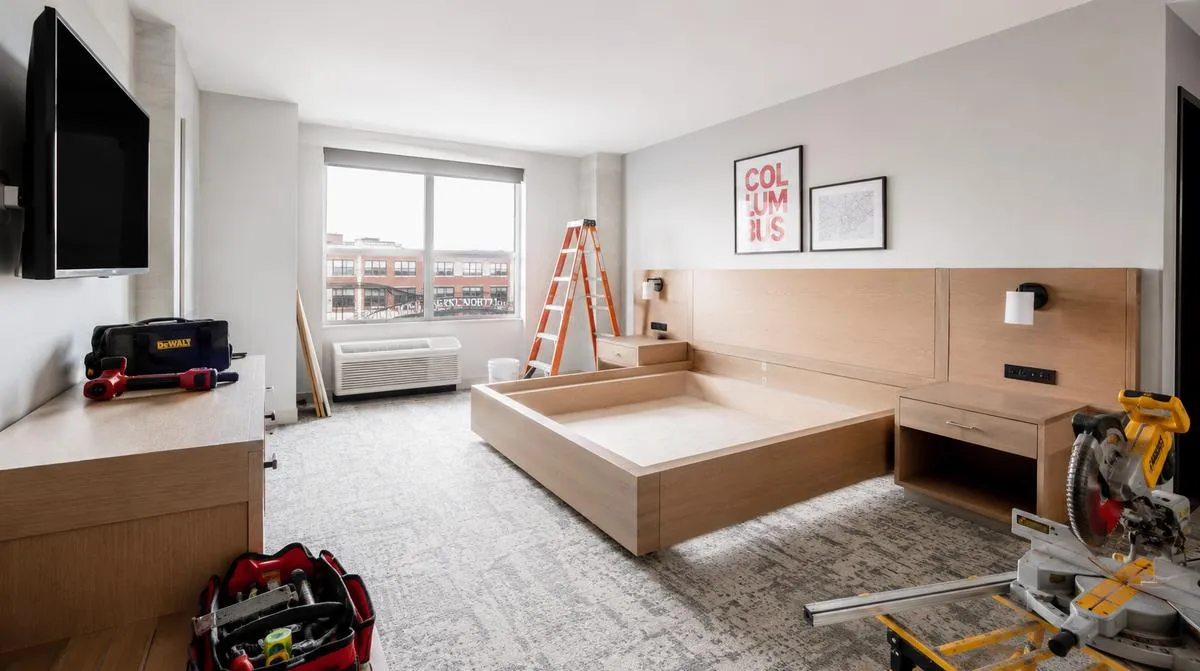
For Short North boutique properties renovating in tight floor plans, furniture must often be sized and sequenced carefully. Narrow corridors and small freight elevators limit what can be delivered in a single move. Pre-measuring doorways, elevator dimensions, and stairwell clearances before finalizing furniture specifications avoids the expensive surprises pieces that arrive and cannot be moved to their destination without disassembly that delay renovation schedules and add cost.
Specification Consistency Across Renovation Phases
Renovation projects completed in phases across multiple years need to plan for finish and fabric consistency. A sofa specified in 2025 for a first-phase lobby renovation needs to match the sofas ordered for a second-phase expansion in 2027. Suppliers who cannot guarantee finish lot and fabric dye lot consistency between production runs create visible inconsistencies in completed spaces that require either acceptance or expensive replacement.
The practical solution is to order all furniture for a multi-phase project in a single production run where possible, staging delivery for each phase. When this is not financially viable, document exact finish codes, fabric SKUs, and frame specifications in detail at the time of the original purchase so that re-orders can be matched precisely.
Banquet chairs and event furniture are particularly susceptible to this problem, as they are purchased in large quantities and often renewed in partial fleets over time. Maintaining a reserve stock of matched pieces purchased in the original run is the most reliable way to manage replacement needs between major renovation cycles.
Planning hotel renovation furniture for your Columbus project? Share your specs and quantities and we will build pricing around your actual program. Request a quote to get numbers for your space.