The hotel lobby in Columbus works differently depending on which market segment the property serves. In the Short North Arts District, the lobby is a signature space photographed, reviewed, and capable of commanding rate premiums when it projects the design quality guests came for. In convention and corporate hotels, the lobby is a transit infrastructure challenge a space that must absorb sudden surges of arrivals and departures without creating bottlenecks or looking chaotic. Both scenarios demand furniture chosen with precision, and the specifications are meaningfully different.
Lobby Demand in Columbus's Distinct Hotel Markets
Short North and boutique hotel lobbies operate as extensions of the neighborhood's creative identity. Guests who book these properties are partly paying for the experience of being in a thoughtfully designed space from check-in through checkout. The lobby furniture in these properties functions as art direction: lounge chairs with distinctive silhouettes, sofas in rich performance fabrics, and ottomans that invite guests to settle in rather than pass through. These lobbies often function as informal social spaces guests meet here, check email here, and take photos here. Furniture that is merely adequate fails in this context.
The aesthetic vocabulary that works in Short North lobbies draws from the neighborhood's exposed-brick, mixed-metal design language. Low-profile lounge chairs with tapered wood or matte black metal legs, tightly upholstered in textured fabrics bouclé, woven wool-blends, or performance chenille anchor the seating areas. Sofas tend toward mid-century-adjacent profiles: clean arms, visible frame detail, fabric choices in warm earth tones or deep jewel colors. Every piece is chosen for both visual impact and the reality that guests will be sitting in it at 2 a.m. after a long day.
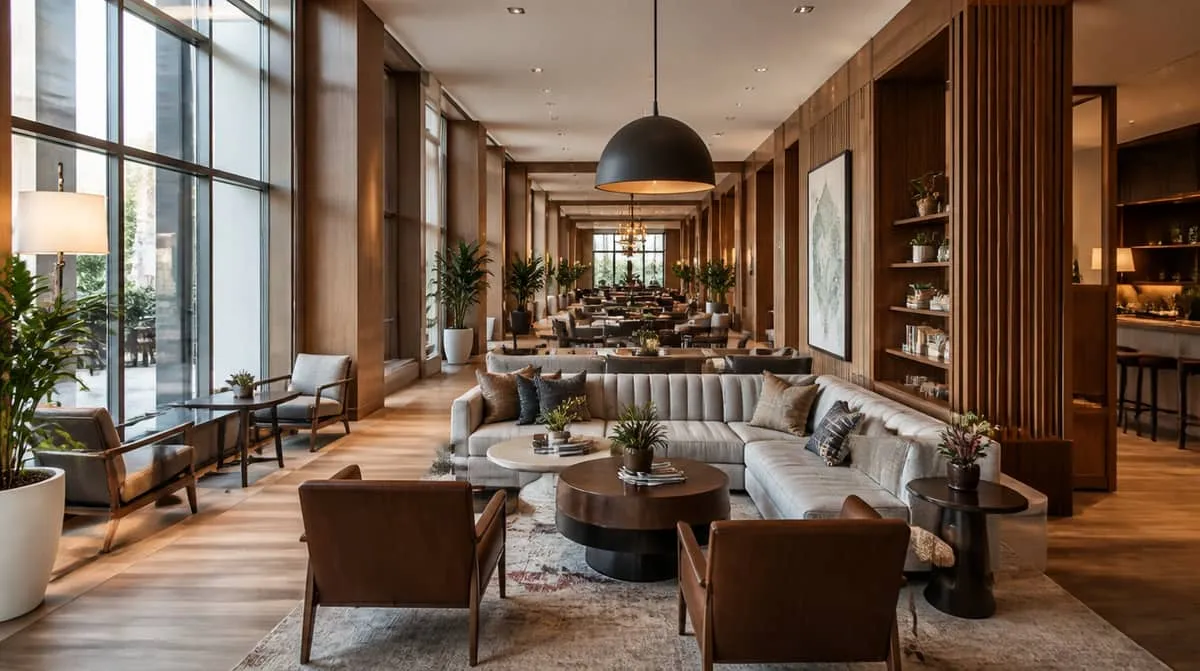
Convention and corporate hotels near the Columbus Convention Center and Easton Town Center face a fundamentally different lobby challenge. When a major convention breaks at 5 p.m., the lobby transitions from moderate occupancy to maximum density within minutes. Hundreds of guests checking in, checking out, waiting for shuttles, and gathering before dinner events flow through the space simultaneously. Furniture here needs to be arranged for traffic flow, durable enough to handle contact and repositioning by guests, and presentable enough to maintain a professional appearance through continuous use.
Ohio State home game weekends push convention hotel lobbies to their absolute maximum. The arrival and departure surges on game day weekends are unlike anything these properties face at any other point in the year. Lobby furniture that loosens, tips, or shows wear under this kind of volume creates both safety concerns and guest experience problems that show up immediately in post-stay reviews.
Furniture Specifications for Columbus Hotel Lobbies
Lobby seating in any Columbus property should be specified at commercial contract grade BIFMA or equivalent testing regardless of how refined the aesthetic. The distinction between contract and residential furniture is not visible from across the room but becomes apparent quickly under hotel conditions.
Lounge chairs in Columbus hotel lobbies most commonly specify at a seat height of 16–18 inches for standard lounge seating, with occasional higher-seat occasional chairs for guests who want to sit briefly rather than settle in. Swivel bases are popular in open lobby plans because they allow guests to reorient toward the room, toward conversation partners, or toward check-in counters without moving the chair itself. Specify commercial-grade swivel mechanisms residential swivels fail quickly under hotel conditions.
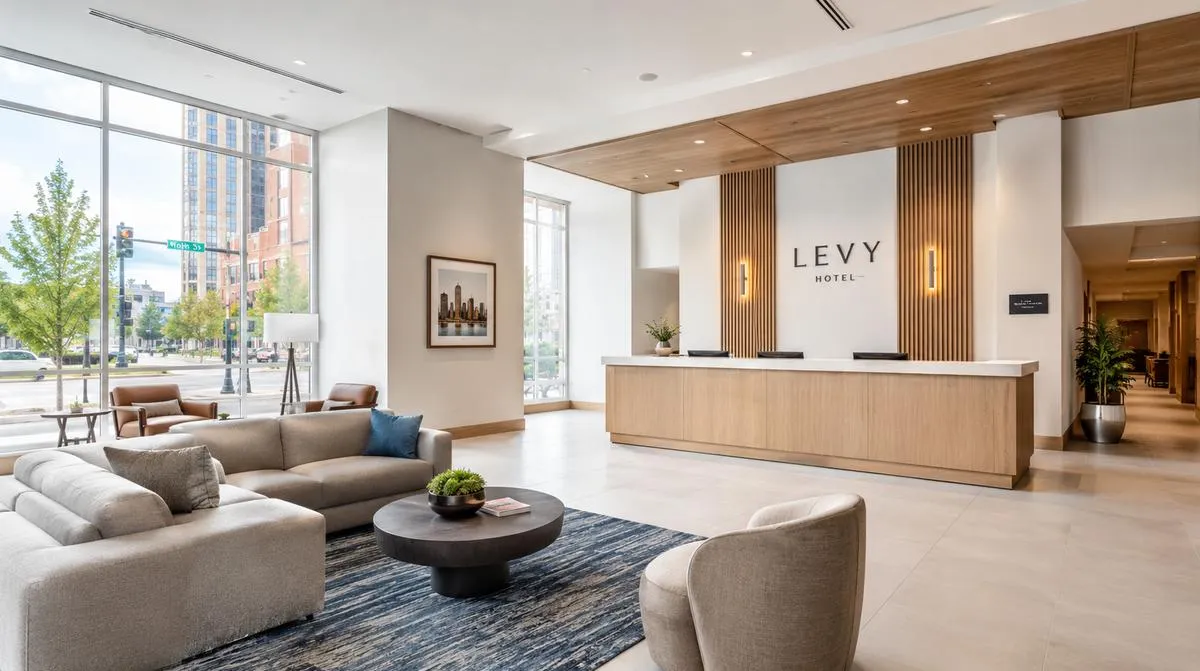
Sofas in boutique lobby settings typically run 72–84 inches to seat three comfortably without forcing proximity. Two-piece sectional configurations work well in larger lobby plans where the layout needs to accommodate both intimate seating clusters and open circulation paths. Cushion firmness matters: a lobby sofa that sags after six months of use projects neglect rather than quality, regardless of how well it originally presented.
Ottomans serve as flexible elements in lobby plans they can function as additional seating, as footrests, or as informal side surfaces. In Columbus boutique lobbies, large-format square ottomans with tray tops are common, as they double as coffee tables in seating groupings without requiring dedicated side table purchases.
Procurement Sequence for Lobby Projects
Lobby furniture is typically the highest-visibility purchase in any hotel FF&E project, and it should be specified early in the design process not as an afterthought after guestroom furniture has been finalized. The lobby anchors the guest's first and last impression of the property, and changes in specification late in the procurement process create delays that affect other project phases.
Lead times for custom-specified lobby furniture particularly pieces with COM (customer's own material) fabric selection or custom finish options often run fourteen to eighteen weeks. Standard catalog selections from contract hospitality suppliers typically deliver within eight to twelve weeks.
Ready to spec hotel lobby furniture for your Columbus project? Send us the details and we will price it around your requirements. Request a quote to start.