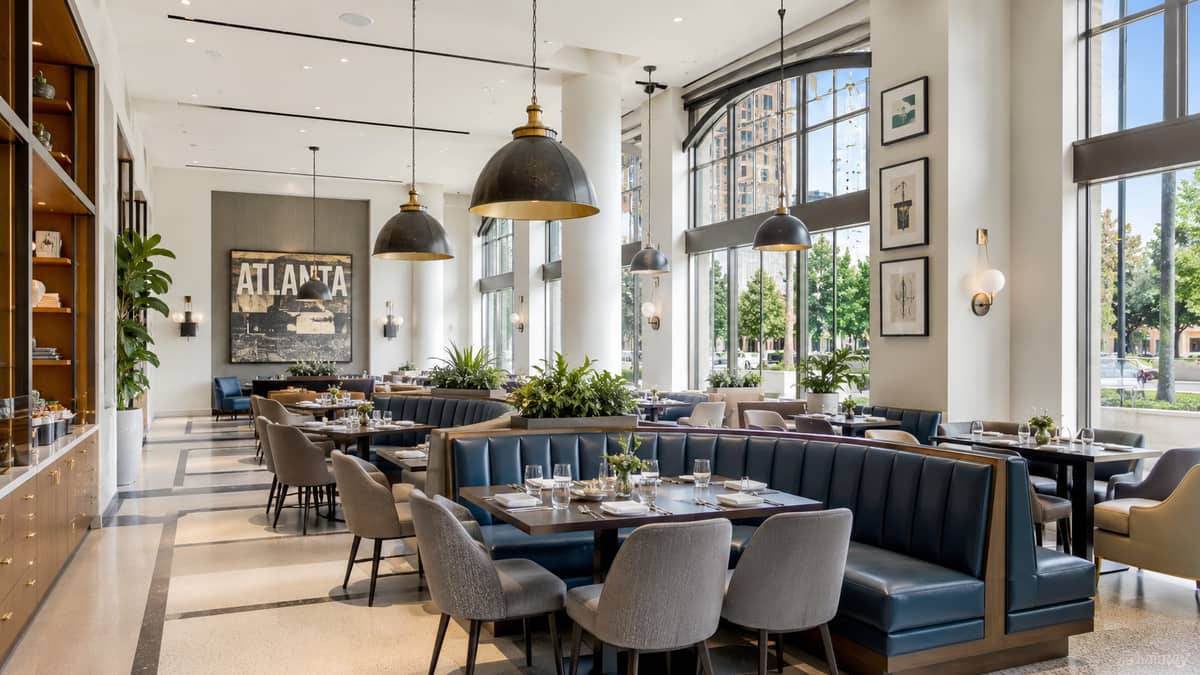
Salisbury sits at the center of a hospitality market that punches above what its size would suggest, because it functions as the commercial and medical hub for Maryland's Eastern Shore. The Wicomico Youth and Civic Center keeps a steady stream of tournaments, trade shows, and conventions moving through town, and that demand fills hotel rooms along the airport corridor year round. Downtown Salisbury has spent recent years turning older commercial blocks into a more interesting restaurant and brewery scene. Add in Salisbury University's family and alumni traffic and the seasonal overflow from the nearby Ocean City resort corridor, and the procurement challenge is not finding furniture, it is locking in specifications, managing lead times from suppliers that are rarely local, and coordinating delivery against a construction schedule that will not wait for you.
What FF&E Actually Covers (and What It Does Not)
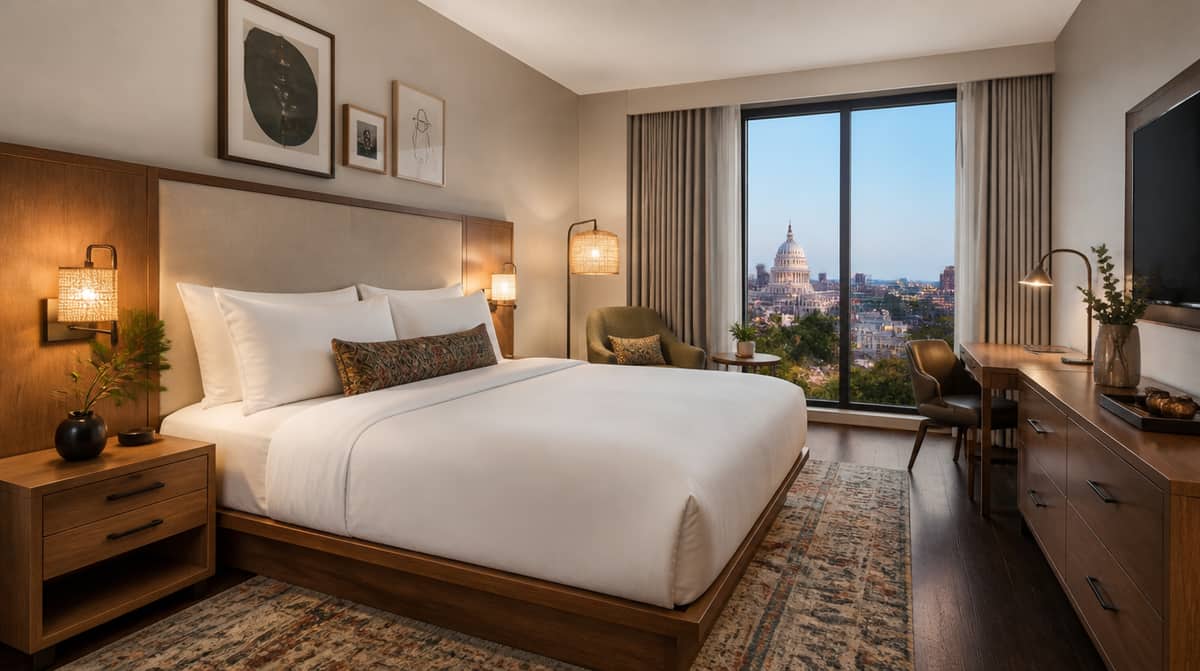
FF&E stands for furniture, fixtures, and equipment. In a hotel context, that is your guestroom beds, nightstands, desks, and chairs. It is your lobby lounge seating, the banquettes in your restaurant, bar stools at your taproom, and decorative lighting fixtures throughout public spaces. In a restaurant-only project, it covers dining tables, all seating, host stands, and any fixed booth or banquette construction procured through the furniture budget rather than the general contractor.

What FF&E does not cover is OS&E, operating supplies and equipment. That category handles linens, dishware, glassware, kitchen smallwares, and anything with a short replacement cycle. The line matters because FF&E is a capital expenditure managed by your development or ownership team, while OS&E is an operational cost managed by whoever is running the property. On a larger Salisbury project, a select-service hotel near the civic center or a multi-space restaurant buildout downtown, the FF&E budget can reach seven figures. Treating it like a procurement afterthought is how projects go sideways.
Get your FF&E scope defined in writing before you engage any vendors. A clear scope document keeps your interior designer, procurement agent, and general contractor working from the same definitions. Without it, you spend money resolving disputes that never needed to happen.
How the Salisbury Market Shapes Procurement Timelines
Salisbury operators are often surprised by how quickly the procurement clock runs, and the distance from major manufacturing centers makes that clock less forgiving than it is in larger metros. Contract furniture manufacturers, particularly those producing custom upholstered seating or branded casegoods, carry lead times of 14 to 22 weeks from confirmed purchase order to delivery. Custom work, distinctive pieces that reflect a property's own design identity rather than generic catalog options, pushes those timelines to 28 weeks or beyond, and freight routing onto the Eastern Shore adds days that a market closer to interstate freight corridors would not have to plan around.
For a hotel near the civic center, a property downtown, or a restaurant buildout serving university and business traffic, your procurement process needs to begin well before construction is complete. The practical sequence looks like this: specifications locked during the design development phase, bids issued two to three weeks later, purchase orders placed no later than 20 to 22 weeks before your target delivery date, and delivery phased into the property zone by zone as construction turns over.
The civic center's event calendar creates a pressure point most other markets do not have to the same degree. When tournament season, major trade shows, or regional conventions land, hotel demand across the airport corridor spikes sharply and rooms sell out weeks in advance. If your opening date is tied to one of those windows, a procurement delay does not just cost you days, it costs you the rate premium that came with that date. That is real revenue, not a rounding error.
Salisbury's climate adds its own procurement variable. Summers bring intense humidity and the beach-season traffic surge, and outdoor patios downtown see the same conditions. Outdoor and semi-outdoor furniture here needs to handle a wider humidity and storm range than furniture destined for a drier market, and that narrows product options while adding cost when you source correctly.
Working With Designers and Procurement Agents
Most Salisbury hospitality projects involve three parties: an interior designer setting the aesthetic vision, a procurement agent managing vendors and purchase orders, and you as the owner holding the budget and the deadline. The dynamic between those three parties determines whether your project opens on time or spends its final weeks in crisis mode.
Salisbury has a smaller pool of hospitality-focused interior design firms than a major metro, which means many of the region's most active designers work across the broader Delmarva Peninsula rather than staying confined to one city. Several have established relationships with contract furniture reps who cover the broader Mid-Atlantic territory. That network matters. A rep who already knows your designer's spec language can pull lead time estimates and flag substitution options before you formally go to bid, which is especially valuable when your project is competing for factory capacity against much larger metro developments.
The most consistent mistake in Salisbury projects is engaging the procurement agent too late. If you wait until design is fully resolved before asking about pricing and lead times, you will be redesigning pieces under time pressure. You will be substituting product at the last minute, compromising design intent, and sometimes pushing your certificate of occupancy, all while freight to the Eastern Shore adds weeks you did not budget for. Bring your procurement agent in during schematic design, when specifications are still flexible enough to value engineer without damaging the concept.
For larger projects, a full-service hotel near the airport corridor or a multi-outlet restaurant group expanding across downtown, many operators use a dedicated FF&E procurement consultant who sits between design and purchasing. That role owns vendor communication, purchase order management, freight coordination, and punch list resolution. For smaller projects, the interior designer often manages procurement directly with a purchasing fee built into their contract. Either model works. What does not work is leaving the question of who owns procurement decisions unanswered until the project is already in motion.
What Your Budget Should Account For
FF&E budgets for Salisbury hospitality projects vary by property tier and design complexity. A select-service hotel near the airport corridor typically runs $9,000 to $16,000 per key. A full-service or boutique property downtown can reach $20,000 to $32,000 per key, with public spaces pushing well past that ceiling when the design program is ambitious.
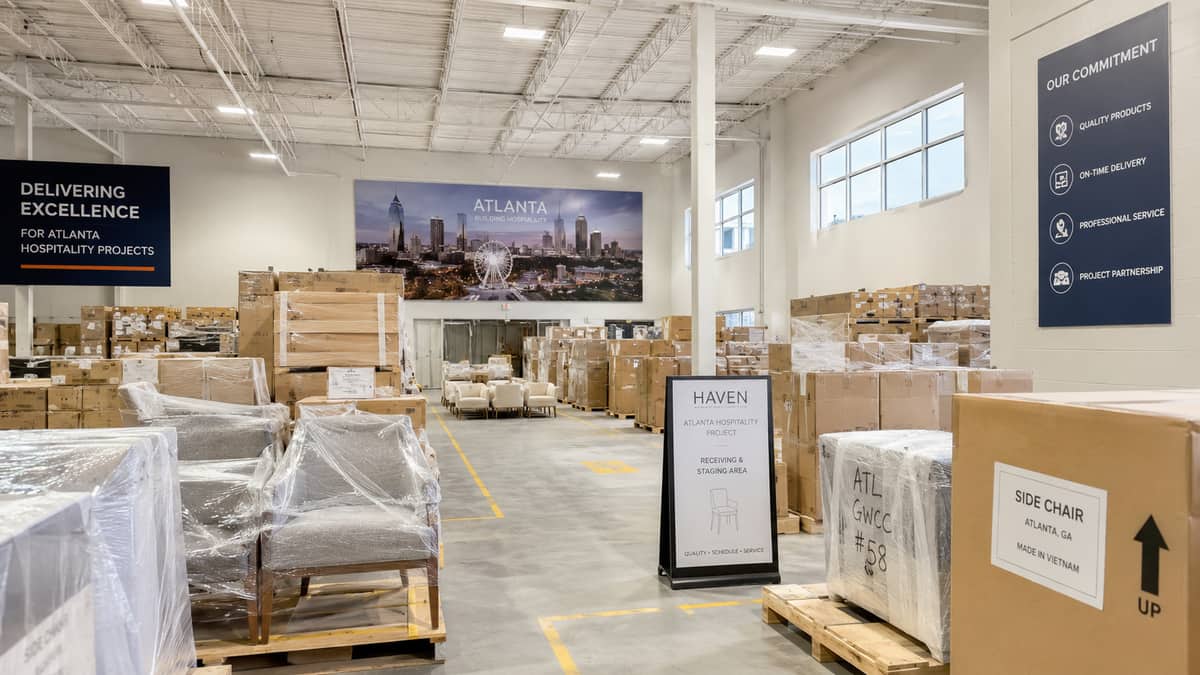
Several line items reliably catch Salisbury developers off guard. Freight from domestic contract furniture manufacturers, primarily in North Carolina, Wisconsin, and Mississippi, adds 10 to 15 percent on top of product cost once the added mileage onto the Eastern Shore is factored in, a meaningfully higher share than a project closer to those manufacturing regions would see. White-glove delivery and installation, often contracted separately from the furniture purchase itself, runs another 5 to 8 percent. Storage costs come into play when your furniture is ready before your construction site is, which happens more often than project schedules acknowledge, and summer beach-season freight congestion makes this more likely in Salisbury than in less seasonal markets.
Custom and semi-custom work carries premium pricing and longer lead times, but it is increasingly common on Salisbury's higher-profile projects as the downtown restaurant scene has raised the visual bar for what a hospitality interior looks like here. Operators who try to hit that bar with catalog furniture at catalog prices generally end up with neither the design quality nor the cost savings they expected.
Build a contingency of at least 10 percent into your FF&E budget from the start. Salisbury's construction market moves in cycles tied to agriculture and event activity across the region, and field changes late in the process are not unusual. Having that buffer lets you absorb surprises without making procurement decisions under financial duress.
The properties that open on time and on budget in Salisbury are the ones that started procurement early, respected lead times that account for the region's distance from manufacturing centers, and kept the designer and procurement agent in constant communication throughout the process. Whether you are outfitting a hotel near the civic center, a boutique property downtown, or a new restaurant concept along the main commercial corridor, the fundamentals are the same: start earlier than you think you need to, specify clearly before you bid, and build freight and installation into your numbers from day one. Ready to get numbers against your project? Request a quote today.