Columbus hotel FF&E procurement is more calendar-dependent than in most Midwest markets. Ohio State's academic and athletics schedule creates hard constraints on renovation windows that owners and asset managers must plan around from the moment a project enters the concept phase. A missed delivery window that pushes renovation completion into September means absorbing the cost of another full Ohio State home game season with deferred furniture and the revenue impact of rooms that can't be sold at premium rates.
Columbus FF&E Planning: The Academic Calendar Factor
The Ohio State schedule is the first constraint any Columbus hotel FF&E procurement team should map before finalizing a project timeline. Home football games in September and October, spring commencement in May, and freshman move-in in late August all compress hotel room availability and delivery logistics simultaneously. These are not minor demand spikes Ohio State home games regularly deliver six-figure visitor counts to Columbus, and the hotel market prices accordingly.
The practical implication for FF&E procurement is that the January through mid-March window is the primary renovation season for Columbus hotels that cannot afford to pull rooms during peak demand periods. This creates a compressed annual procurement cycle where multiple properties are simultaneously ordering furniture, scheduling deliveries, and coordinating installation within the same narrow window. Working with suppliers who can confirm delivery dates and hold inventory is essential vague lead time estimates from vendors who can't guarantee January delivery dates create real financial risk.
For boutique properties in the Short North and Franklinton districts, the academic calendar matters differently. These hotels run high occupancy during Ohio State events but often have more flexibility on the margins a 40-room boutique can phase a renovation across multiple off-peak windows in ways that a 300-room convention hotel cannot. Still, the Short North's own event calendar gallery hops, street festivals, the Columbus arts scene's active programming creates its own demand peaks that FF&E planners need to account for.
Convention Center-adjacent hotels face a third dynamic: the convention calendar itself. The Greater Columbus Convention Center hosts hundreds of events annually, and the hotel market around it prices to that demand. FF&E procurement timelines for these properties need to account for convention-related blackout periods that don't follow the academic calendar but are equally difficult to ignore.
Specification and Budget Management for Columbus Projects
Columbus FF&E budgets span a wide range depending on property type and positioning. Boutique Short North properties typically specify higher per-unit costs on showcase pieces lounge chairs, headboards, and lobby seating while managing overall budget through strategic use of standard catalog items in less visible positions. The design investment in these properties is front-loaded into the guest-facing spaces where it drives rate premiums.
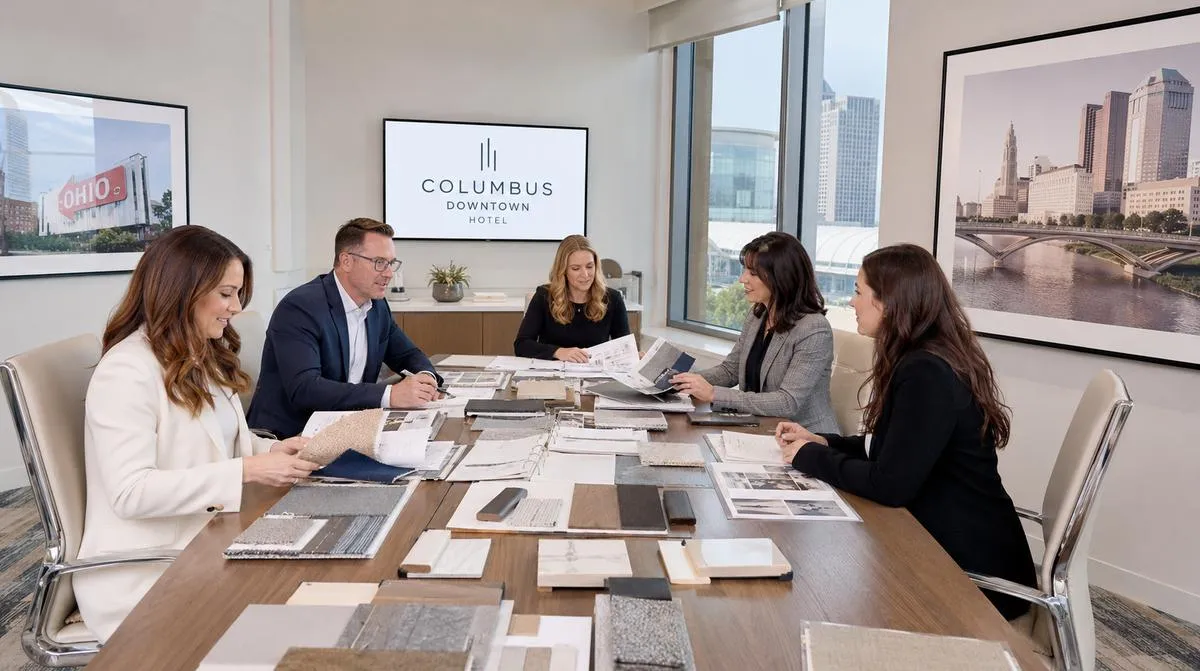
Convention and corporate hotels near the Convention Center and Easton Town Center typically operate on tighter per-key budgets but at higher total project scale. Efficient specification using contract-grade catalog items that perform reliably without custom upcharges is the standard approach. Volume pricing from suppliers who work in the hospitality FF&E segment regularly provides meaningful budget relief compared to general commercial furniture suppliers who occasionally take hotel projects.
Sofas and ottomans in public spaces represent a disproportionate share of FF&E budget relative to room count, because lobby and lounge furniture absorbs far more daily use than guestroom furniture. Investing in commercial-density construction for public-area seating delivers better long-term value than cutting costs in spaces where furniture failure is visible to every guest.
Logistics and Delivery Coordination
Columbus's freeway access makes it a relatively efficient delivery market. I-70, I-71, and I-270 connect the city to major Midwest distribution hubs, and most commercial furniture suppliers can reach Columbus properties within standard delivery windows.
For large projects, confirm whether your supplier offers white-glove installation, freight-only delivery, or consolidated shipping with a local receiving warehouse. Short North properties in particular may have limited dock access and tight freight elevator capacity coordinate logistics details before finalizing the delivery schedule, not during it.
For Columbus properties comparing FF&E options, project-specific pricing tells you more than any published range. Request a quote and we will scope it to your space and volume.