
Topeka has a patio problem that most operators underestimate walking in. The assumption is that summer heat is the main challenge. It is a factor, but the operators who run serious outdoor programs downtown and in the NOTO Arts District know the real challenge is more complicated: Kansas patios need to perform through 95-degree July afternoons with sudden thunderstorms and hail, through genuine winter cold with ice rather than reliable snow cover, and under the kind of temperature swing between seasons that punishes cheap finishes fast.
The operators who get commercial patio furniture in Topeka right are not treating outdoor seating as a warm-weather amenity. They are treating it as a revenue program with specific durability, comfort, and aesthetic requirements. Getting those specifications correct from the start is the difference between a patio program that earns its ROI over eight years and one that needs a partial replacement after two.
Kansas Weather Requires More, Not Less
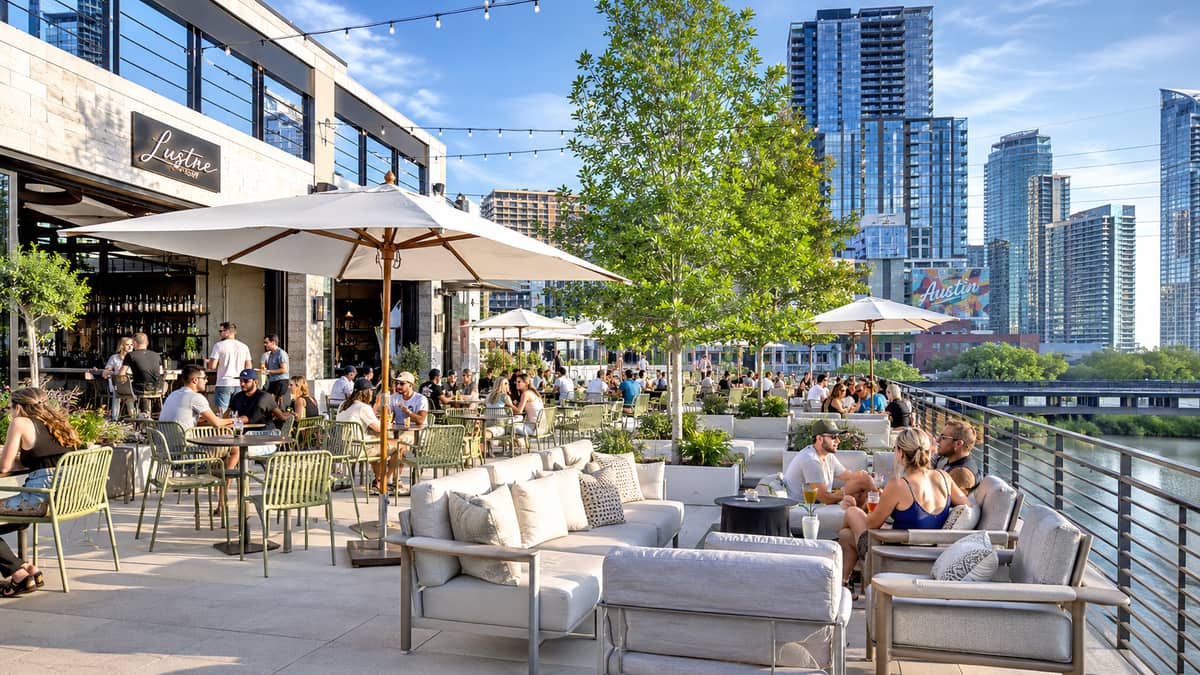
The standard industry logic runs like this: milder climates are easier on outdoor furniture. Topeka's weather pattern says otherwise. The city sits squarely in Tornado Alley's seasonal storm track, and that means outdoor furniture programs need to account for sudden high-wind events as well as ordinary wear. Furniture that cannot be secured or quickly stowed ahead of a storm warning becomes a liability, not just a maintenance line item.
Winter brings genuine freeze events most years, often with ice. Ice is harder on furniture than snow because it infiltrates micro-cracks in powder coat finishes, expands, and accelerates delamination at weld points. An operator who buys on the assumption that Kansas does not need cold-weather durability specs learns this the first February. Summer brings its own demands: UV exposure and humidity that runs high enough across the season to create mold and mildew conditions on cushion fabrics that are not rated for it.
What Downtown and NOTO Actually Require
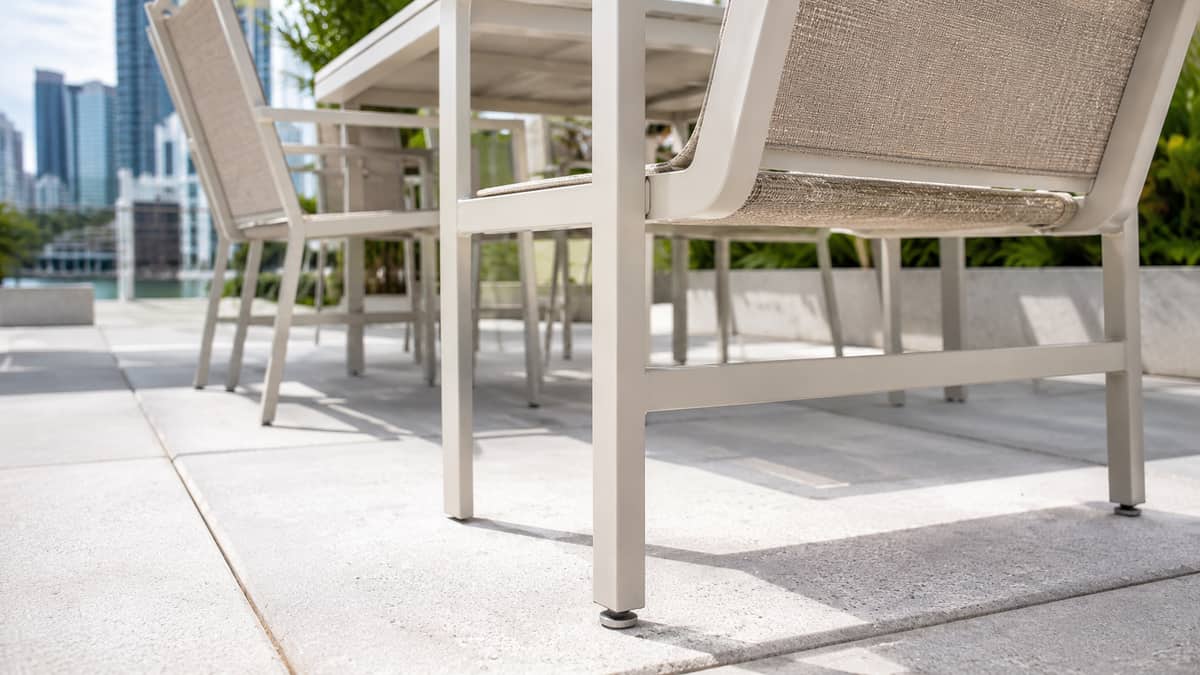
Topeka's patio market is not uniform. The design expectations at a downtown restaurant terrace near the Statehouse are different from a NOTO Arts District bar patio. Specifying commercial patio furniture in Topeka without matching the program to the location's guest profile and design context is how operators end up with furniture that functions correctly but reads as slightly wrong.
Downtown's restaurant and hotel patio market serves a business and government travel crowd that expects a program that reads as complete and cohesive: matching frame finishes across dining chairs, lounge pieces, and side tables. NOTO's patio market operates on a different logic. The aesthetic here skews artistic, local, and tactile. The NOTO patio market rewards darker powder coat finishes in matte charcoal or bronze, materials that have visual weight and texture, and designs that feel considered rather than catalog-ordered.
Heat, UV, and Fabric: Getting the Spec Right
Fabric specification in Topeka requires attention before the first season. Solution-dyed acrylic is the correct base specification for any uncovered or partially covered patio. The dye is embedded in the fiber during manufacturing, which is why the fade resistance holds up under Kansas UV rather than washing out within two seasons. It also cleans with diluted bleach, the correct maintenance protocol for mold prevention in a humid climate, and it handles the cycle of getting soaked in an afternoon storm and drying in direct sun without the fiber structure degrading.
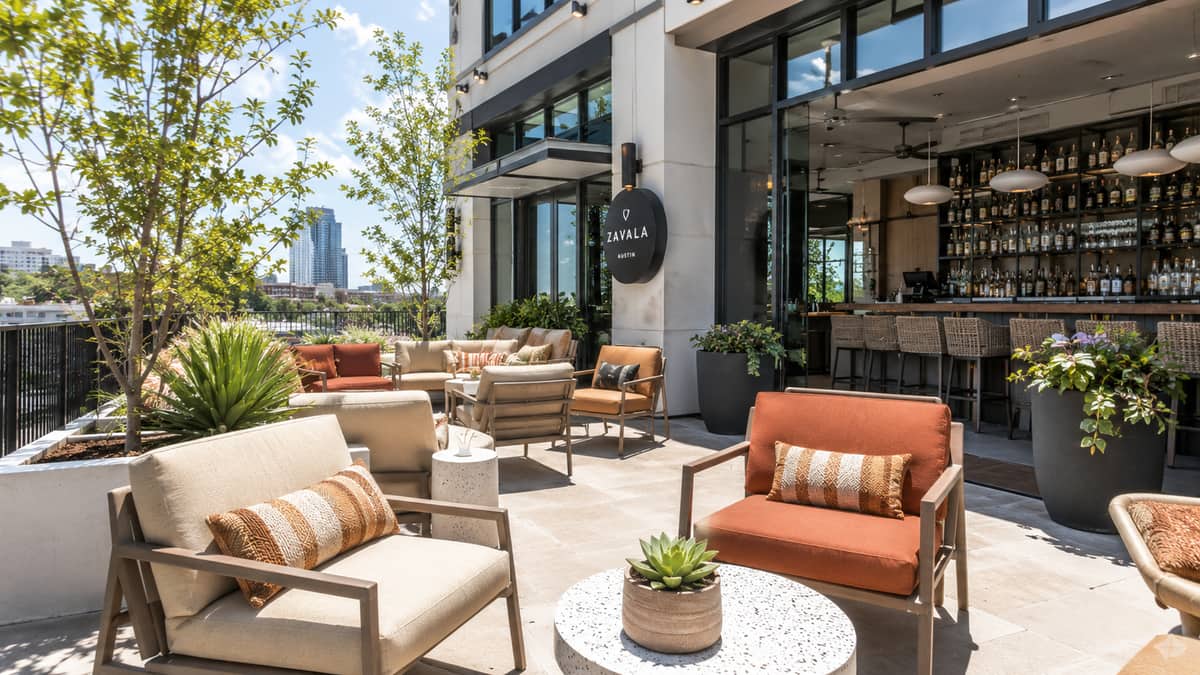
Foam density is where many patio programs fail quietly rather than dramatically. Commercial seating foam runs 2.0 to 2.5 lb density with a higher ILD rating that maintains its shape under continuous rotation through a full Kansas summer of weekend use. For frame material, commercial-grade aluminum at 1.5mm wall thickness minimum is the appropriate starting point. Weld quality at the joints is as important as the wall thickness, and it is worth asking suppliers specifically about their joint construction.
The Revenue Math on Quality Commercial Patio Furniture
A commercial aluminum dining chair correctly specified for a Kansas climate, properly maintained, lasts eight to ten years in active service. A consumer-grade or commercial-style chair at a lower upfront cost that requires replacement in two years costs more per year and adds the operational disruption of sourcing replacements mid-season.
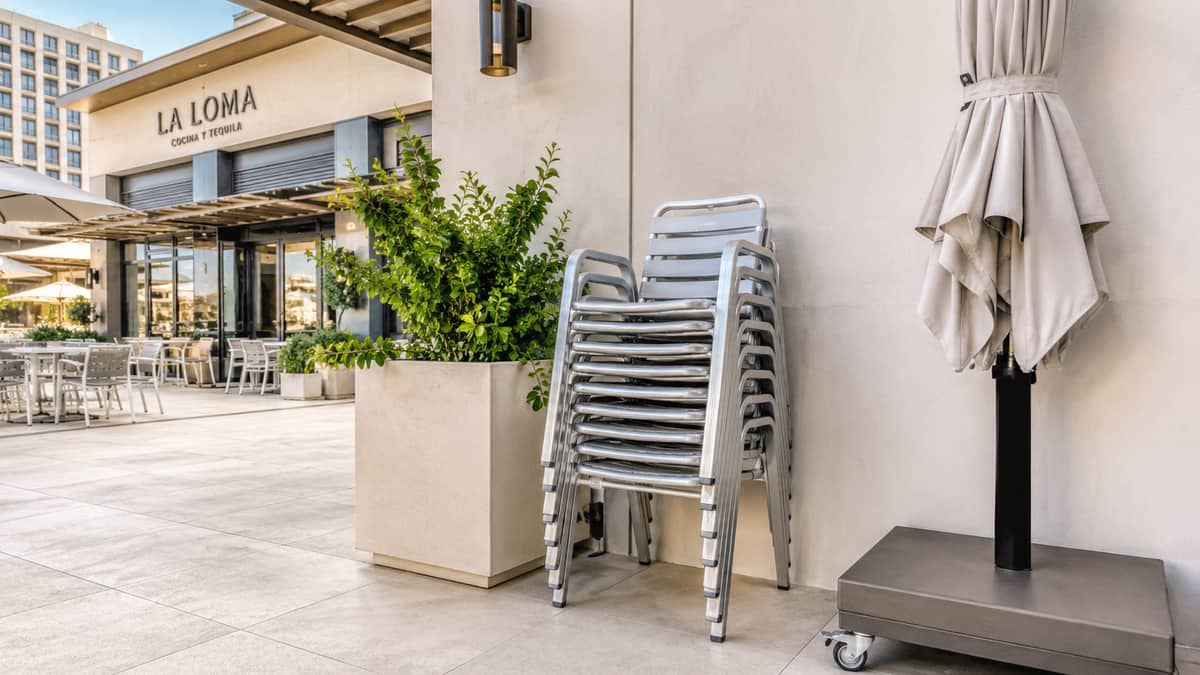
The right approach to commercial patio furniture in Topeka is to specify for the actual climate, match the aesthetic to the corridor's design grammar, and buy for the full lifecycle rather than the opening day cost. When you are ready to spec a program, get a quote with your seat count and frame finish so lead time gets locked in ahead of the season you are targeting.