Columbus has a genuine outdoor dining and hospitality culture, concentrated most visibly in the Short North Arts District and along the Scioto Mile's riverfront hotel and restaurant corridor. Sidewalk seating along High Street is among the most competitive real estate in the city operators fight for permits, configure every square foot with intention, and rely on that outdoor capacity to drive revenue from May through October. Furniture that fades, corrodes, or structurally fails mid-season is not an operational inconvenience; it's lost revenue.
Columbus Outdoor Hospitality Demand
The Short North's sidewalk culture is year-round in aspiration and genuinely functional from late April through October. High Street restaurants and bars with patio permits treat outdoor seating as primary capacity, not supplemental overflow. These spaces are visible from the street, photographed constantly, and function as the first impression guests form of the establishment. Furniture needs to look as intentional outdoors as the interior design does inside.
Ohio State game weekends expand the outdoor hospitality footprint dramatically. Tailgate culture extends from campus into the Short North and surrounding neighborhoods, and hotels and restaurants with outdoor space run it at maximum capacity for the duration. This is heavy commercial use not leisurely weekend brunch, but sustained high-volume seating with guests who are celebrating and moving furniture freely. Commercial-grade outdoor furniture with welded aluminum or steel frames and secured connections handles this without failing; residential patio furniture does not.
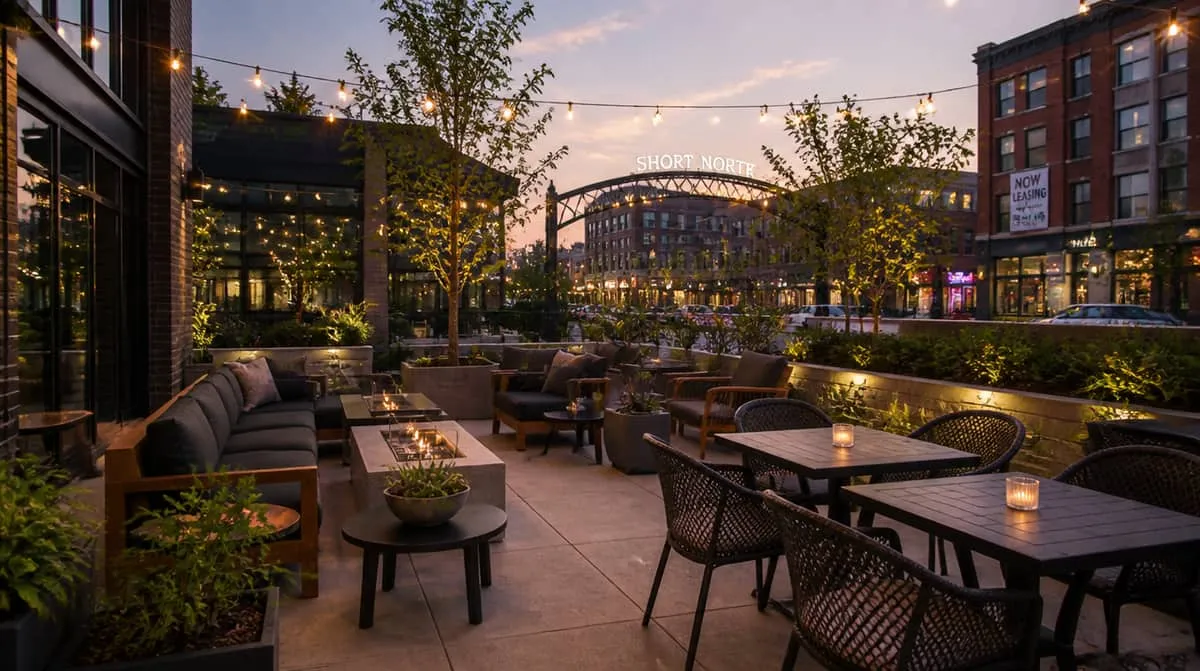
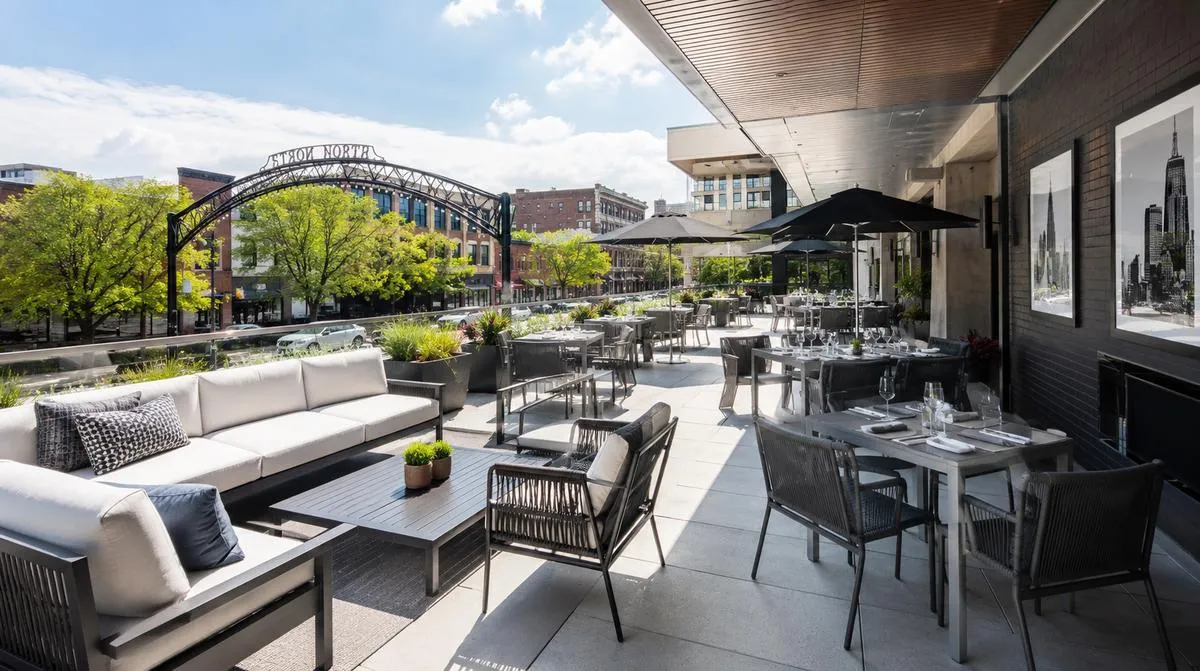
The Columbus Convention Center's adjacent hotels rely on outdoor terraces and courtyard spaces to accommodate overflow during large conventions and for post-session receptions. These spaces transition quickly between daytime casual programming and evening event setups, which puts a premium on furniture that stacks efficiently and reconfigures without requiring significant labor. Dining chairs with outdoor ratings and stack-capable profiles are standard specifications for these settings.
Easton Town Center's hotel and restaurant operators face a different outdoor context: suburban retail-adjacent patios that attract a family-friendly and corporate dining mix. These spaces run heavy lunch traffic from the adjacent office market and weekend volume from retail shoppers. Furniture here needs to present well enough for a corporate lunch while surviving the wear of constant turnover throughout the day.
Material and Design Specifications for Columbus Outdoor Furniture
Ohio's climate creates specific material requirements. Columbus summers are humid with occasional intense heat, and late-season outdoor use extends into weather that can include sudden rain. Furniture frames should be powder-coated aluminum or marine-grade stainless steel both resist rust and hold finish through seasonal temperature swings. Tubular steel with powder-coat finishes is a common choice for operators who want the matte black aesthetic of Short North interiors translated to outdoor settings.
Seating surfaces and cushions, where used, require solution-dyed acrylic fabrics rated for UV and moisture resistance. Sunbrella and equivalent materials are the standard commercial specification for Columbus's outdoor hospitality market. Operators who specify residential patio cushion fabrics even attractive ones face replacement costs within two or three seasons as UV exposure and moisture degrade materials that were not engineered for sustained outdoor commercial use.
Barstools for outdoor bar rail positions need to meet the same construction standards as indoor bar furniture, with the additional requirement of weather-appropriate materials throughout. Footrests on outdoor barstools should be capped or wrapped in materials that resist moisture intrusion into the frame joint a common failure point in lower-quality outdoor bar seating.
For Short North properties that want to maintain visual continuity between indoor and outdoor spaces, specify furniture lines that offer the same silhouette in both indoor and outdoor-rated versions. This allows a restaurant's interior dining chair to appear on the patio in an aluminum or weatherized version without breaking the design language.
Procurement and Seasonal Planning
Columbus's outdoor hospitality season runs roughly May through mid-October. Outdoor furniture orders should be placed no later than February to ensure delivery before the season opens. Suppliers with Midwest distribution can often accommodate March orders for standard specifications, but April ordering risks delayed delivery into peak season.
For operators who store patio furniture through winter, confirm that frames and fabric storage requirements are manageable in your available space. Stackable chair profiles and folding table options significantly reduce winter storage footprint and extend furniture lifespan by protecting pieces from freeze-thaw cycles.
For Columbus properties comparing commercial patio furniture options, project-specific pricing tells you more than any published range. Request a quote and we will scope it to your space and volume.